
Kid-Friendly Healthy Meals That Actually Work for Busy Parents
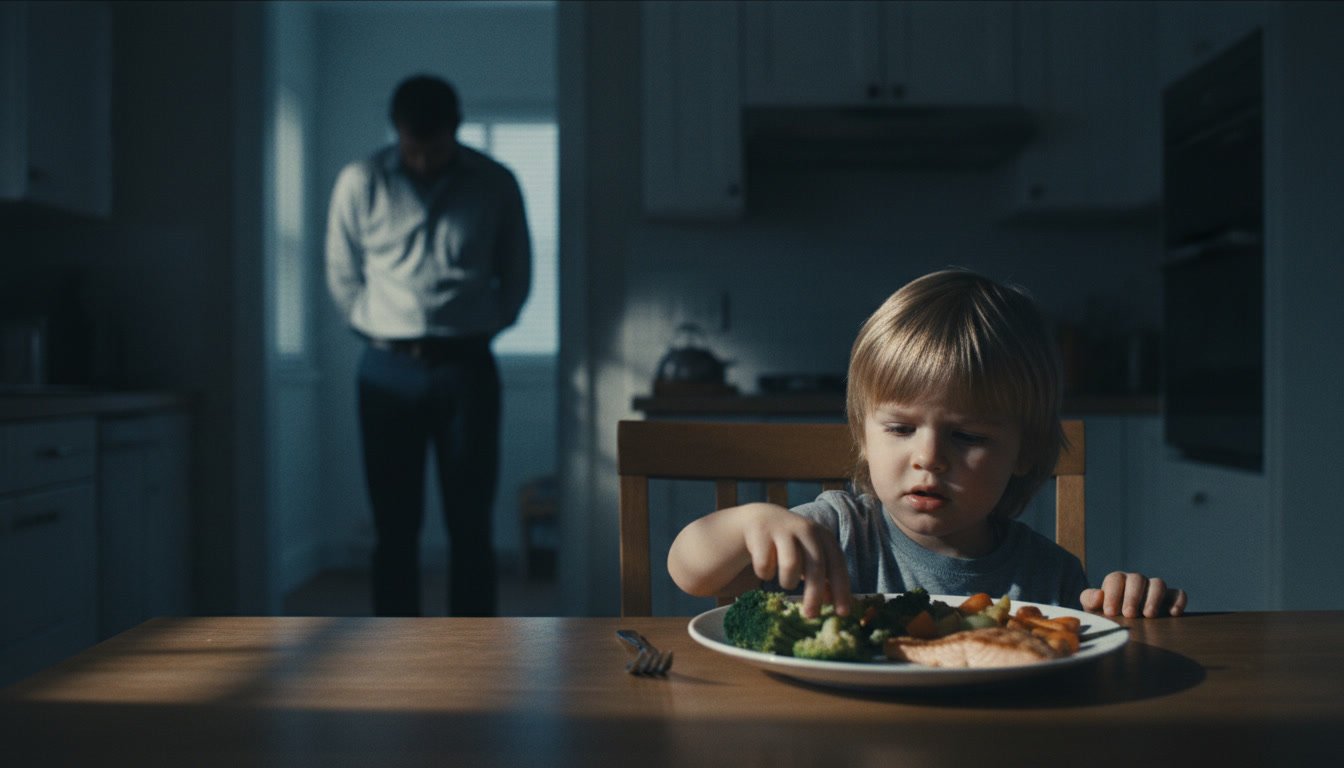
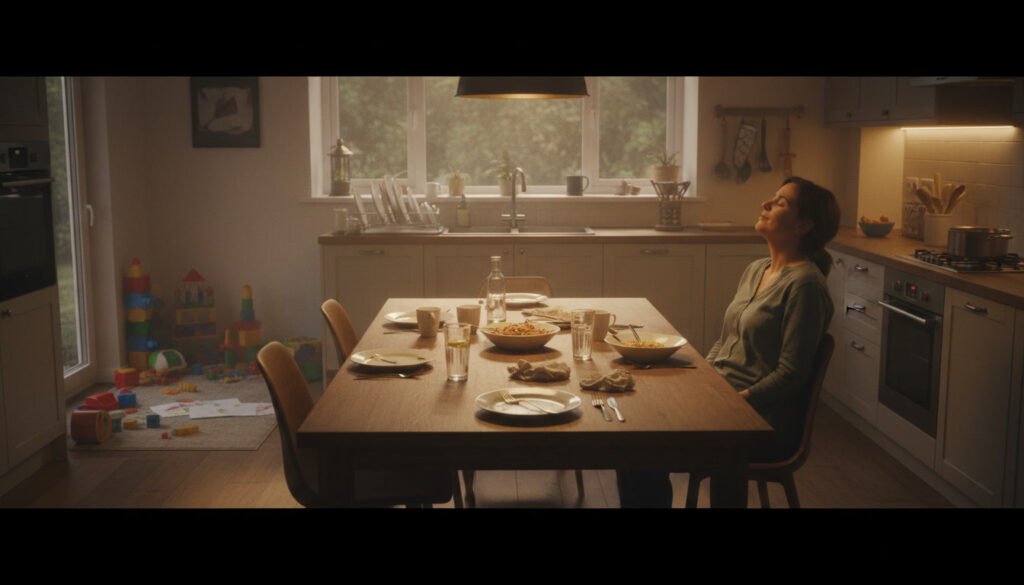
There’s a specific kind of silence that happens at dinner. You set the plate down. You wait. Your kid pokes the food, sighs, and looks at you like you’ve personally betrayed them. And suddenly, what was supposed to be a normal weeknight turns into a quiet referendum on your parenting, your energy level, and every nutrition article you’ve ever read.
If this feels familiar, pause right here. This isn’t a failure. It’s a mismatch—between how kids experience food and how adults are told to serve it. What follows is a grounded, human blueprint for healthy meals your kids will actually eat, built for working parents who are tired, thoughtful, and done feeling judged by a dinner plate.
Core idea: Most “kid-friendly healthy meals” fail because they don’t match how kids decide. This guide fixes the psychology first—then the plate.
Table of Contents:
- Why Most “Kid-Friendly Healthy Meals” Fail at the Table
- The Psychology of Kids Saying Yes to Healthy Food
- Kid-Approved Healthy Dinners for Busy Parents
- 10 Go-To Weeknight Meals (Under 30 Minutes)
- How to Transition Picky Eaters Without Battles
- Real-World Tips from Working Parents
- Products / Tools / Resources
- FAQs
Why Most “Kid-Friendly Healthy Meals” Fail at the Table
Most meals don’t fail because they’re unhealthy. They fail because they ask kids to leap too far, too fast. Dinner breaks down when the meal doesn’t match what a child’s brain reads as safe, familiar, and predictable.
Taste mismatch vs adult nutrition logic
Adults chase nutrients. Kids chase certainty. We read “healthy” and think fiber, balance, variety. Kids see unfamiliar smells, new colors, and flavors that don’t map to anything they already trust. To them, that’s not nourishment—it’s uncertainty.
Texture aversion and sensory overload
For kids, texture isn’t a detail. It’s the decision-maker. Chunky sauces, slippery vegetables, mixed consistencies, and surprise crunch can trigger sensory resistance before taste even enters the conversation.
Why forcing bites backfires long-term
Pressure doesn’t teach kids to eat better. It teaches them to tense up. When meals become negotiations, stress rises, appetite drops, and food turns into emotional terrain. Structure helps; pressure harms.
Quick tips:
The Psychology of Kids Saying Yes to Healthy Food
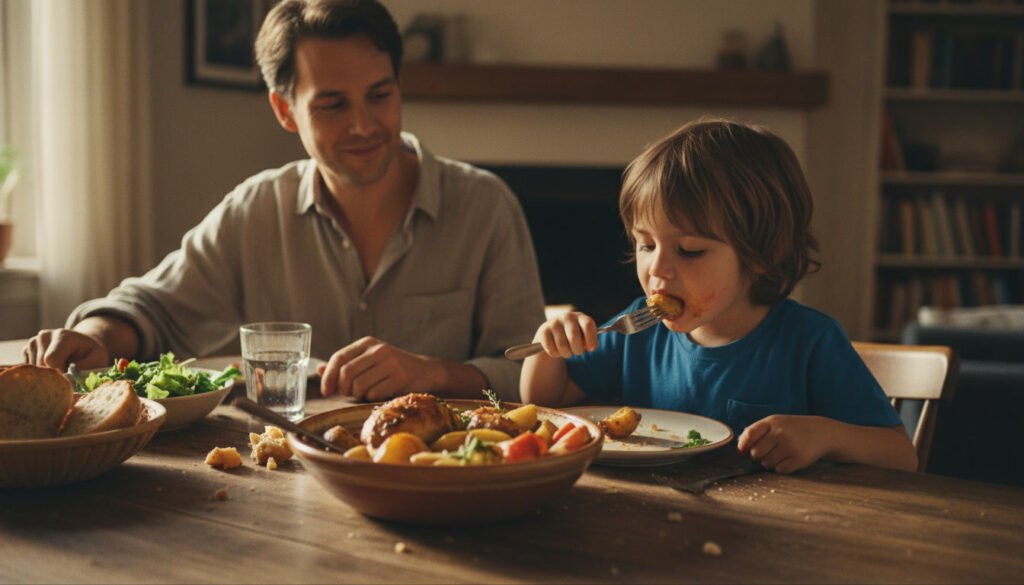
Kids don’t need convincing. They need safety signals. Once you understand what “safe” looks like at the table, you stop fighting your child’s wiring and start working with it.
Familiar shapes, colors, and names
Presentation is psychology in disguise. A meal that looks familiar gets a chance. Keep the visual language steady—recognizable formats, consistent colors, and names that don’t trigger instant skepticism.
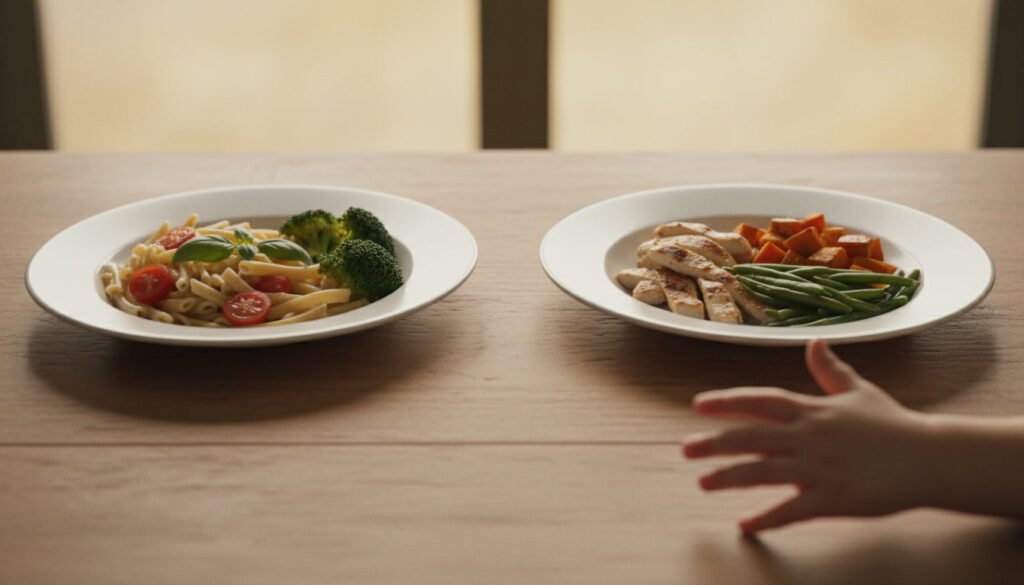
Choice illusion (two good options, not many)
Autonomy reduces resistance. Offer two parent-approved options:
- “Pasta or rice?”
- “Chicken plain or with sauce?”
- “Red sauce or creamy sauce?”
Repetition without pressure
Many foods aren’t rejected forever—they’re rejected for now. Calm exposure over time builds familiarity without turning dinner into a test.
Kid-Friendly Healthy Meals for Busy Parents
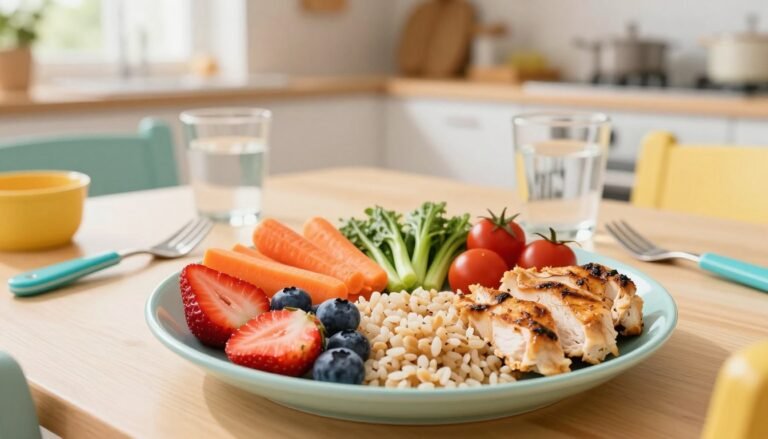
The meals that work best don’t announce themselves as “healthy.” They show up consistently, look familiar, and deliver comfort first— then nutrition.
Healthy pasta dishes kids love
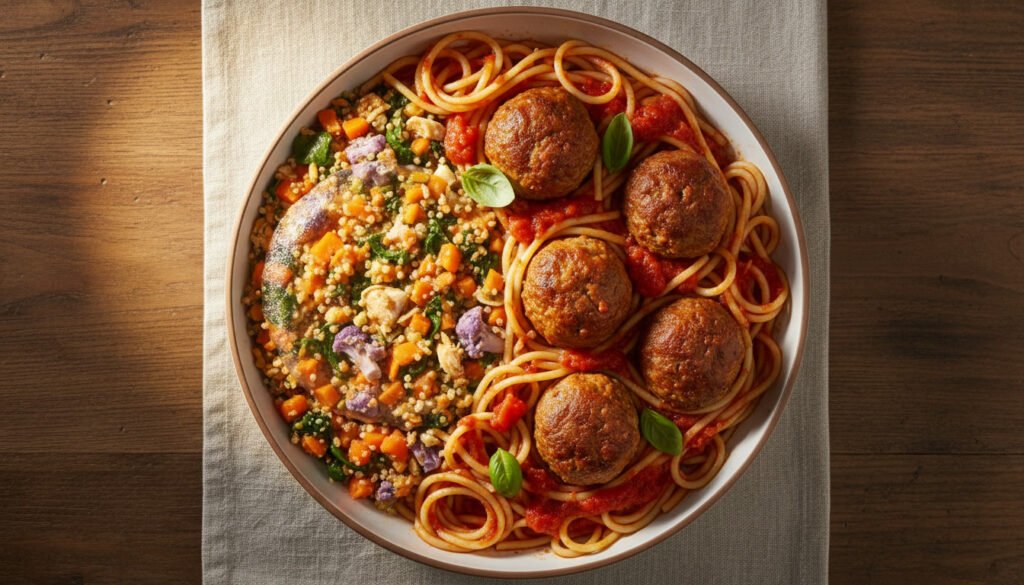
- Smooth tomato sauce with blended vegetables
- Protein-boosted mac-and-cheese style bakes
- Simple butter/olive-oil pasta with gentle add-ins
Chicken meals with hidden nutrition
- Shredded chicken folded into familiar formats (wraps, bowls, pasta)
- Baked chicken pieces with soft interiors
- Sauces that carry nutrients invisibly while staying smooth
Comfort foods made nutrient-dense
Keep the dish recognizable. Upgrade it gently. Comfort isn’t the enemy of health—it’s often the doorway.
10 Go-To Weeknight Meals (Under 30 Minutes)
Speed isn’t about convenience. It’s about emotional capacity. Here are fast meal formats that reduce chaos and increase the odds of a calm bite.
One-pot meals
- One-pot pasta with chicken and a smooth sauce
- Mild chili with hidden vegetables blended into the base
- Rice bowls with simple toppings and a “choose-your-own” feel
Sheet-pan dinners
- Chicken + potatoes + carrots (with familiar seasoning)
- Salmon or chicken bites + broccoli (served with a favorite dip)
- Sausage + bell peppers + rice (separate components for picky eaters)
Leftover-friendly recipes
- Pasta bakes that taste better the next day
- Shredded chicken that can become wraps, bowls, or pasta
- Smooth soups that reheat fast and stay predictable
How to Transition Picky Eaters Without Battles
Change sticks when it’s quiet. You don’t need a showdown. You need a system that lowers pressure and slowly expands comfort.
The 80/20 familiar-new rule
Every plate should feel mostly safe. Aim for 80% familiar foods and 20% gentle exposure. No commentary. No bargaining. Just presence.
Language shifts that change behavior
Replace pressure phrases with neutral structure:
- Instead of: “You need to eat this.”
- Try: “This is what we’re having tonight.”
When to stop negotiating food
Negotiation turns dinner into a test. Structure without commentary restores calm. Kids eat more freely when the emotional temperature drops.
Real-World Tips from Working Parents
These aren’t “hacks.” They’re survival strategies—small moves that protect your bandwidth so dinner stays human.
Morning prep hacks
- Decide dinner before the workday begins
- Pre-portion ingredients (protein, pasta, sauces)
- Use freezer-friendly portions for “hard day” backups
After-work energy management
Dinner reflects your state before it reflects your skill. Simpler meals often land better. Calm plates beat ambitious plates when everyone’s tired.
Dinner routines that reduce chaos
Predictability is underrated. Same time. Same flow. Same expectations. When the structure is steady, behavior follows.
Products / Tools / Resources
The goal isn’t to buy more—it’s to remove friction where it quietly drains energy. These tools can help make kid-friendly healthy meals easier for working parents (and far less stressful at cleanup time).

Kid-Sized Meal Prep Containers
Smaller portions look less intimidating and make “try bites” feel doable—perfect for picky eaters and leftovers.
- Portion control without pressure
- Great for lunchbox leftovers
- Helps reduce food waste
Shop kid-sized meal prep containers

Heavy-Duty Sheet Pan Set
Sheet-pan dinners reduce decision fatigue and cleanup—ideal for fast, kid-friendly healthy meals on busy weeknights.
- One-tray cooking for less chaos
- Better browning, fewer soggy textures
- Pairs perfectly with “components” for picky eaters

High-Speed Blender (Smooth Sauce Weapon)
Texture is everything. A blender helps you create smooth sauces and soups that keep nutrition high without triggering sensory pushback.
- Blended veggie sauces kids accept
- Creamy soups with predictable texture
- Fast cleanup = lower weeknight friction

Nonstick Skillet for Fast Weeknight Cooking
When energy is low, cleanup can be the breaking point. A solid skillet reduces sticking, speeds cooking, and keeps dinner calmer.
- Quick sears for chicken and veggies
- Less oil needed
- Easier cleanup on hard days
FAQs (The Questions You’re Already Thinking)
What if my child refuses every “healthy dinner” I make?
Start by making the meal feel safe, not “healthy.” Keep most of the plate familiar (80/20 rule), reduce mixed textures, and remove pressure language. Repeat exposures calmly and focus on structure, not outcomes.
How do I feed picky eaters without making a second meal?
Serve “components” from the same dinner: a safe carb (pasta/rice), a simple protein (chicken/meatballs), and a sauce/dip. You’re not making two meals—you’re offering flexibility inside one plan.
What are the best quick healthy meals for working parents?
One-pot pasta, sheet-pan chicken and potatoes, build-your-own bowls, and leftover-friendly bakes are reliable. The best meals are repeatable and low-friction—especially on weekdays.
How can I get my kids to eat vegetables without a fight?
Blend vegetables into smooth sauces or soups to avoid texture triggers. Pair them with familiar foods and keep the tone neutral. The goal is calm exposure, not a showdown.
As an Amazon Associate, I earn from qualifying purchases.


One Comment