Hidden Benefits of High-Protein Functional Meals
Ever feel like you’re doing everything right—salads, smoothies, “clean” eating—but you’re still hungry an hour later, and your energy levels are a joke? I’ve been there. For years, I watched people spin their wheels on diets that were technically “nutritious” but functionally useless. This constant cycle of dieting, crashing, and feeling sluggish is the problem, and it’s why most people give up.
It’s not your fault; it’s your food. The good news? There’s a better way to eat that stops the madness and actually delivers on its promises. I’m talking about the profound benefits of high-protein functional meals. This isn’t just another diet trend; it’s a fundamental shift in how you view food—moving from mere calories to strategic, performance-enhancing fuel.
Table of Contents
- Functional Meals Explained: Why Your “Healthy” Lunch is Lying to You
- What are functional meals?
- Myth-Busting: The Protein Ceiling and Why You Need More
- Can your body only absorb 30 grams of protein per meal?
- The Core Benefits of High-Protein Functional Meals
- The Thermic Effect: Your Secret Weight Loss Weapon
- Stable Energy, Zero Crash: Goodbye, 3 PM Slump
- Beyond Muscle: Immune and Cognitive Support
- Advanced Tactics for Protein-Based Functional Meals
- Tactic 1: The Strategic Fiber Pairing (The “Protein-Fiber Lock”)
- Tactic 2: The Power of Pre- and Post-Sleep Protein
- Tactic 3: Don’t Fear the Fat (The Satiety Signal)
- Final Takeaway: The Function is the Future
Functional Meals Explained: Why Your “Healthy” Lunch is Lying to You

Let’s be real: most “healthy” meals are just a collection of ingredients. A functional meal, however, is an engineered outcome. It’s designed to perform a specific biological function, whether that’s stabilizing blood sugar, maximizing muscle repair, or boosting cognitive focus.
What are functional meals?
Functional meals are strategically designed food compositions that deliver specific, measurable biological outcomes beyond basic nutrition. They prioritize macronutrient ratios, ingredient synergy, and high-quality protein sources to optimize satiety, energy stability, and metabolic health, effectively turning your food into a performance tool.
The core difference is intent. A “nutritious” meal might have a decent mix of vitamins. A functional nutrition meal is built around a primary goal, and for most people, that goal should be protein-based functional meals. Why? Because protein is the most functionally versatile macronutrient. It’s not just for bodybuilders, IMO. It’s the key to unlocking sustained energy, effortless weight management, and a metabolism that actually works for you, not against you. If you want the bigger picture and the “why this works” breakdown, this high-protein and functional meals guide connects all the dots without the fluff.
I often see clients who are eating “clean” but are protein-deficient. They’re consuming huge bowls of oats or massive fruit smoothies. While these are fine, they trigger a blood sugar rollercoaster that leaves you craving sugar and feeling exhausted by 3 PM. That’s not functional; that’s just a slow-motion crash.
Quick tool that makes functional eating easier
If you struggle with “I think I’m eating enough protein… but I’m not sure,” a simple kitchen scale removes the guessing game fast. Grab a reliable food scale for accurate portions
This isn’t about obsessing—it’s about getting the protein-first plate right without accidental under-dosing.
Myth-Busting: The Protein Ceiling and Why You Need More
Let’s tackle the biggest, most persistent myth in nutrition, the one that keeps people from experiencing the true power of high-protein eating: the “30-gram per meal” rule.
Can your body only absorb 30 grams of protein per meal?
Answer Target: Absolutely not. The idea that the body can only absorb 30 grams of protein per sitting is a gross oversimplification. While the rate of muscle protein synthesis (MPS) may peak around 20-40 grams, the body can and does absorb far more. The excess amino acids are simply utilized for other vital functions, like tissue repair, hormone production, and gluconeogenesis, ensuring nothing is wasted.
This myth is a classic example of confusing rate of use with total absorption. Think of it like this: if you pour a gallon of water into a funnel, the water doesn’t disappear just because the funnel can only handle a slow stream. It just takes longer to pass through. Your body is the same. It’s a highly efficient machine.
The real insider knowledge here is this: You should focus less on the protein per meal and more on your total daily protein intake and the quality of that protein. For optimal function, especially if you are active or over 40, you should be aiming for 1.6 to 2.2 grams of protein per kilogram of body weight. For a 150-pound person, that’s 109 to 150 grams per day. Trying to hit that with a strict 30g limit means eating 4-5 meals a day, which is simply not practical for most people. If you want a plain-English primer on how these meals actually work (without bro-science), read what are high-protein functional meal.
Advanced Tactic: Instead of stressing over the 30g limit, focus on a Protein-First Rule for meal construction. Every time you build a plate, the protein source should be the largest, most prominent component. This naturally pushes your intake higher and ensures you get the amino acids you need to signal satiety and metabolic function.
The Core Benefits of High-Protein Functional Meals

When you start eating for function, the results are dramatic. The benefits of high-protein functional meals extend far beyond just building muscle; they fundamentally rewire your metabolism and energy system.
The Thermic Effect: Your Secret Weight Loss Weapon
This is one of my favorite “under-the-radar” tactics. It’s called the Thermic Effect of Food (TEF), and it’s essentially the energy your body burns just to digest, absorb, and process nutrients.
- Carbohydrates: Have a TEF of about 5-10% of their caloric value.
- Fats: Have a TEF of about 0-3% of their caloric value.
- Protein: Has a TEF of a whopping 20-30% of its caloric value.
What does this mean? If you eat 300 calories of pure protein, your body burns up to 90 of those calories just to process it. If you eat 300 calories of fat, you burn almost none. By simply shifting your caloric intake towards protein, you are passively increasing your daily energy expenditure. This is why a high-protein diet feels like cheating—you’re burning more calories without even trying. This metabolic advantage is the single most compelling reason to prioritize protein.
Stable Energy, Zero Crash: Goodbye, 3 PM Slump
Ever wondered why most people fail at sticking to a diet? It’s the energy crash. The 3 PM slump isn’t a sign of laziness; it’s a hormonal response to unstable blood sugar.
Functional meals, by design, are low on rapidly digestible carbohydrates and high in protein and fiber. Protein slows down gastric emptying, which means the glucose from any accompanying carbs is released into your bloodstream at a much slower, steadier rate.
The result is metabolic stability. You avoid the insulin spike, the subsequent blood sugar crash, and the desperate, brain-fogged craving for sugar that follows. This is the difference between feeling sharp and focused all afternoon and needing a third cup of coffee just to keep your eyes open. A truly functional meal keeps your brain and body running on a smooth, predictable fuel line.
Busy-day shortcut that still hits “functional”
If time crushes you, a protein shake can bridge gaps without turning your day into chaos—especially when you build it with fiber (berries/chia) and a fat (nut butter). Use a solid shaker bottle that doesn’t leak
The goal isn’t “drink meals forever.” The goal is no more crash-and-crave loop.
Beyond Muscle: Immune and Cognitive Support
We often pigeonhole protein as a muscle-building nutrient, but that’s like saying a smartphone is just for making calls. Protein is the building block for everything in your body.
- Immune System: Antibodies, the soldiers of your immune system, are made of protein. A protein-deficient diet directly compromises your ability to fight off illness.
- Cognitive Function: Neurotransmitters—the chemical messengers that govern mood, focus, and memory—are synthesized from amino acids (the components of protein). Eating a high-protein breakfast, for example, provides the raw materials for dopamine and norepinephrine, which are critical for alertness and concentration. This is a key component of functional nutrition meals.
I’ve personally noticed a massive difference in my focus when I swap a carb-heavy breakfast for a protein-rich one. It’s not just physical energy; it’s mental clarity. It’s like upgrading your brain’s operating system.
Advanced Tactics for Protein-Based Functional Meals

If you’re ready to move past the basics, here are three advanced, insider tactics for maximizing the functional impact of your protein-based functional meals.
Tactic 1: The Strategic Fiber Pairing (The “Protein-Fiber Lock”)
A high-protein meal is great, but a high-protein, high-fiber meal is a metabolic masterpiece. Fiber, particularly soluble fiber (found in beans, oats, and certain vegetables), forms a gel in your digestive tract. When this gel is combined with the slow-digesting nature of protein, it creates a Protein-Fiber Lock.
This lock dramatically enhances satiety and further slows down the absorption of any accompanying carbohydrates. It’s the ultimate cheat code for appetite control.
Example of a Functional Lock:
- Good: Chicken breast and white rice. (High protein, low fiber, fast digestion)
- Better: Chicken breast and a large salad with olive oil. (High protein, decent fiber)
- Best (The Lock): Chicken breast, black beans, and a side of broccoli. (High protein, high soluble and insoluble fiber, maximum satiety and slow release)
Tactic 2: The Power of Pre- and Post-Sleep Protein
Most people fast for 7-9 hours while they sleep. This is a huge missed opportunity for muscle repair and metabolic maintenance. Your body doesn’t stop working just because you close your eyes.
Pre-Sleep Protein: Consuming a slow-digesting protein source, like casein (found in cottage cheese or a specific protein powder), 30 minutes before bed provides a steady stream of amino acids throughout the night. This maximizes overnight muscle protein synthesis and recovery. It’s like putting a slow-drip IV of fuel into your system while you recharge.
Pre-sleep protein made simple
Casein can be a clean option when food doesn’t fit (travel, late meetings, low appetite). Browse quality casein protein options
Look for minimal add-ins and a taste you’ll actually stick with—consistency beats perfection.
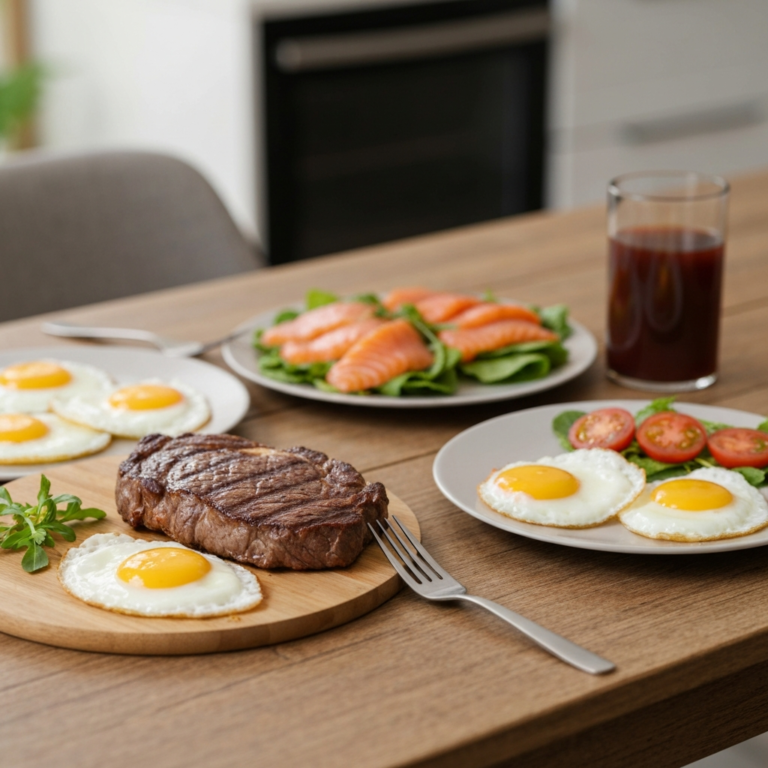
Post-Sleep Protein: Your body is in a catabolic (breakdown) state when you wake up. The first meal of the day should be a massive protein hit to immediately switch your body into an anabolic (building) state. This is non-negotiable. Skip the toast and grab the eggs, Greek yogurt, or a protein shake. This sets the metabolic tone for the entire day.
Tactic 3: Don’t Fear the Fat (The Satiety Signal)
In the 90s, we were taught to fear fat. Now, we know better. For a meal to be truly functional, it needs to be satisfying, and that means including healthy fats.
Fats (like those from avocados, nuts, seeds, or olive oil) are crucial for hormone production and nutrient absorption. More importantly, they provide a powerful satiety signal that works synergistically with protein. A high-protein, low-fat meal often leaves you feeling “empty” because the psychological and hormonal signals of fullness haven’t been fully triggered.
The Functional Meal Formula I use:
- Protein: The anchor (aim for 40g+).
- Fiber: The regulator (from vegetables/legumes).
- Healthy Fat: The satiety signal (a thumb-sized portion).
This trifecta ensures you are not only nourished but genuinely satisfied, making adherence to a healthy eating pattern feel effortless. It’s a game-changer, FYI. If your schedule feels like a constant fire drill, these high-protein recipes for busy professionals make the protein-first rule realistic on real-life days.
Functional meal prep that doesn’t fall apart by Day 3
If you want adherence to feel effortless, make the environment win. Meal-prep containers help you execute the protein-fiber-fat trifecta on autopilot. Pick durable glass meal prep containers
Glass tends to reheat better, doesn’t hold odors, and makes “future you” way more likely to follow through.

Final Takeaway: The Function is the Future
If you take one thing away from this deep dive, let it be this: Stop eating for calories and start eating for function. The benefits of high-protein functional meals are not just theoretical; they are a direct, measurable upgrade to your daily life—better energy, easier weight management, and sharper focus.
The key insider takeaway is that functional eating is about minimizing metabolic chaos. It’s about controlling the variables—blood sugar, hunger hormones, and energy expenditure—so that your body can operate at its peak efficiency. You don’t need to be a nutritionist to do this; you just need to prioritize protein and fiber at every single meal.
So, ditch the diet mentality. Start viewing your plate as a powerful tool. Go build yourself a truly functional meal right now. Your 3 PM self will thank you. 😉
Disclaimer: I am an SEO strategist, not a doctor. Always consult with a healthcare professional before making significant changes to your diet.
Products / Tools / Resources:
- A simple food scale to dial in protein portions without guesswork.
- Glass meal-prep containers so your functional meals stay “grab-and-go” instead of “guess-and-crash.”
- A leak-proof shaker bottle for busy-day protein coverage when a full meal isn’t realistic.
- Casein protein options for pre-sleep recovery support when you want slow-release amino acids overnight.
As an Amazon Associate, I earn from qualifying purchases.