
Longevity-Focused Meals: What to Eat Daily
Here’s the truth: most people chasing longevity-focused meals aren’t losing because they “lack discipline.” They’re losing because their daily food system is chaos. Fast forward to week three of “clean eating,” and they’re back to snack bars, takeout, and regret.
The problem is you don’t need more nutrition trivia. You need a simple daily blueprint you can repeat on autopilot—one that keeps blood sugar steady, hits protein, drives fiber up, and pushes ultra-processed food out of the driver’s seat.
Table of Contents
- The daily blueprint for longevity-focused meals
- Protein: the non-negotiable you’re probably under-eating
- Plants + fiber: the silent longevity lever
- Fats that help (and fats that quietly wreck you)
- Timing and consistency: build a system, not a mood
- What to eat daily: a realistic one-day template
- Common “healthy” pitfalls that age you faster
- Frequently Asked Questions
- Bottom line
The daily blueprint for longevity-focused meals
Featured snippet answer (daily eating plan): Build longevity-focused meals by eating mostly minimally processed foods: a protein anchor (fish/beans/eggs/yogurt), 2–4 cups of colorful plants, a high-fiber carb (beans/oats/whole grains/potatoes), and mostly unsaturated fats (olive oil/nuts). Limit added sugar and saturated fat daily.
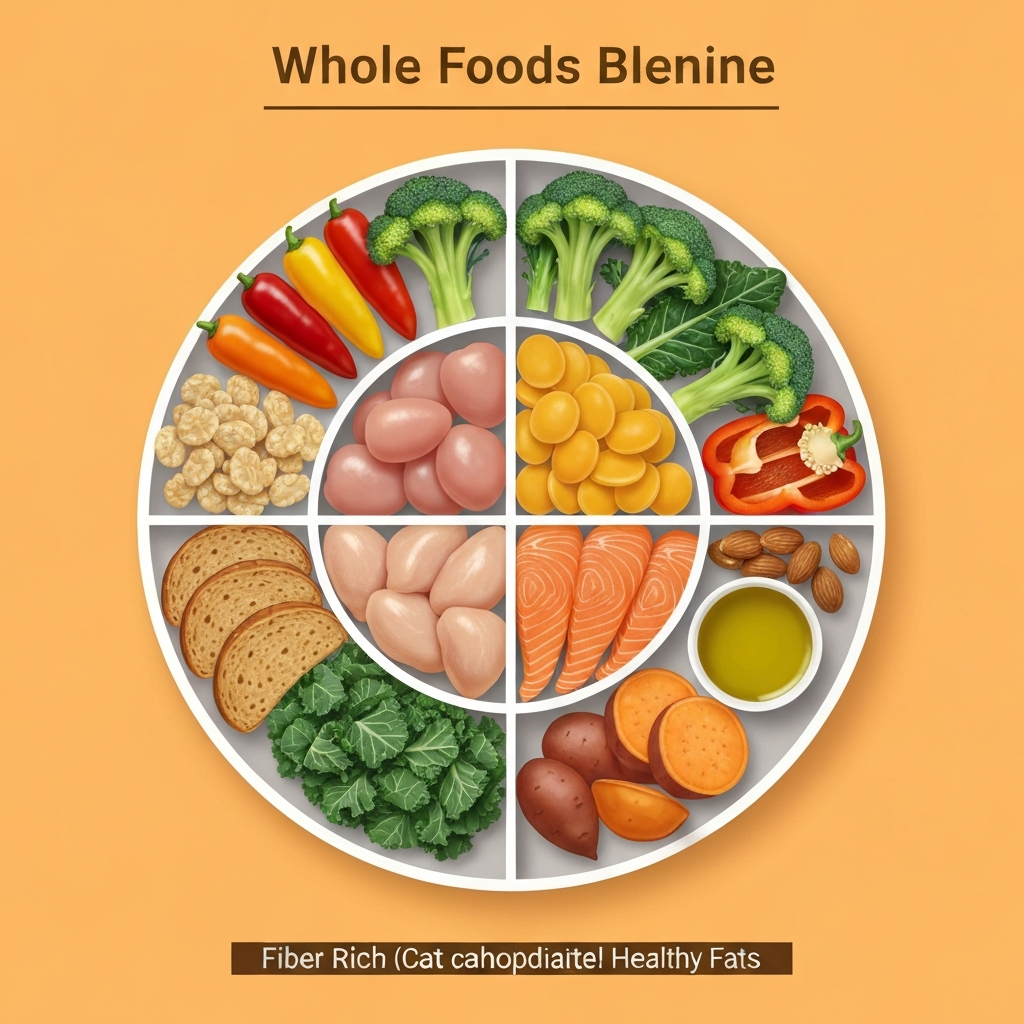
Stop hunting for a magic ingredient. Start building a repeatable plate.
Here’s the blueprint I’ve seen work for real humans with jobs, families, and a calendar that hates them:
- Protein anchor: every meal gets a clear protein source.
- Plant volume: half the plate is vegetables and/or fruit (yes, fruit counts).
- Fiber-forward carbs: beans, lentils, oats, whole grains, potatoes with skin.
- Smart fats: olive oil, nuts, seeds, avocado, fatty fish.
- Ultra-processed “extras” capped: you don’t “ban” them—you shrink them.
Want the longer strategy version? Use this pillar-style guide as your reference: lifestyle nutrition and longevity-focused meals fundamentals. It’s the “system,” not the hype.
Bottom line: if your “healthy meal” doesn’t have protein and fiber, it’s just a snack wearing a suit.
Also, the government guidelines aren’t perfect, but they nail two key limits most people ignore: keep added sugars and saturated fat low. The U.S. Dietary Guidelines emphasize staying under 10% of calories for each. That’s not “diet culture.” That’s basic risk management. Source: DietaryGuidelines.gov
Protein: the non-negotiable you’re probably under-eating
People love to argue about carbs vs fat because it’s entertaining. Protein is boring, so they ignore it. Then they wonder why they’re hungry 90 minutes after lunch.
Protein does three jobs that matter for longevity-focused meals:
- Protects lean mass as you age (muscle is your metabolic engine).
- Stabilizes appetite so you don’t “accidentally” snack your way into chaos.
- Improves meal quality because it forces structure (a meal with an anchor looks different).
Practical target: aim for a protein serving at every meal. For many adults, 25–40g per meal works well depending on size and activity. Don’t overthink perfection. Build repeatability.
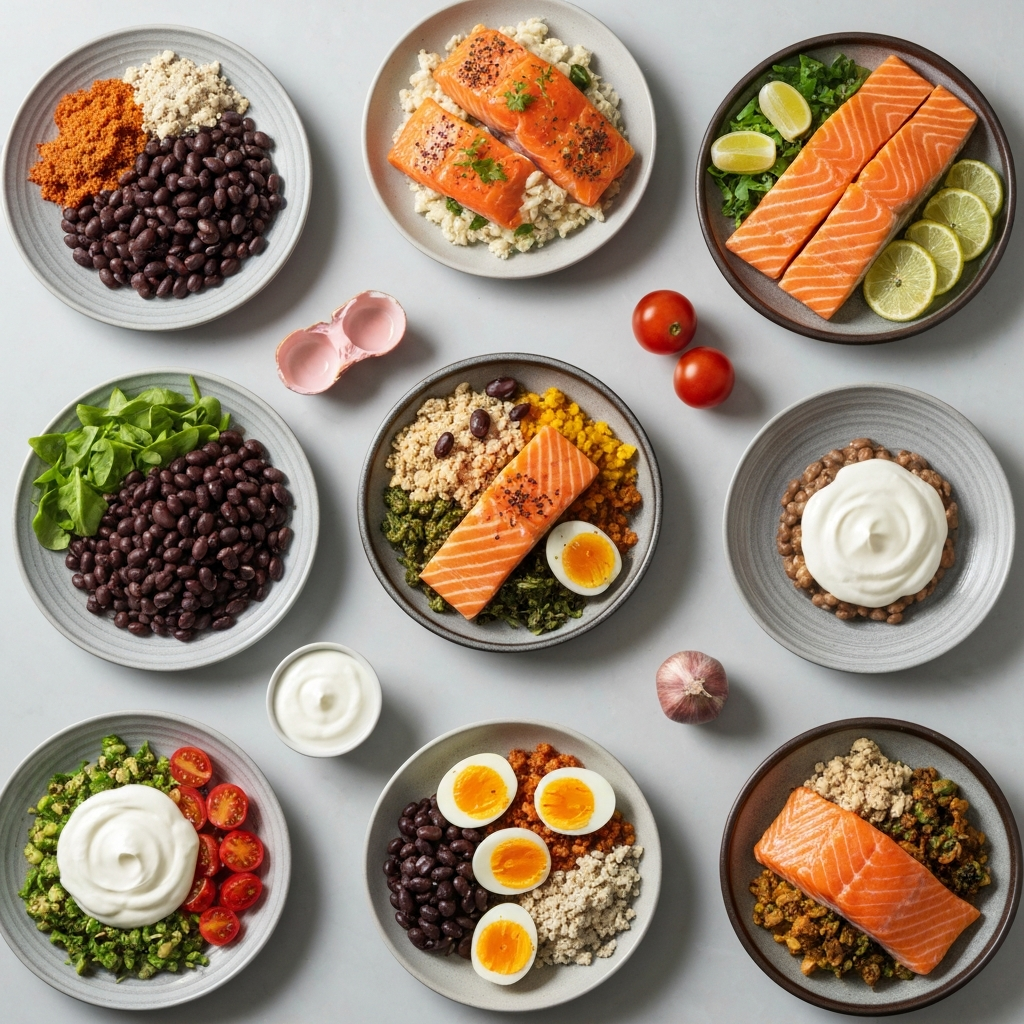
Best “daily driver” proteins:
- Fish (especially fatty fish like salmon, sardines)
- Legumes (lentils, chickpeas, black beans)
- Eggs (easy, cheap, adaptable)
- Greek yogurt / skyr (high protein, pairs with fruit/nuts)
- Lean meats (if you eat them, keep portions sane)
Hot take: most protein bars are just dessert with a lab coat. If you need convenience, fine. But don’t call it a health plan.
Plants + fiber: the silent longevity lever
If you want one metric that predicts whether someone’s meals support long-term health, I don’t start with calories. I start with fiber.
The problem is fiber intake usually collapses when people “eat healthy” by removing foods instead of adding the right ones. They cut carbs, then wonder why digestion, energy, and cravings go off the rails.
Fiber does a lot: helps satiety, supports gut microbes, and improves glycemic control. And yes, guidelines exist for a reason. The Dietary Guidelines use a practical rule: about 14 grams of fiber per 1,000 calories. Source: DietaryGuidelines.gov resources
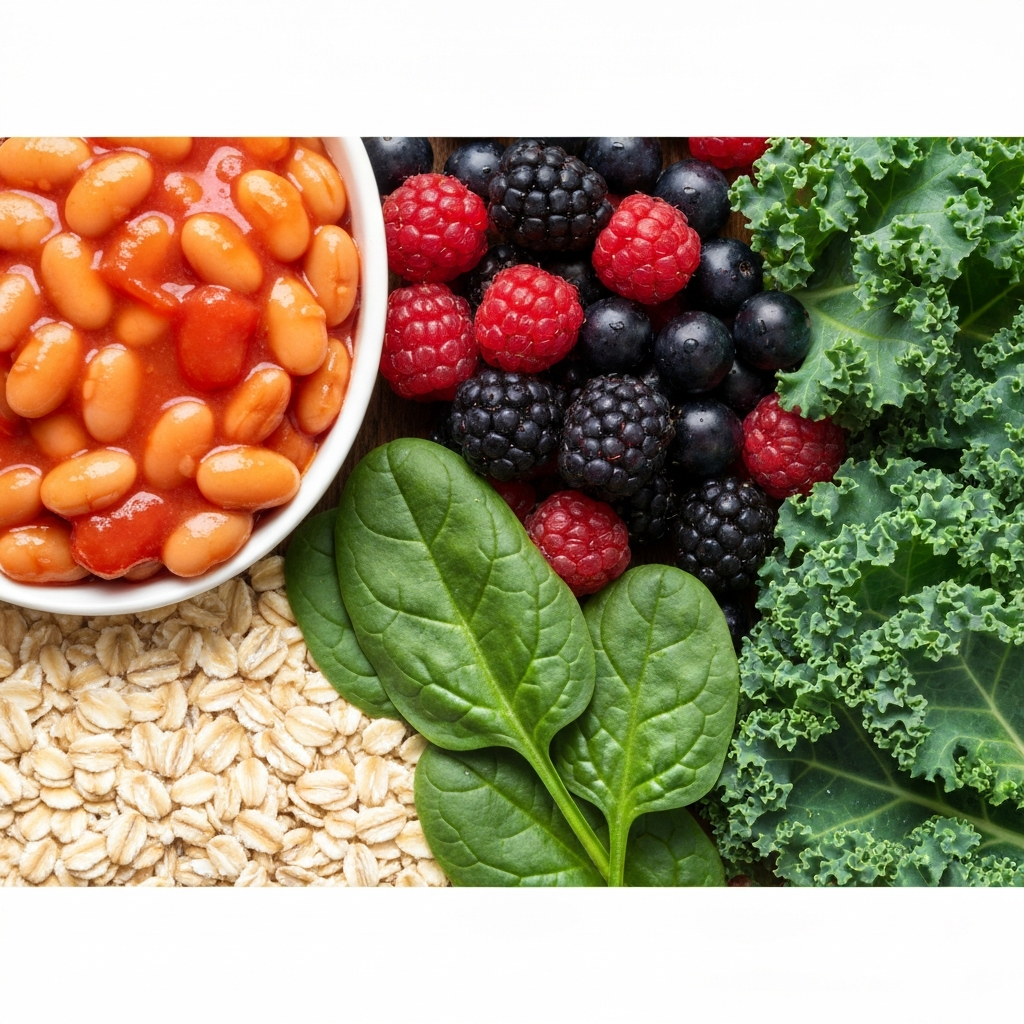
Daily fiber builders (easy mode):
- Beans/lentils (the MVP—cheap, versatile, absurdly effective)
- Oats (especially if you add chia/flax)
- Berries (high fiber, low drama)
- Crucifers (broccoli, cabbage, Brussels sprouts)
- Seeds (chia, flax, pumpkin seeds)
And don’t outsource your plant intake to a green powder. Use real food. Powders are for emergencies, not daily strategy.
If you want the “why this works” angle—especially around inflammation—read this next: anti-inflammatory meals for longevity. It ties the food choices to the real-world outcomes people care about.
Fats that help (and fats that quietly wreck you)
Fat isn’t the villain. The type and the context matter.
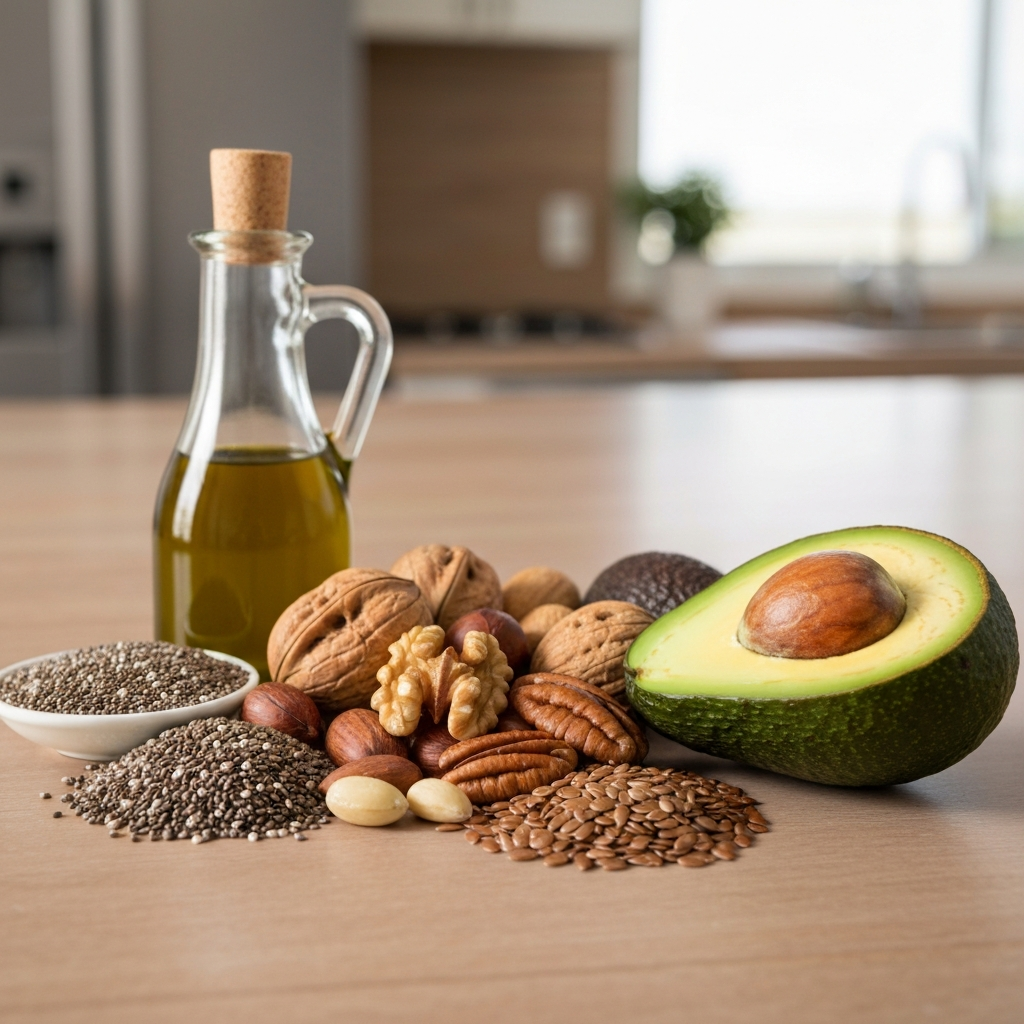
Best daily fats for longevity-focused meals:
- Extra virgin olive oil as your default cooking/finishing fat
- Nuts and seeds (small serving, big payoff)
- Avocado (great in bowls and salads)
- Fatty fish (food-first omega-3 strategy)
Fats to keep on a short leash: heavy butter habits, frequent fried foods, and processed meats that show up like an uninvited guest at every meal.
Again, boring but real: the U.S. Dietary Guidelines recommend keeping saturated fat under 10% of daily calories. Source: DietaryGuidelines.gov
One more truth bomb: “keto snacks” can be ultra-processed junk with a different label. Marketing doesn’t change biology.
Timing and consistency: build a system, not a mood
People ask: “Should I do intermittent fasting?”
My answer: only if it helps you eat better—not if it makes you ravenous and reckless at night.
Consistency wins. Your body responds to what you do most days, not what you do on Mondays after a motivational video.
Simple timing strategy that doesn’t require a personality transplant:
- Protein at breakfast (or your first meal) to reduce snack hunting later.
- Two structured meals built from the template: protein + plants + fiber carbs + smart fats.
- One planned snack if needed (fruit + yogurt, nuts + fruit, hummus + veggies).
If you want a research-backed dietary pattern that consistently performs well, look at the Mediterranean-style pattern. Harvard’s nutrition faculty summarize the core foods and behaviors clearly. Source: Harvard T.H. Chan School of Public Health
What to eat daily: a realistic one-day template
This isn’t a “perfect day.” It’s a repeatable day. That’s the point.
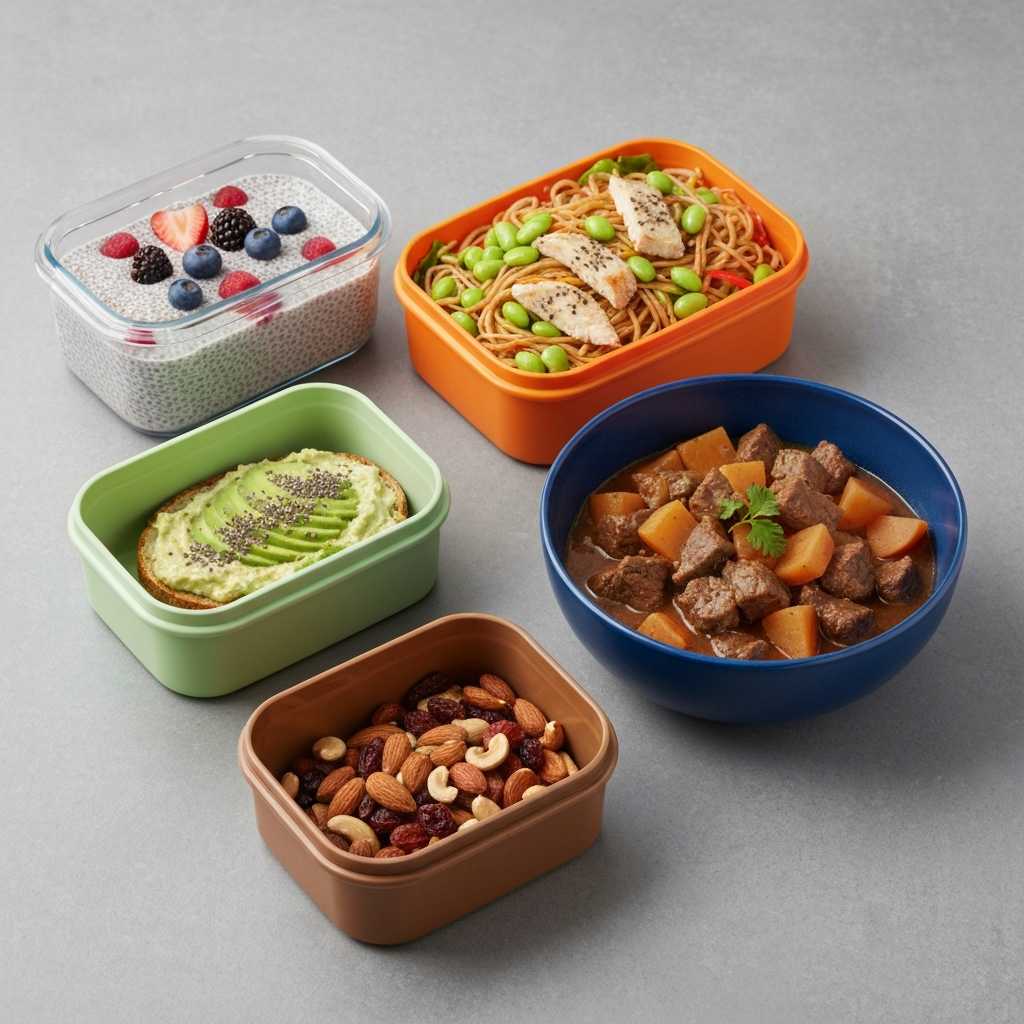
Breakfast (or first meal)
- Greek yogurt + berries + chia/flax + walnuts
- Optional: drizzle of honey (small), cinnamon, and a pinch of salt
Why it works: protein anchor + fiber + healthy fats, with minimal added sugar.
Lunch
- Big salad bowl: mixed greens + chickpeas or tuna/salmon + chopped veggies
- Fiber carb: quinoa or a side of beans
- Fat: olive oil + lemon dressing
Snack (if you actually need it)
- Apple or orange + a handful of nuts
- Or carrots + hummus
Dinner
- Protein: salmon (or tofu/tempeh)
- Plants: roasted broccoli + peppers/onions
- Fiber carb: potatoes with skin or lentils
- Finish: olive oil, herbs, and a squeeze of citrus
Notice what’s missing: “diet foods.” You’re eating real food, in a structure that makes overeating harder and under-nutrition unlikely.
Amazon-friendly tools to make this stupid-easy
Not mandatory, but if you want consistency, these tools remove friction (which is where most plans die).
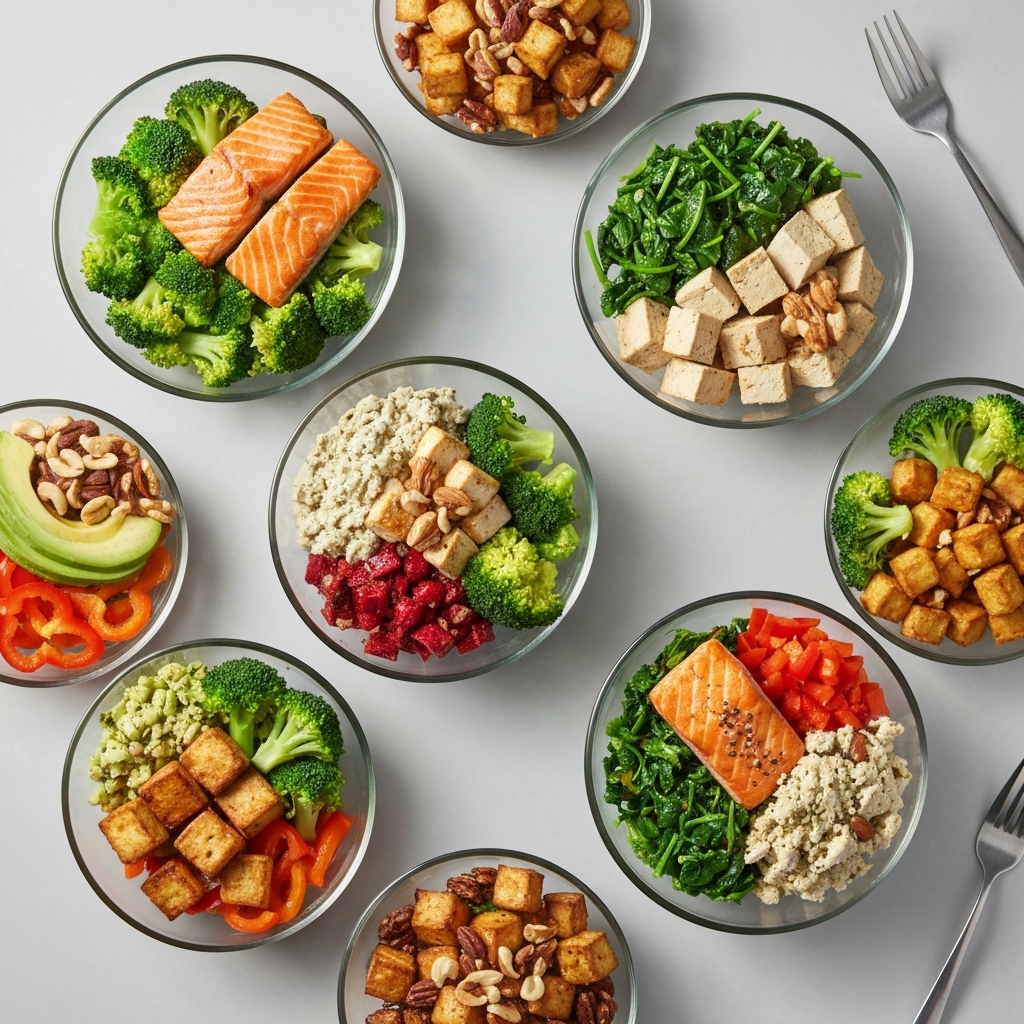
Glass Meal Prep Containers (leak-proof) — makes “grab and go” a real thing.
Digital Kitchen Scale — portion accuracy without guesswork or drama.
Extra Virgin Olive Oil (cold-pressed) — the default fat for daily cooking and dressing.
Chia Seeds — a fast fiber/protein booster for yogurt, oats, and smoothies.
Common “healthy” pitfalls that age you faster
Let’s call out the stuff that looks healthy on Instagram but fails in real life.
- Liquid calories as a habit: juices, sweet coffees, and “healthy” smoothies that drink like dessert.
- Protein avoidance: meals that are basically carbs + fat, then you snack all afternoon.
- Fiber neglect: you “eat clean” but your gut hates you.
- Ultra-processed swap culture: chips become “protein chips,” candy becomes “keto candy.” Same problem, new font.
- All-or-nothing thinking: you mess up once, then you turn it into a weekend.
Here’s the truth: if your plan requires perfect behavior, it’s not a plan. It’s a fantasy.
Frequently Asked Questions
Do I need to eat “superfoods” every day for longevity?
No. You need a repeatable pattern: high fiber plants, adequate protein, mostly unsaturated fats, and minimal ultra-processed calories. “Superfoods” help, but consistency beats novelty.
How much protein should I aim for in longevity-focused meals?
Most adults do well with protein spread across meals—think 25–40g per meal depending on body size and activity. Prioritize quality sources (fish, legumes, eggs, yogurt, lean meats) over sugary protein snacks.
Are carbs bad for longevity?
Carbs aren’t the enemy—refined carbs are. Choose high-fiber carbs like beans, oats, quinoa, fruit, and potatoes with the skin. Pair them with protein and healthy fats to keep energy steady.
What’s the simplest daily meal pattern if I’m busy?
Use a 3-part template: protein + plants + smart fat. Repeat it at lunch and dinner, then keep breakfast simple (Greek yogurt + berries + nuts, or oats + chia + fruit).
Do I have to do intermittent fasting to get results?
No. Some people like time-restricted eating, but the big levers are food quality, total intake, fiber, protein, and sleep. If fasting makes you overeat later, it’s not a win.
Bottom line
Insider takeaway: Longevity isn’t built with occasional “perfect” meals. It’s built with a boringly consistent template—protein anchor, plant volume, fiber carbs, smart fats—executed most days with minimal ultra-processed noise.
Action step: pick two meals you eat most often and rebuild them using the template. Don’t redesign your whole life. Fix the repeat offenders.
And if you fall off? Cool. Get back on at the next meal. Your body doesn’t keep a spreadsheet. (Sadly, your calendar does.)
As an Amazon Associate, I earn from qualifying purchases.





One Comment