Clean Meal Prep for Weight Loss: 90-Min System
Here’s the truth: Clean Meal Prep for Weight Loss is not about becoming a culinary monk who eats dry chicken in silence. It’s about removing the daily “what do I eat?” chaos that keeps nuking your progress.
The problem is most “meal prep advice” comes from two types of people: fitness influencers who secretly hate food, and recipe bloggers who act like you have unlimited time, money, and dishwasher space.
You don’t.
You need a system that makes the healthy choice the lazy choice. Fast forward to next week: you open the fridge, grab a meal that actually tastes good, and you don’t end up in a drive-thru negotiating with your willpower like it’s a hostage situation.
Table of Contents
- The Clean Meal Prep System That Actually Cuts Weight
- Protein, Portions, and the Calorie Deficit Reality
- The 90-Minute Workflow (Repeatable, Not Heroic)
- Grocery List Templates That Prevent “Random Cart” Syndrome
- Flavor Without Sabotage: Sauces, Spices, and Swaps
- Common Fail Points (and the Fixes)
- Frequently Asked Questions
- Bottom Line: Your Insider Takeaway
The Clean Meal Prep System That Actually Cuts Weight
Clean Meal Prep for Weight Loss works when you pre-decide meals that hit protein, control portions, and reduce friction—then you execute them on autopilot. Keep recipes simple, repeat components, and use sauces/spices for variety. The goal isn’t perfection; it’s consistency that survives real life.
Let’s define “clean” the adult way: not a moral badge, not an ingredient purity contest. “Clean” means minimally processed, protein-forward, fiber-friendly meals you can eat repeatedly without feeling punished.
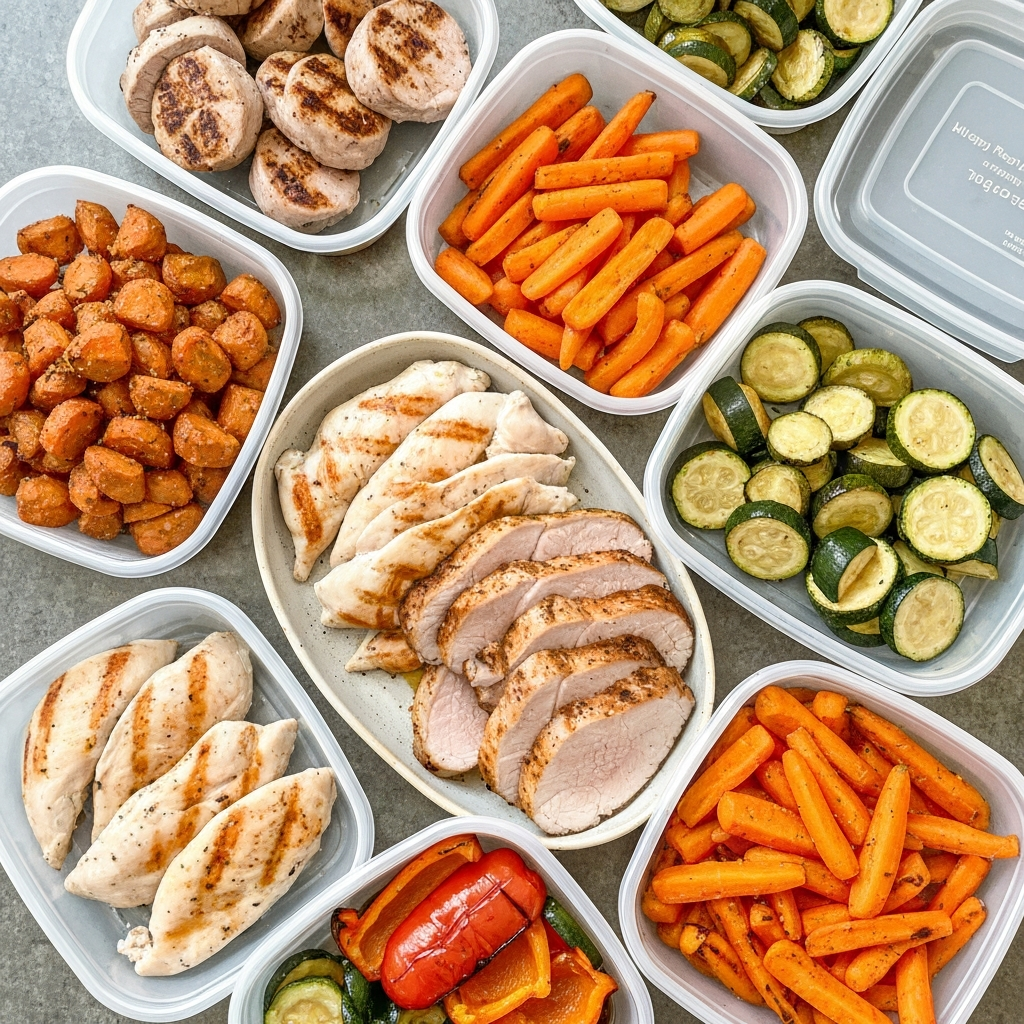
And “meal prep” isn’t “cook 21 meals.” That’s how you burn out. Proper meal prep is prepping components so you can assemble meals fast:
- Protein base: chicken thighs, turkey, lean beef, eggs, Greek yogurt, tofu, lentils
- Volume: roasted/frozen veggies, salad kits, slaws, soups
- Smart carbs: potatoes, rice, oats, beans, fruit (portion-controlled)
- Fats: olive oil, avocado, nuts, cheese (measured, not “free-poured”)
If you want a practical framework for time-boxing this, use this internal guide as your backbone: the 90-minute clean meal prep method.
Protein, Portions, and the Calorie Deficit Reality
Bottom line: weight loss requires a calorie deficit. No deficit, no fat loss. Yes, even if the food is “clean.” (I know. Annoying.)
But here’s the part most people miss: you don’t need a spreadsheet lifestyle to create a deficit. You need a structure that naturally limits calories while keeping you full.
Why protein is your cheat code (the legal kind)
Protein tends to increase satiety, preserves lean mass during weight loss, and makes meals feel “complete.” A widely used evidence-based target range is around 1.6–2.2 g/kg/day for many active adults (individual needs vary). You can read a deep overview on protein needs from credible sources like Wikipedia’s protein overview and research summaries via institutions like Harvard T.H. Chan’s Nutrition Source.
If you hate math, use this instead:
- 25–40g protein per meal (most people land in a good range with 3–4 meals/day)
- Half your plate veggies (fiber + volume = less hunger drama)
- Carbs and fats measured (not guessed with vibes)
Portioning that doesn’t feel like dieting
The simplest portion rule that works: pre-portion your “calorie dense” stuff and go generous on veggies.
- Cook rice/potatoes in bulk, portion into containers (don’t free-scoop at mealtime)
- Measure oils, nut butters, cheese once—then stop “oops-ing” extra calories
- Build meals with at least 2 cups of veggies where possible
For official food-safety and storage guidelines that keep your prep from turning into a science experiment, use established guidance like the USDA FSIS food safety resources.
The 90-Minute Workflow (Repeatable, Not Heroic)
The problem is people treat meal prep like a weekend cooking show. That’s cute until you’re scrubbing pans at 10 PM and questioning your life choices.
Here’s a workflow that fits real schedules. One grocery run. One prep block. Minimal dishes.
Step 1: Pick a “menu” with shared ingredients
Choose 2 proteins, 2 veggie formats, 1–2 carbs, and 2 sauces. That’s it.
- Protein A: sheet-pan chicken thighs
- Protein B: turkey chili (or tofu stir-fry if plant-based)
- Veg: roasted broccoli + bagged salad
- Carb: rice or potatoes
- Sauces: salsa verde + Greek yogurt herb sauce
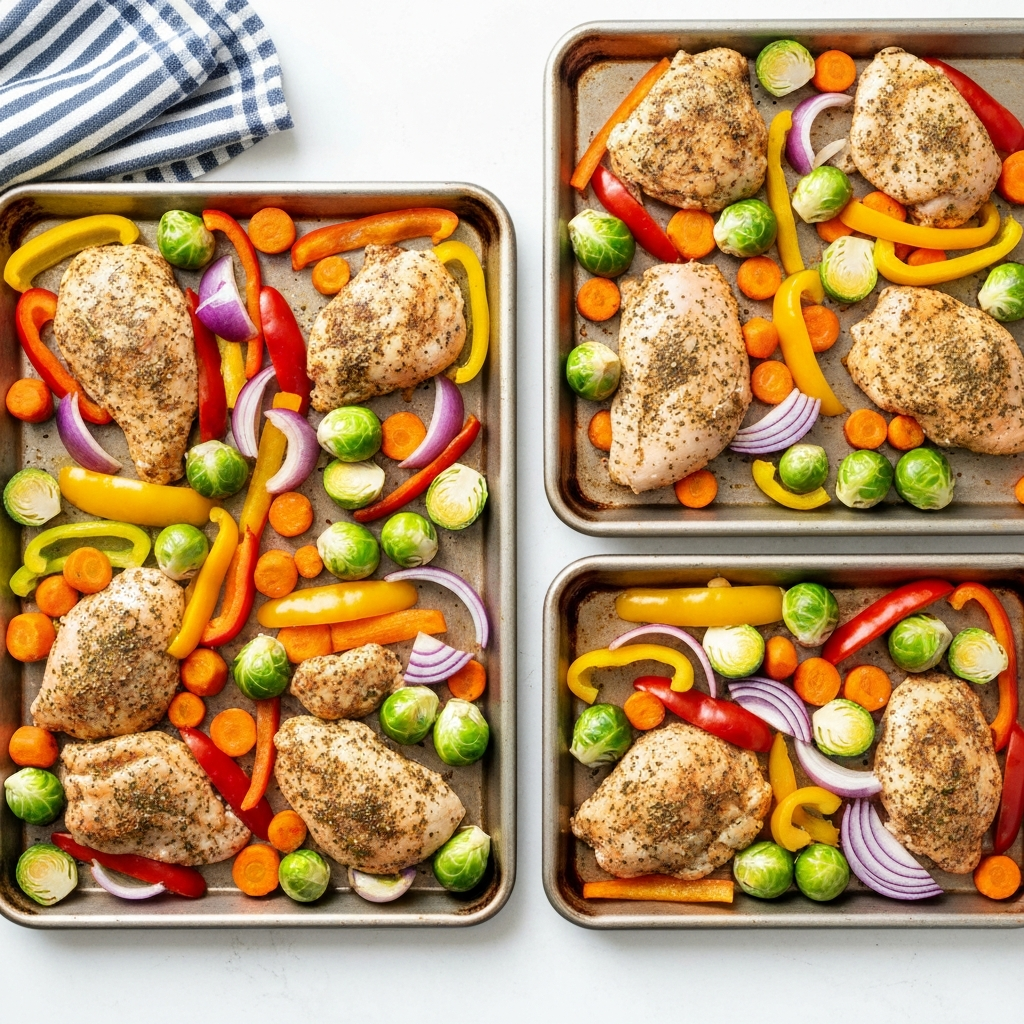
Step 2: Batch cook in parallel (like an engineer, not a martyr)
- Preheat oven. Start rice/potatoes.
- Load sheet pans (protein + veg). Roast.
- Simmer chili/soup while the oven runs.
- Assemble sauces while things cook.
Want the full timing breakdown and a clean workflow checklist? Use this internal reference: what clean and simple meal prep actually is (and what it isn’t).
Step 3: Portion with intent
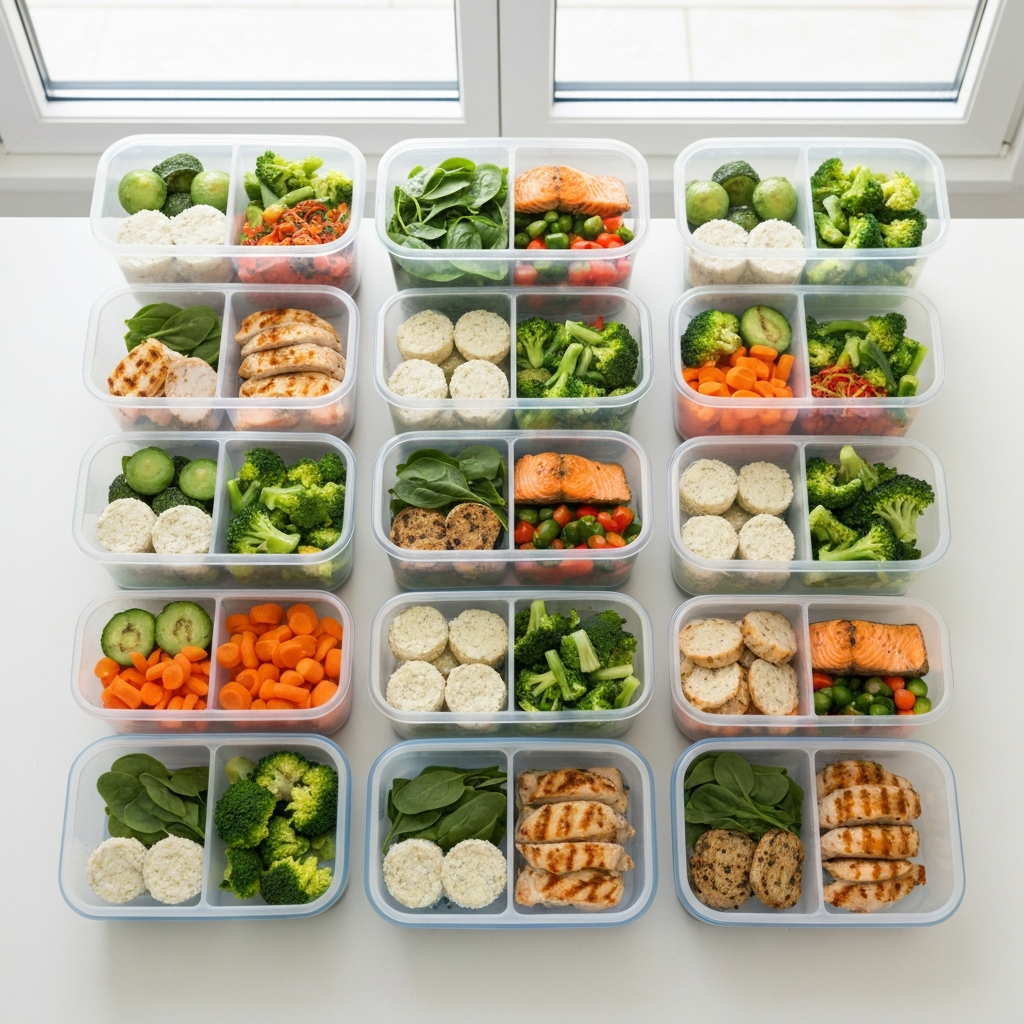
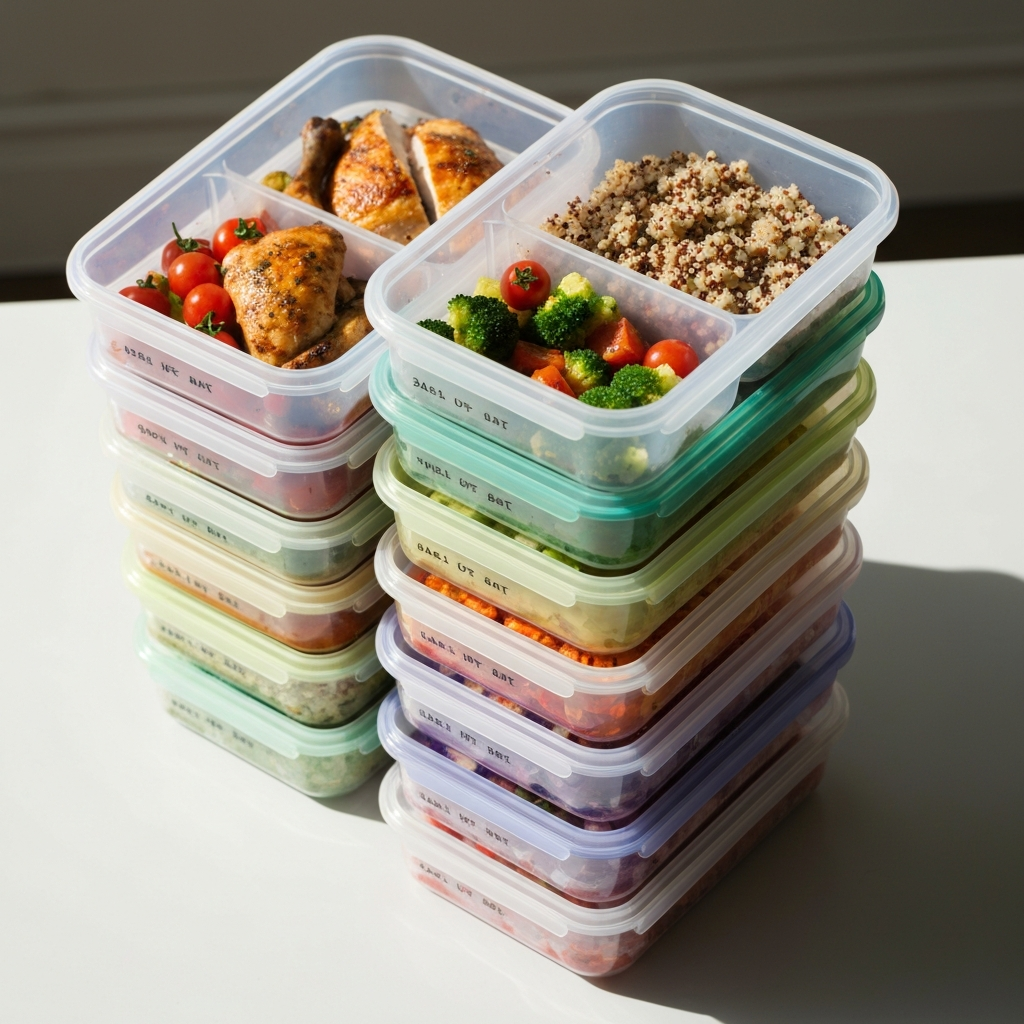
Don’t just dump food into containers like you’re feeding a dragon. Build 8–12 “units” you can deploy all week:
- Lunch boxes: protein + veg + measured carb
- Dinner bases: protein + veg (carb optional depending on day)
- Emergency snacks: Greek yogurt, fruit, protein shakes, nuts (pre-portioned)
Grocery List Templates That Prevent “Random Cart” Syndrome
Here’s the truth: most people don’t fail at meal prep in the kitchen. They fail in the grocery store.
If you buy random healthy ingredients without a plan, you end up with a fridge full of good intentions and nothing that becomes a meal.
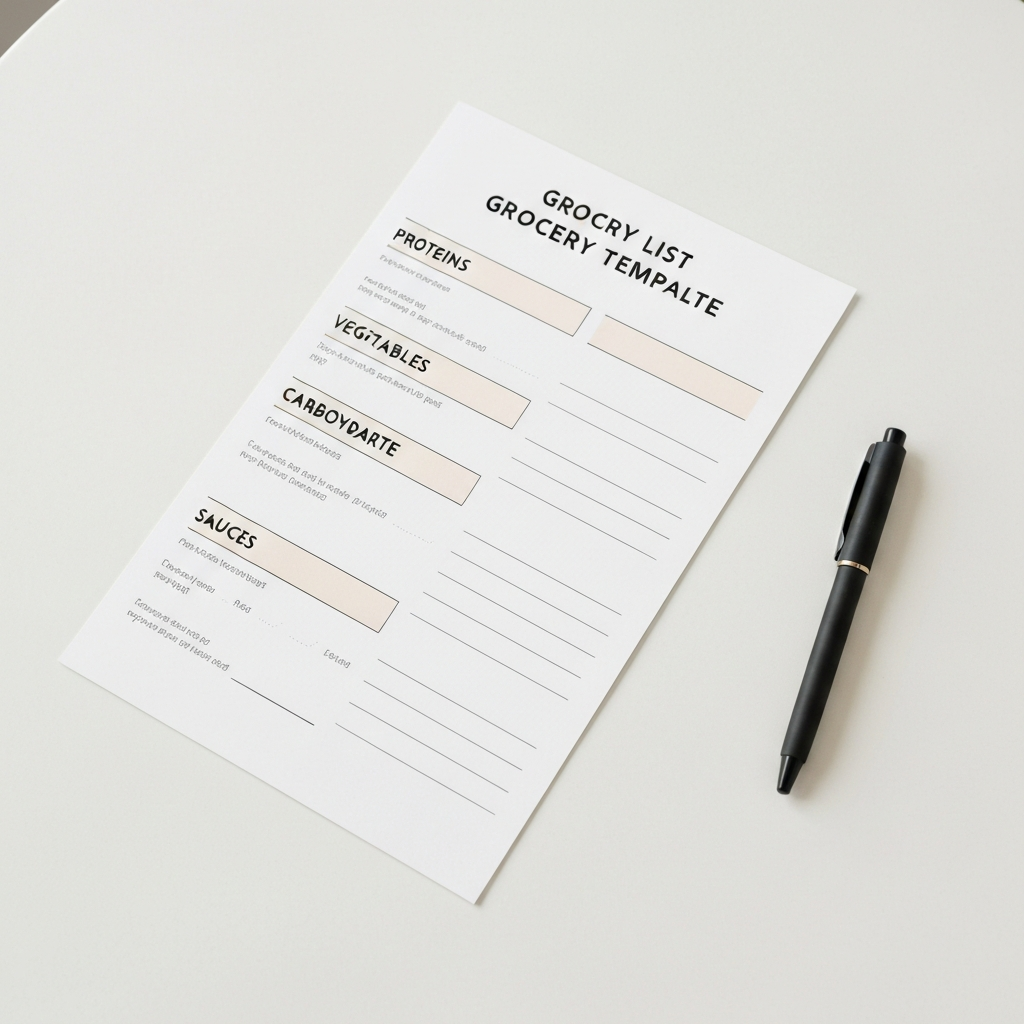
Use these 3 templates (pick one)
Template A: The Balanced Bowl Week
- Protein: chicken thighs, canned tuna/salmon
- Veg: frozen mixed veg, spinach, bell peppers
- Carb: rice, potatoes, oats
- Fat: olive oil, avocado
- Flavor: salsa, hot sauce, lemons, garlic, cumin
Template B: Low-Carb, High-Protein Week
- Protein: eggs, Greek yogurt, turkey mince, tofu
- Veg: zucchini, cauliflower rice, salad kits
- Fat: olive oil, feta, nuts (measured)
- Flavor: vinegar, mustard, herbs, chili flakes
Template C: Budget “Clean” Week
- Protein: beans/lentils, chicken legs, eggs
- Veg: frozen broccoli, carrots, cabbage
- Carb: oats, rice
- Flavor: soy sauce, vinegar, curry powder
Also: stop buying “diet foods” that taste like packing peanuts. You’re not a robot. If you want guidance on building meals that feel normal, lean on structured approaches like the plate method used in many public health resources (for example, CDC healthy eating guidance).
Flavor Without Sabotage: Sauces, Spices, and Swaps
Most clean meal prep tastes boring because people prep “final meals” instead of flexible components.
Your fix: make neutral bases, then change flavor at serving time.
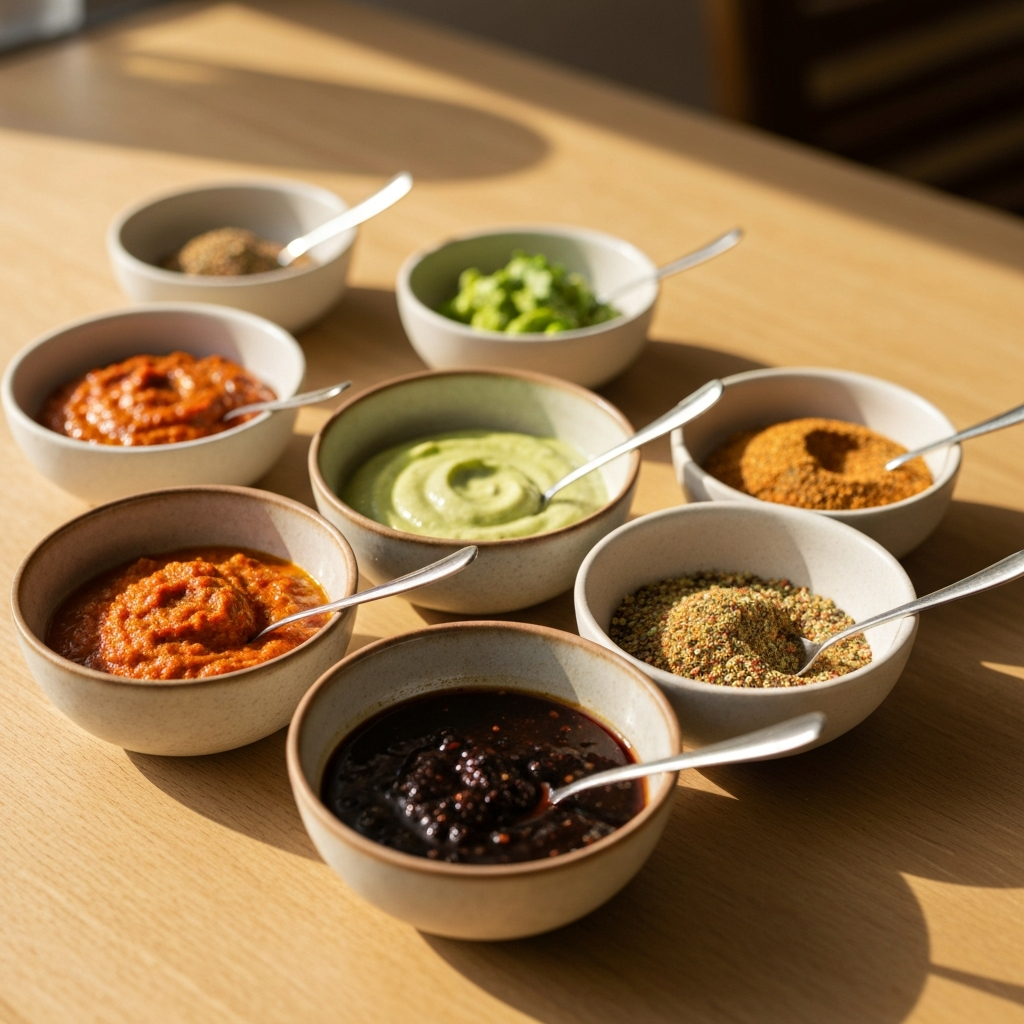
The “Flavor Stack” that keeps calories sane
- Acid: lemon, lime, vinegar (wakes up food instantly)
- Heat: chili flakes, hot sauce, harissa
- Fresh: herbs, scallions, cilantro
- Creamy: Greek yogurt sauces (high protein, lower calories than mayo-based)
- Umami: soy sauce, miso, parmesan (measured)
Swaps that matter:
- Use Greek yogurt instead of heavy mayo-based sauces.
- Use air fryer / sheet pan to make veggies taste like actual food.
- Use chicken thighs instead of chicken breast if breast makes you sad. Thighs taste better and are more forgiving. Just portion them intelligently.
Common Fail Points (and the Fixes)
I’ve watched people fail at this for years. Not because they’re lazy. Because their system is fragile.
Fail Point #1: Prepping too much variety
Fix: cap it at 2–3 core meals. Variety comes from sauces, toppings, and swapping carb portions by day.
Fail Point #2: “Clean” turning into “low-calorie misery”
Fix: add volume (veggies, soups, salads) and keep protein high. Starving yourself is not a personality trait.
Fail Point #3: Portion creep
Fix: measure oils and calorie-dense add-ons once. After that, let containers do the policing.
Fail Point #4: Food safety roulette
Fix: keep fridge meals in a 3–4 day rotation and freeze the rest. Follow reputable guidance like FoodSafety.gov for storage and reheating basics.
If you want a simple reference you can revisit anytime, bookmark the clean meal prep in 90 minutes guide and treat it like your weekly operating manual.
Frequently Asked Questions
Do I have to count calories for clean meal prep to work?
No. Build the structure first: protein-forward meals, measured calorie-dense add-ons, and pre-portioned carbs. Tracking becomes useful later if progress stalls or you want faster optimization.
What’s the best protein target for weight loss meal prep?
A common range used in research and coaching is roughly 1.6–2.2 g/kg/day (individual needs vary). Practical version: 25–40g protein per meal and don’t “forget” protein at breakfast.
How do I keep meal prep from tasting boring by day three?
Prep bases, not identical meals. Change sauces and toppings at serving time. Acid + heat + fresh herbs can turn the same chicken bowl into three different meals.
Is clean meal prep expensive?
Only if you buy fancy “clean” branded stuff. Staples win. Frozen veg, beans, oats, eggs, and cheaper cuts of meat can be both clean and budget-friendly.
How long can prepped meals stay safe in the fridge?
Many cooked foods are generally best within 3–4 days refrigerated. For longer, freeze portions and rotate. Use reputable guidance (like FoodSafety.gov/USDA resources) and reheat thoroughly.
Bottom Line: Your Insider Takeaway
Here’s the truth: Clean Meal Prep for Weight Loss isn’t a recipe problem. It’s a systems problem.
Pick a simple menu. Cook in parallel. Portion the calorie-dense stuff on purpose. Use sauces and spices so you don’t rage-quit on Wednesday. Repeat weekly like you’re running a tight operation—because you are.
And if you mess up? Cool. You’re human. Reset at the next meal, not “next Monday.”
Now go prep like an adult. Your future self (the one not eating crackers over the sink) will thank you.
As an Amazon Associate, I earn from qualifying purchases.