
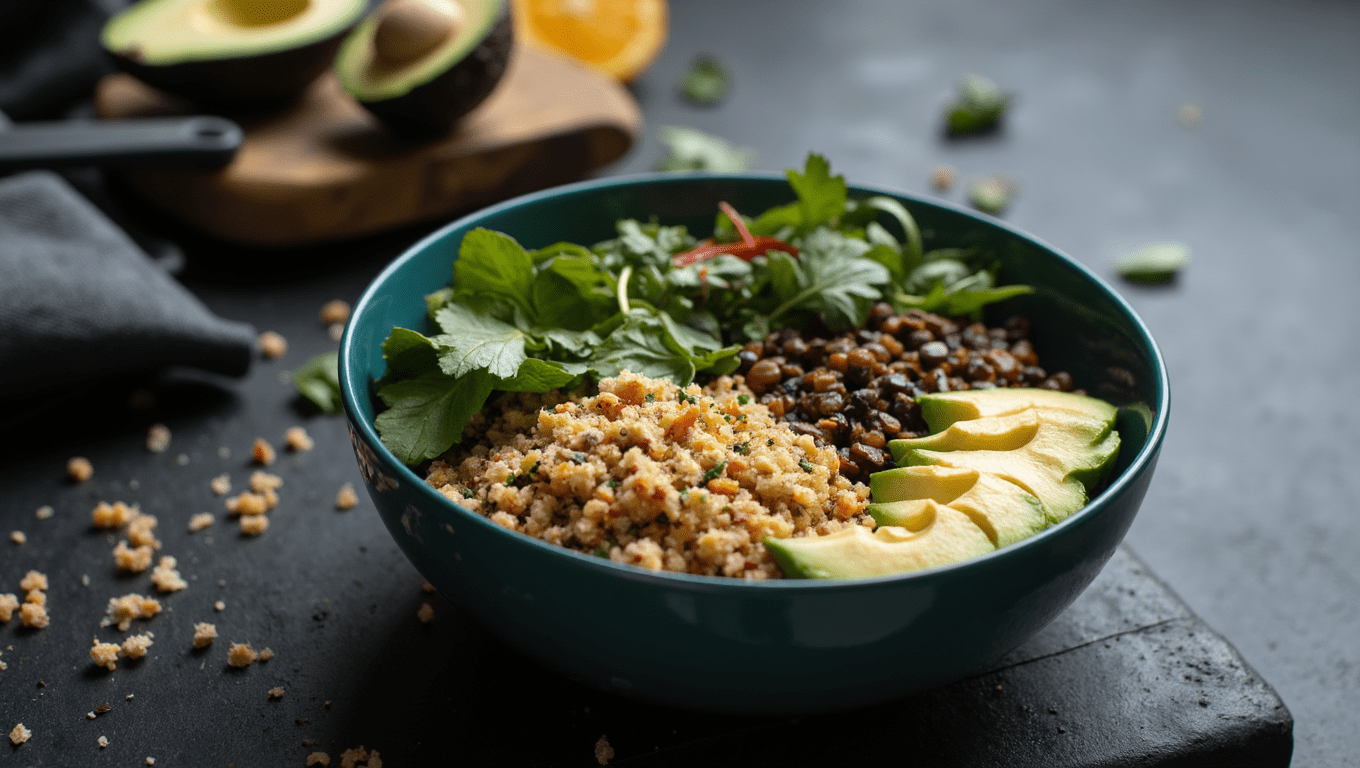
🌱 Plant-Based Protein Bowls That Beat Meat … and Boost Recovery
Table of Contents
Why Plant-Based Protein Bowls Are Taking Over the Gym Scene
Let’s be honest — most people still think “real protein” comes from chicken, steak, or whey powder that smells like a chemistry set. But here’s the plot twist: plant-based protein bowls can go toe-to-toe with meat when it comes to recovery, muscle repair, and staying lean.
And they don’t just work — they taste amazing, too.
If you’ve ever rolled your eyes at “rabbit food,” it’s time for a rebrand.
The Science: Why Plants Pack More Than You Think
Here’s the deal: your muscles don’t care where protein comes from — they care about amino acids, digestibility, and nutrient synergy.
🧠 The Recovery Equation
When you train hard, your body needs:
- Protein to repair microtears in muscles
- Carbs to refill glycogen stores
- Antioxidants to reduce inflammation
Plant-based bowls hit all three in one go. Think quinoa + black beans + roasted veggies — you’re covering all bases without the grease or heaviness.
🌾 Complete Proteins, Simplified
Forget the myth that plants are “incomplete.” Combine any of these and you’re golden:
- Grains + legumes (rice + beans, quinoa + lentils)
- Nuts + seeds (almonds + chia, tahini + pumpkin seeds)
- Soy + anything (tofu, tempeh, edamame = full profile)
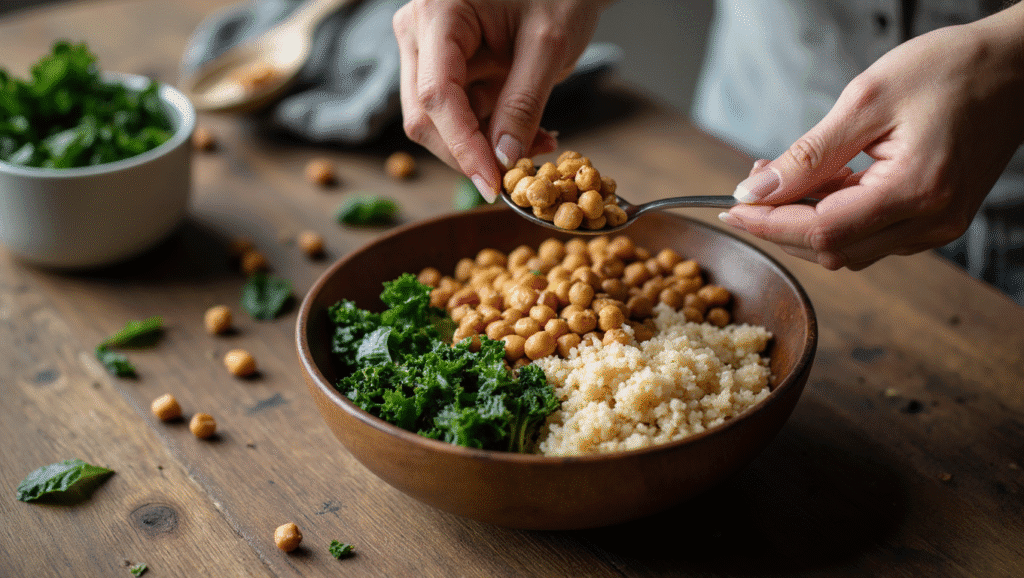
Build-the-Perfect Plant-Based Protein Bowl
You can think of a protein bowl as a recovery system in a bowl — everything your body craves after a sweat session.
🥣 Step 1: Pick a Base
Keep it complex and fiber-rich to sustain energy.
- Quinoa (8g protein per cup)
- Farro
- Brown rice
- Sweet potato chunks
🌿 Step 2: Add Protein Power
Mix and match for a complete amino acid profile.
- Lentils
- Chickpeas
- Edamame
- Tempeh or tofu
🥦 Step 3: Load the Greens
They don’t just add color — they reduce oxidative stress post-workout.
- Spinach, kale, or arugula
- Roasted Brussels sprouts or broccoli
🥑 Step 4: Healthy Fats & Flavor Boosters
These help absorb fat-soluble vitamins and balance hormones.
- Avocado
- Tahini dressing
- Olive oil drizzle
- Nuts and seeds for crunch
🌶 Step 5: Sauce It Up
The sauce makes or breaks it. A few that never miss:
- Lemon-tahini
- Spicy peanut-ginger
- Miso-sesame
Top 5 Plant-Based Protein Bowls That Rival Meat
Here’s where it gets real — five bowls that could convert even your most skeptical gym buddy.
1️⃣ The Mediterranean Muscle Bowl
What’s in it: Quinoa, chickpeas, roasted peppers, olives, and tahini dressing.
Why it works: High in lysine and arginine — both critical for muscle repair and blood flow.
2️⃣ Thai Peanut Power Bowl
What’s in it: Brown rice, tofu, shredded carrots, edamame, and spicy peanut sauce.
Recovery factor: Combines complete protein with antioxidants from carrots and ginger.
3️⃣ Southwest Lentil & Corn Bowl
What’s in it: Lentils, roasted corn, avocado, black beans, and cilantro-lime dressing.
Bonus: Fiber keeps you full longer than a chicken burrito ever could.
4️⃣ Green Goddess Protein Bowl
What’s in it: Farro, kale, roasted broccoli, pumpkin seeds, and lemon-tahini dressing.
Recovery edge: Magnesium and zinc-rich — great for reducing muscle cramps.
5️⃣ Tofu Teriyaki Strength Bowl
What’s in it: Tofu, jasmine rice, sautéed bok choy, sesame seeds, and teriyaki glaze.
Why it beats meat: Plant-based soy protein contains all nine essential amino acids.
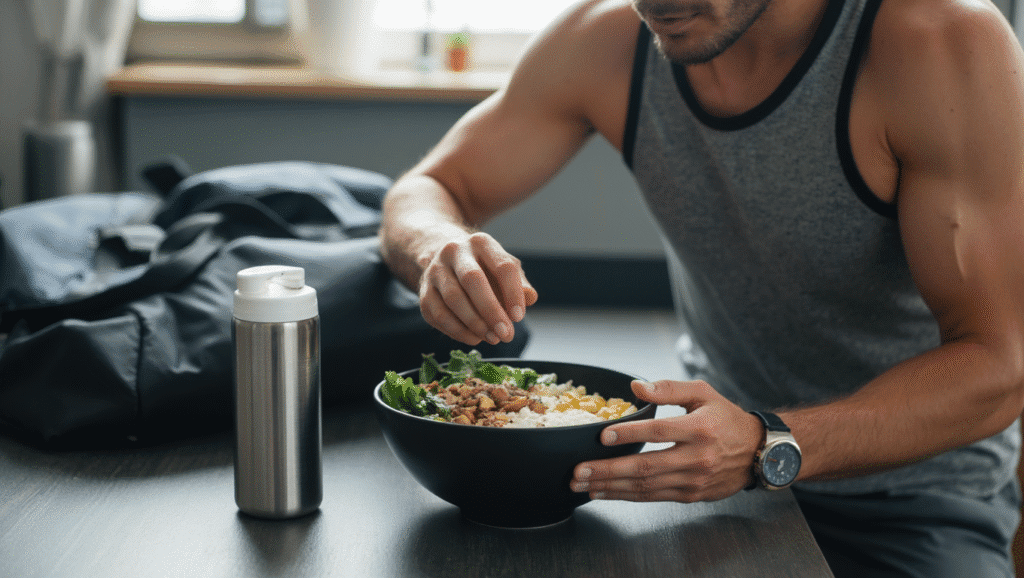
When to Eat These Bowls for Max Recovery
⏰ Post-Workout Window
Eat your protein bowl within 30–60 minutes after training — that’s when your muscles are most responsive.
☀️ Morning Fuel
Swap eggs for a quinoa breakfast bowl with almond butter, banana, and hemp seeds. It’s a complete plant-based meal that keeps you full till lunch.
🌙 Dinner Recovery
Evening bowls are perfect to reduce inflammation and improve sleep quality. Add turmeric or ginger for extra anti-inflammatory power.
The Performance Edge — What Studies Say
Recent sports nutrition research shows athletes on plant-based diets can maintain or even improve muscle recovery rates compared to omnivores.
Key findings:
- Equal strength gains in plant vs. animal protein groups
- Lower inflammation markers post-training
- Improved gut health = better nutrient absorption
Translation? Your post-workout burrito bowl doesn’t need steak to build muscle — plants do it cleaner.
Common Myths — Debunked
❌ “You can’t build muscle without meat.”
Plenty of elite athletes (from NFL players to Olympians) are fully plant-based — and jacked. The key is total protein intake, not the source.
❌ “Plant protein doesn’t digest well.”
Tempeh, lentils, and quinoa score high on the PDCAAS (protein digestibility rating). Translation: your body uses them efficiently.
❌ “It’s too complicated.”
Once you build a rotation of 3–4 go-to bowls, meal prep becomes effortless. You’ll spend less time cooking than you did marinating chicken.
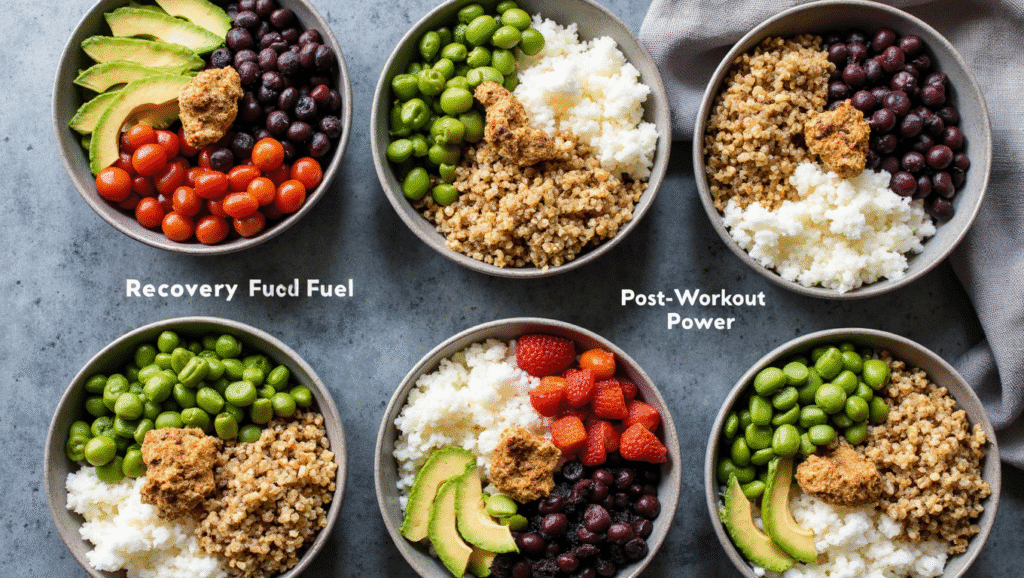
Meal Prep Hacks for Busy Weeks
If you’re juggling work, gym, and recovery, this section’s your cheat code.
💡 Batch Cook Like a Pro
Cook grains and legumes in bulk — they last 4–5 days in the fridge.
🧊 Portion & Freeze
Freeze single servings in glass containers. They reheat beautifully and maintain texture.
🥗 Prep Dressings Separately
Store sauces in small jars to avoid soggy bowls. Rotate flavors for variety.
Recovery Add-Ons That Boost Gains
🌰 Supercharge with Toppers
- Hemp seeds: Omega-3s and complete protein
- Nutritional yeast: B12 hit and cheesy flavor
- Beets: Natural nitric oxide for endurance
💧 Don’t Forget Hydration
Even mild dehydration can slow recovery. Add lemon or cucumber slices for taste.
The Payoff — How You’ll Feel
After a week of switching to plant-based protein bowls, most people report:
- Less bloating and inflammation
- More steady energy (no post-meat coma)
- Improved recovery times
- Better digestion and mood
Your body runs cleaner — and it shows in your lifts, skin, and sleep.
Quick FAQ
Q: Can I still use protein powder with these bowls?
Absolutely. Add a scoop of pea or brown rice protein to smoothies or even mix into sauces.
Q: How much protein do I need daily?
Roughly 0.8–1.0g per pound of body weight if you’re active. That’s easy to hit with 2–3 bowls and snacks.
Q: What if I’m allergic to soy?
Swap tofu for lentils, chickpeas, or seitan-free tempeh alternatives.
🥗 Pro Tip
For next-level recovery, add a small carb side (like roasted sweet potatoes) and sip green tea after your bowl. The polyphenols in tea help reduce exercise-induced stress.
🏁 Conclusion: Plants Are Winning the Protein Game
You don’t need a steak to build strength — just smart combinations of grains, legumes, and flavor.
Plant-based protein bowls are proof that recovery food can be clean, fast, and seriously delicious.
Start simple — pick one recipe above, prep it for the week, and track how your energy shifts. Odds are, you’ll never miss the meat.
💪 Share your favorite plant-based bowl in the comments, or explore our next guide on “Top Vegan Supplements for Muscle Recovery”.




5 Comments