Effortless ADHD Healthy Eating Hacks: Automate Your Meals and Eliminate 90% of Food Stress
ADHD Healthy Eating Hacks. If you live with ADHD, you already know food shouldn’t be this complicated—yet somehow it always is. You can be starving and still struggle to decide what to eat. You can want to cook and still never make it past the first step. And on the days where motivation flatlines? Forget it. Even opening the fridge feels like a multi-step quest.
But here’s the truth nobody says out loud: healthy eating becomes easy the second your brain no longer has to think about it.
Once you stop relying on willpower and start building systems that run in the background, the entire world of eating changes. Stress lifts. Energy stabilizes. Meals happen without effort, without drama, without that heavy, guilty pressure of “Why can’t I just get it together?”
This is where automation comes in—not tech, not apps, not fancy diets. Automation as in: your environment, your defaults, your rhythms doing the heavy lifting for you.
And once those pieces lock into place, the chaos that used to come with eating suddenly… stops.
Why ADHD Brains Thrive When Food Runs on Autopilot

Habit Loops, Dopamine, and Those Impossible Meal Decisions
For neurotypical brains, choosing lunch is just another Tuesday. For an ADHD brain, it’s a dopamine negotiation, a willpower drain, a whole internal debate you didn’t ask for.
Every ADHD Healthy Eating Hacks meal is a micro-battle:
- What do I want?
- Do I have it?
- How long will it take?
- Will I actually finish prepping it?
When dopamine dips, even deciding “pasta or eggs?” can feel like pushing a stalled car uphill.
That’s why automation hits so differently: it bypasses the dopamine toll booth entirely. The fewer decisions your brain needs to make, the more energy you have left for literally everything else.
The Pricetag of Constant Food Decisions
Every unplanned meal chips away at your focus. Not metaphorically—cognitively.
Each tiny choice drains the same fuel you need for work, conversations, planning, remembering, regulating emotions… everything. And of course, when the decision fatigue spikes, the body starts begging for fast dopamine: sugar, salt, quick calories, whatever’s closest.
Automation cuts this psychological tax down to almost zero, handing your brain the structure it’s been desperate for.
Why Automation Feels Like Cognitive Relief
When you automate food, you aren’t becoming rigid. You’re creating breathing room.
No more stressing about what to cook. No more “I’ll figure it out later.” No more guilt spirals because you ended up eating crackers at 3 p.m. and calling it lunch.
You replace stress with clarity, overwhelm with predictability, and chaos with ease.
The more predictable your eating flow becomes, the more stable your energy—and your mind—feel.
The ADHD Nutrition Ladder: 3 Levels of Automation That Actually Stick
You don’t need a complex plan. You need a ladder—a simple progression your brain can climb without resistance.
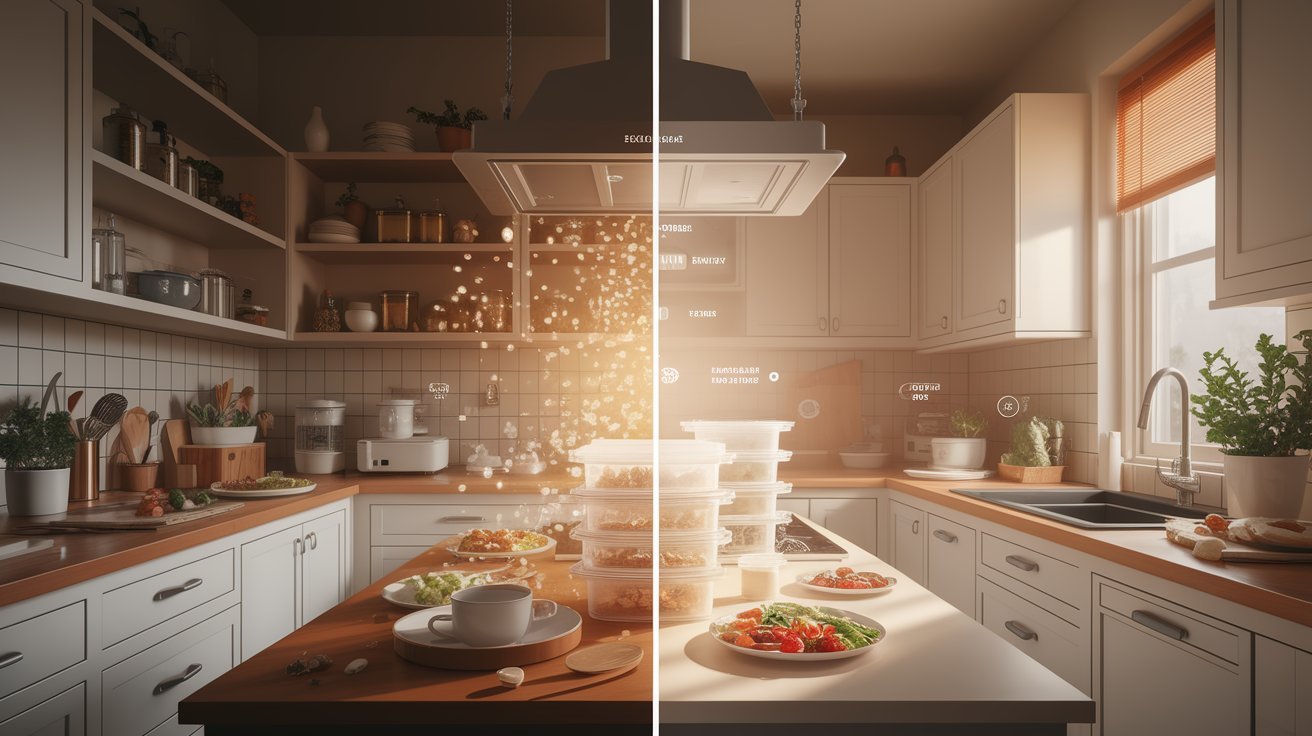
Level 1 — Environmental Automation (The Kitchen That Does Half the Work)
Walk into your kitchen. What’s the first thing you see?
For most ADHD adults, the answer is: a vortex of random items that offer zero direction. Automation starts by reshaping your environment into something that quietly nudges you forward.
Try this:
- Make protein the first thing you see when you open the fridge.
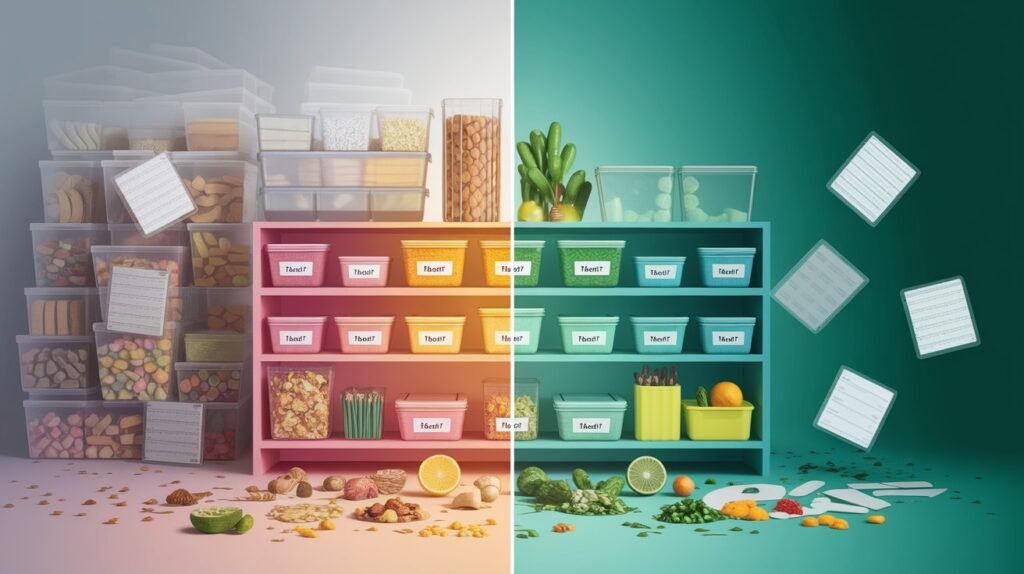
- Use clear containers to eliminate the “out of sight, out of mind” problem.
- Create one shelf that’s exclusively “grab-and-eat” items.
- Hide or relocate your problem snacks.
- Keep pre-washed veggies at eye level—not shoved in a drawer where produce goes to die.
When your surroundings stop working against you, they start working for you.
Level 2 — Behavioral Automation (Default Meals + Timers = No More Guessing)
ADHD brains adore routines—when those routines are designed correctly.
The trick isn’t discipline. It’s removing the need for decisions.
Set up:
- A 5-meal rotation that you use on repeat.
- Timers that remind you it’s time to eat before the hunger crash hits.
- Auto-generated grocery lists based on your rotation.
- Pre-portioned snacks to prevent overeating or forgetting to eat at all.
Once your behaviors follow preset defaults, the “food stress” that used to overwhelm you fizzles into background noise.
Level 3 — Cognitive Automation (Flowing Through Food Decisions Without Thinking)
Cognitive automation is the secret sauce. It gives you a script—a built-in pathway your brain can follow even when motivation is running on fumes.
Your internal flow might look something like:
1. Do I have energy to cook?
If not → go to your no-cook template.
If yes → pick from your 10-minute meals.
2. Do I need fast dopamine?
If yes → choose a snack-plus meal.
If no → pick your default lunch or dinner.
3. Do I have ingredients?
If not → use your emergency fallback meals.
Instead of “What do I do?” your brain thinks: “Which lane am I in?”
That’s cognitive ease. That’s automation.
Meal Templates: The ADHD-Friendly Way to Make Food Impossible to Mess Up
The goal isn’t gourmet meals—it’s meals your brain will actually do.
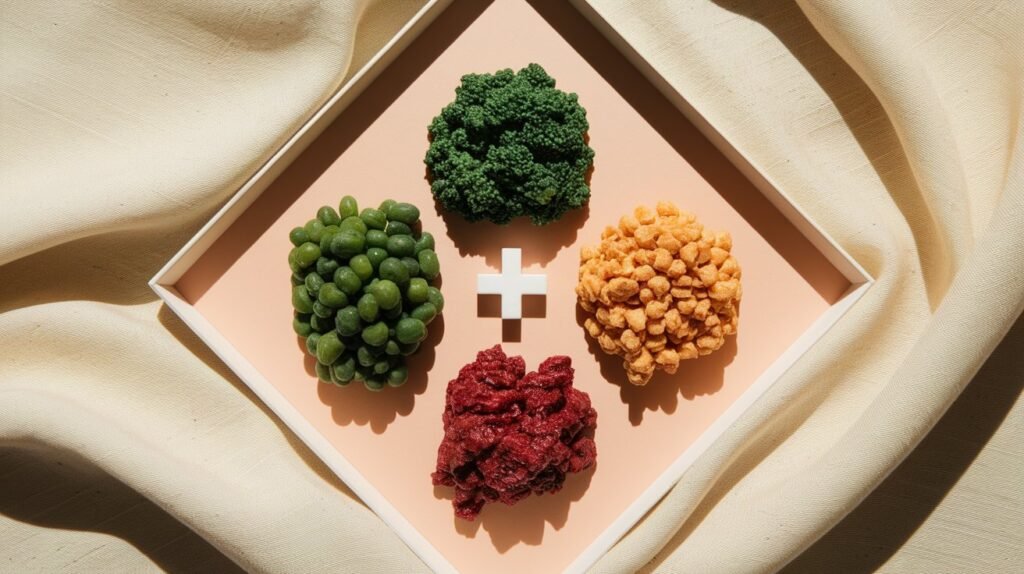
The Protein + Carb + Color Formula
Three pieces. Endless combinations. Zero stress.
- Protein: chicken, tofu, tuna, eggs, Greek yogurt
- Carb: rice, quinoa, pasta, potatoes, whole-wheat wraps
- Color: greens, tomatoes, roasted peppers, frozen veggies
You mix and match. You adjust. You repeat. This formula is ADHD gold because it requires no thinking—just plugging in pieces.
“Two-Step Meals” Built for ADHD Brain Chemistry
These are the meals that save you on days when life feels heavy and motivation feels fictional.
Think:
- Rotisserie chicken + salad mix
- Microwave rice + canned beans + salsa
- Air-fried salmon + frozen broccoli
- Scrambled eggs + avocado toast
If the meal takes more than two or three actions, it belongs to a different day entirely.
A 10-Minute Meal Library for Low-Energy Days
Creating a small collection of ultra-fast templates is one of the most stabilizing ADHD habits you can adopt.
A few that always work:
- Stir fry with pre-cut veggies.
- A loaded wrap packed with protein.
- A quinoa bowl with whatever you have.
- A “snack plate” with nuts, cheese, fruit, deli meat.
You don’t need recipes. You need repeatable rhythms.
Meal Prep Without the Burnout (Finally)
Traditional “Sunday meal prep” is a disaster for ADHD brains—too long, too rigid, too boring.
What does work? Systems that play to your strengths.
Batch Ingredients, Not Perfect Meals
Instead of prepping a week of identical meals (which you’ll get sick of by Wednesday), prep building blocks:
- A big batch of rice or quinoa.
- A container of washed veggies.
- Two proteins cooked in advance.
- A few sauces that make everything taste better.
This gives you flexibility without the chaos.
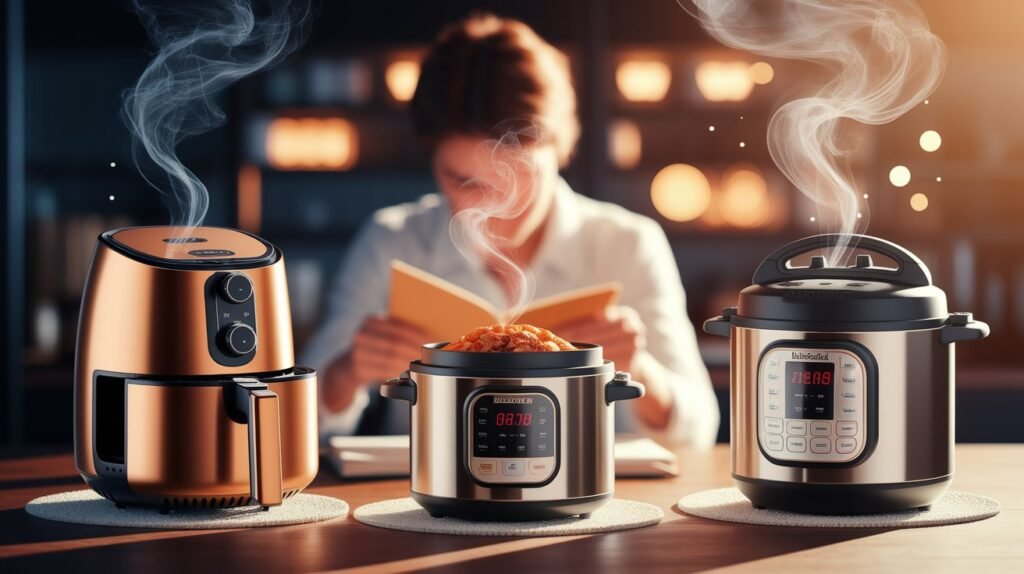
Let Auto-Cook Devices Do the Work
You deserve machines that make your life easier:
- Air fryers that cook protein in 10 minutes.
- Instant Pots that turn ingredients into dinner without your supervision.
- Mini rice cookers that keep your carb base ready.
- Blenders for 60-second breakfast smoothies.
Anything that removes steps is your friend.
The 3-Day Cycle That Saves You From Burnout
Weekly prep asks too much. Three-day cycles keep your meals:
- Fresh
- Flexible
- Low-pressure
- Sustainable
Prep a little → use it → reset → repeat. No guilt. No overwhelm.
Snacks, Systems & Tools That Keep You Consistent
Nobody talks about this enough, but snacks make or break ADHD nutrition. So do the tools that shape your habits.
Gamified Habit Tracking for the ADHD Mind
Tracking isn’t about discipline—it’s dopamine.
Use whatever sparks joy:
- Sticker charts
- Whiteboard checklists
- Habit apps with satisfying animations
- Magnetic trackers on the fridge
Seeing your progress builds momentum. Momentum builds consistency. Consistency builds results.
Your ADHD-Friendly Kitchen Toolkit
A few simple items can turn food chaos into food clarity:
- Clear food containers
- Pre-portioned snack trays
- Label sets
- Timers that keep you anchored
- Sectioned plates that simplify serving
- Magnetic meal planners
- Fridge organizers that keep ingredients visible
Every item reduces friction. Every bit of reduced friction equals more follow-through.
Questions People With ADHD Quietly Ask Themselves
Why do I struggle to eat regularly, even when I’m hungry?
Because memory retrieval, motivation, and decision-making require dopamine—a neurochemical ADHD brains don’t supply consistently. Automation fills that gap.
What’s the fastest meal I can make when I have zero motivation?
Anything in the two-step category: rotisserie chicken + salad, rice + beans, eggs + toast, or anything prepped in your fridge.
How do I stop relying on snacks as meals?
By prepping ingredients in batches and making sure protein is always within reach.
How do I remember to eat before I crash?
Timers. Visual reminders. A predictable meal rhythm. These become your anchors.
Products / Tools / Resources
Here’s a curated list of items that align with the automation principles in this guide. Each one removes friction, lowers cognitive load, and strengthens your nutrition system.
- Stackable Meal Prep Containers – effortless grab-and-go structure.
Browse meal prep containers on Amazon - Compact Rice Cooker – set it, forget it, and always have a carb base ready.
See mini rice cookers on Amazon - Air Fryer – protein in minutes with almost no supervision.
Explore air fryers on Amazon - Visual Timer – keeps your brain anchored in the present while food cooks.
Find visual timers on Amazon - Clear Fridge Organizer Bins – makes healthy options impossible to miss.
Shop fridge organizers on Amazon - Sectioned Bento Boxes – supports quick assembly and portion control.
View bento containers on Amazon - Magnetic Whiteboard Meal Planner – keeps your rotation visible and simple.
Browse meal planner boards on Amazon - Reusable Food Labels – prevents the dreaded “what is this?” fridge confusion.
Check reusable labels on Amazon