

Easy High-Protein Meals for Kids: The No-Fight Guide to Ending Picky Eating
Table of Contents
There’s a moment every parent knows too well—the quiet dread that settles in when dinner is almost ready and you can already see the standoff coming. The tight-lipped refusal. The fork pushed away. The “No, I don’t want that.”
It wears you down. Not because your child is doing anything wrong, but because you’re trying so hard to give them something good, and it keeps backfiring.
What most parents don’t realize is that picky eating isn’t about stubbornness at all. It’s about safety. Predictability. The sense that food won’t surprise them or overwhelm their senses. And here’s the twist that changes everything:
Protein—simple, everyday protein—quietly solves more of this battle than you might think.
High-protein meals help stabilize energy, mood, and appetite, making kids far less reactive and far more open to food itself. Once you understand how, the whole landscape shifts.
Let’s pull this apart together.

Why Picky Eating Happens (and Why Protein Fixes Half the Battle)
There is no such thing as a “bad eater.” There are only kids trying to navigate a world full of textures, temperatures, smells, and sensations that feel unfamiliar or too intense. When food becomes a source of uncertainty, instinct kicks in, and kids retreat to their safe foods—the ones they know won’t betray them.
Protein becomes the anchor in this storm. Not because it tricks kids into eating better, but because it creates the physiological stability that makes new foods feel less threatening.
Texture, Taste, and Sensory Sensitivities Explained
A lot of picky eating starts with texture. Kids gravitate toward foods that behave the same way every time. Crisp. Smooth. Firm. Predictable.
But foods that squish unpredictably? Or mix too many textures in one bite? Those can feel like sensory landmines.
That’s why bread, crackers, pasta, and nuggets feel safe—they’re consistent. And it’s why many high-protein foods actually work well for these kids: yogurt is smooth, eggs are soft but uniform, chicken is firm and familiar, tofu stays consistent bite after bite.
When you work with your child’s sensory system instead of against it, meals become less of a battle and more of a conversation.
Why Low-Protein Kids Crave Junk Food
Here’s the part no one ever mentions: kids who don’t get enough protein often chase foods that give them fast, chaotic bursts of energy—chips, crackers, cereal, sweets, anything beige and carby.
It’s not bad behavior. It’s biology trying to self-regulate.
Protein slows digestion and stabilizes blood sugar. Without it, kids swing from low-energy slumps to sudden cravings, and the cycle reinforces picky eating because they cling to whatever gives them fast relief.
Add even 10–15 grams of protein, and suddenly:
- meltdowns shrink
- cravings drop
- moods smooth out
- new foods feel less scary
Protein isn’t a cure-all, but it absolutely shifts the emotional baseline.
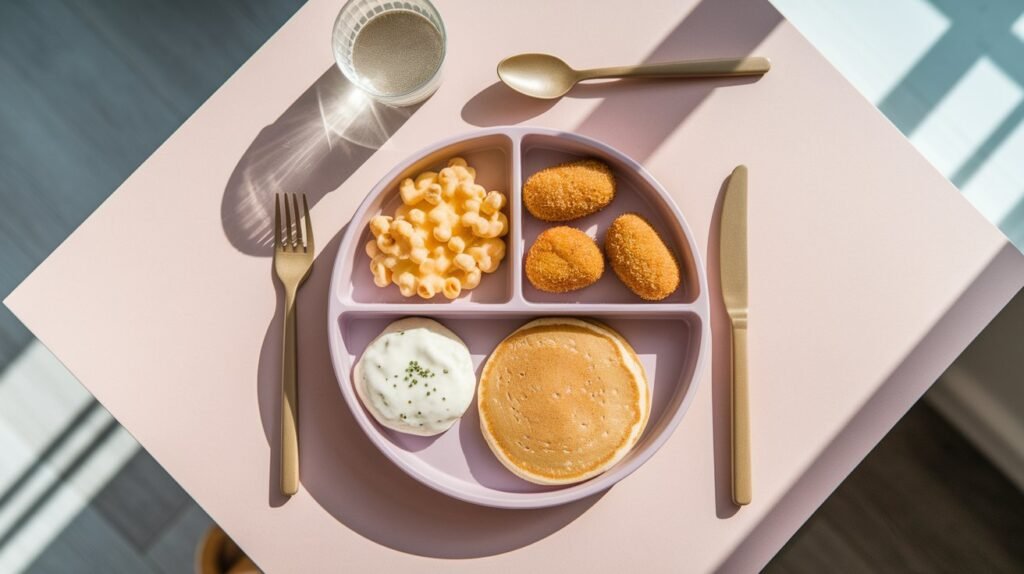
How to Slowly Rebuild a Child’s Food Confidence
Food confidence grows the same way emotional confidence does—through small exposures, tiny wins, predictable patterns, and zero pressure.
A few simple rituals help rebuild trust:
- Pair a familiar food with something lightly new.
- Serve small portions to reduce overwhelm.
- Keep flavors mild and textures consistent.
- Repeat exposures without commentary—8 to 12 times.
When kids feel safe, they become curious. When curiosity shows up, everything else starts falling into place.
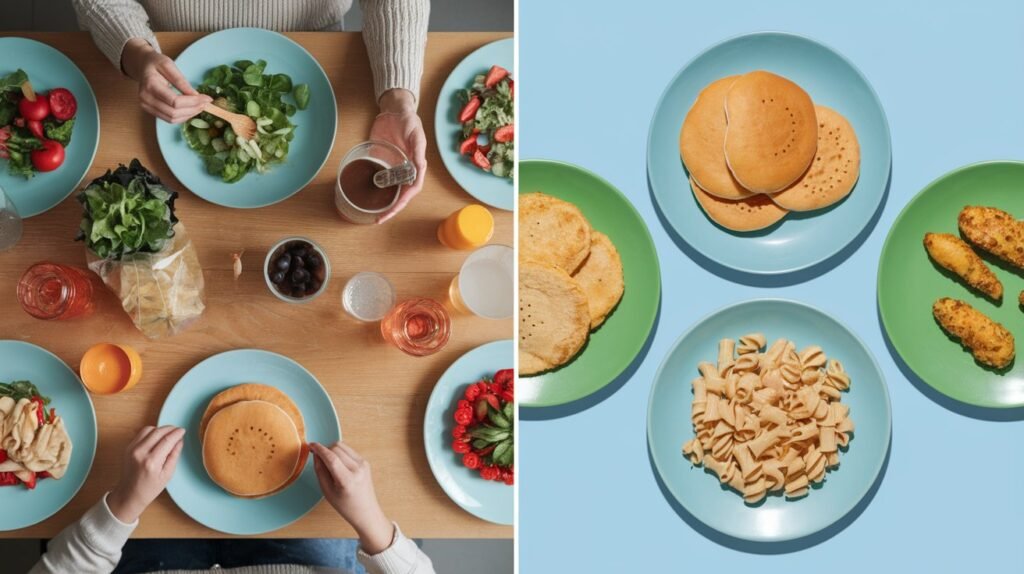
High-Protein Meals That Overcome the Top 5 Picky-Eater Blocks
Every picky eater has a “block”—a specific reason they push food away. Your job isn’t to force your child past the block but to design meals that slip around it.
Meals for Texture-Avoidant Kids
Some children want food to feel clean and controlled. No mush, no mystery.
Meals that feel safe to them include:
- Oven-baked crispy chicken tenders
- Smooth yogurt bowls
- Scrambled eggs with gentle cheese
- Protein waffles or pancakes
- Firm tofu nuggets
The key is uniformity. No surprises. Every bite feels the same.
Meals for “I Only Eat Beige Food” Kids
If your child lives in the kingdom of beige—crackers, toast, pasta—they’re not being difficult. Beige equals predictable.
So meet them there:
- Turkey meatballs
- Chicken quesadillas
- Protein tortilla pizzas
- High-protein pasta with butter and cheese
- Chickpea patties with subtle seasoning
The shape and color feel safe. The protein does the quiet work in the background.
Meals for Veggie-Haters
Kids rarely reject vegetables because of taste alone. It’s texture, scent, color, unpredictability.
Blend, grate, fold—don’t spotlight.
Try:
- Protein mac & cheese with blended carrots
- Chicken fried rice with micro-chopped veggies
- Turkey taco bowls with grated zucchini
- Lentil pasta with smooth, blended marinara
Vegetables disappear into the food landscape, not stand out.
Meals for Dairy-Intolerant or Sensitive Kids
Dairy doesn’t have to carry the protein load.
Incredible dairy-free protein sources:
- Chicken
- Turkey
- Fish
- Eggs
- Beans and lentils
- Chickpeas
- Tofu
- Edamame
- Quinoa
These build structure without upsetting digestion—a win for everyone.
Meals That Look “Normal” but Are Protein-Loaded
Kids reject “different” faster than anything else.
Keep meals familiar, but slip in the nutrition:
- Protein-enhanced pancakes
- Chicken and rice bowls
- High-protein mac & cheese
- Turkey sliders
- Protein-packed muffins
Everything looks “like it’s supposed to”—so kids lean in instead of away.
The Picky-Proof Recipe Library
Here’s where meals become weapons of peace. These recipes are fast, forgiving, and engineered to feel safe for kids while giving them the protein they actually need.
Crispy Protein Nuggets (Healthy, Not Processed)
Take ground turkey or chicken. Shape into small nugget rounds. Coat lightly with breadcrumbs, bake until crisp, and watch how quickly these disappear.
Serve with a high-protein dip—Greek yogurt ranch, if your child tolerates dairy—and you’ve boosted the protein without complicating the experience.
High-Protein Mac & Cheese Swap
This one feels like cheating.
Use high-protein pasta, blend cottage cheese or Greek yogurt into the sauce, and if you want to slip in veggies, blend a handful of steamed carrots right in. It looks exactly like boxed mac but delivers far more protein and stability.
Protein Pizza, Tacos & Wraps
Kids trust these formats almost instinctively.
Make them work for you:
- Tortilla pizza with shredded chicken
- Chicken or turkey tacos
- Quesadilla with beans + cheese
- Mini pita pockets with egg salad or tuna
Same shape. Same identity. More nourishment.
One-Bowl Meals Kids Don’t Push Away
The trick is to separate before combining.
Offer each component separately on the plate: chicken bites, rice, veggies in tiny portions. Let your child mix or not mix. Control reduces friction.
Once trust builds, the bowl format becomes easier.
Behavioral Strategies to Increase Acceptance
Recipes matter, but behavior is the engine that pulls everything forward. The right strategy can turn the loudest “no” into quiet curiosity.
The “Two Choices” Method
Never ask, “What do you want to eat?” It’s too big. Too open. Too stressful.
Instead:
“Chicken tacos or chicken quesadillas?”
Both options are wins. The child feels in control. And you avoid the negotiation spiral.
Plate Color & Portion Framing Psychology
Presentation is psychology.
Kids respond better to:
- Green or blue plates
- Small portions
- Clear separation of foods
These tiny visual shifts lower defensiveness and create calm around meals.
Micro-Exposure Routines That Improve Eating Habits
Think of this as a daily two-minute ritual.
- Place a micro-portion of a new food on the plate.
- Say nothing about it.
- Celebrate proximity—not consumption.
Acceptance happens through repetition, never force.
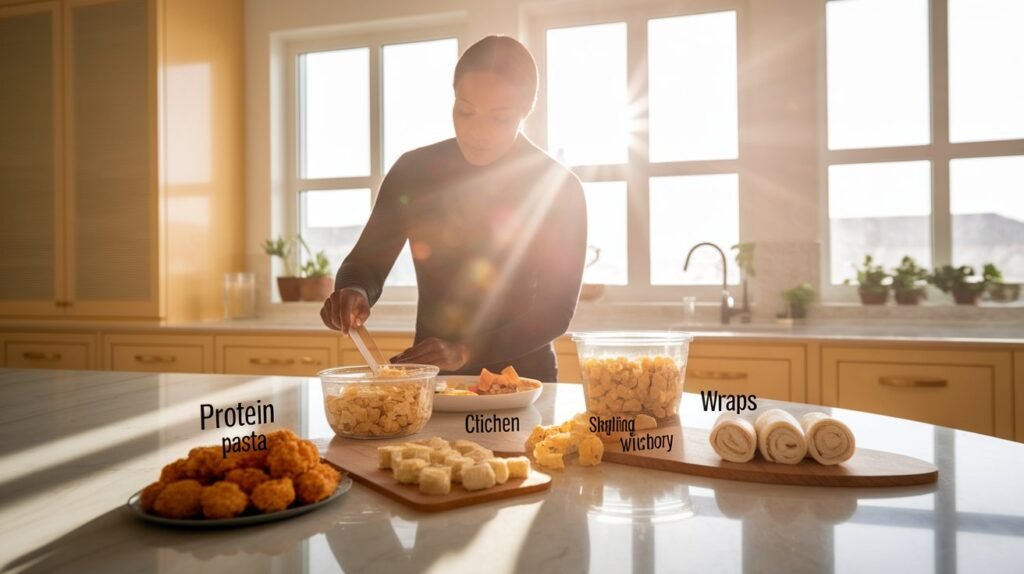
Smart Substitutions That Add 5–15g Protein Instantly
These swaps save parents on the days when time—or patience—is gone.
Swapping Low-Protein Carbs for Protein-Enriched Versions
Same food. More staying power.
- Regular pasta → protein pasta
- Flour tortillas → protein wraps
- White rice → quinoa
- Cereal → high-protein granola
- Bread → whole-grain or protein bread
Kids won’t see the difference, but their bodies will.
Protein Boosters That Are Invisible: Powders, Yogurts, Seeds
These disappear into meals without changing taste or texture:
- Unflavored protein powder
- Greek yogurt
- Cottage cheese
- Hemp seeds
- Chia seeds
- Silken tofu
Blend. Mix. Stir. No resistance. All benefit.
FAQ
How do I build a high-protein meal my kid will actually eat?
Start with what your child already trusts—pasta, rice, tortillas, muffins—and build around that. Add one predictable protein with a texture that feels safe and keep the portion small enough that it doesn’t feel like a challenge.
How much protein is safe for kids?
Most kids thrive with around 0.5–1 gram of protein per pound of body weight per day, depending on age and activity. Protein from whole foods is extremely well-tolerated.
What are the best high-protein foods for picky toddlers?
Toddlers often accept foods that are soft, smooth, or mildly flavored: yogurt, scrambled eggs, protein pancakes, cottage cheese, silken tofu smoothies, soft chicken bites, and lentils blended into soups or sauces.
Products / Tools / Resources
These are parent-friendly tools and staples that make high-protein meals effortless:
- High-Protein Pasta for building filling, kid-friendly meals that still feel like comfort food.
- Kid-Friendly Bento Boxes to separate textures and make food feel less overwhelming.
- Protein Pancake & Waffle Mixes for easy, high-protein breakfasts that feel like a treat.
- Protein Tortillas & Wraps for tacos, quesadillas, and quick pizzas that kids already trust.
- Unflavored Protein Powder that disappears into sauces, muffins, and smoothies without changing the taste.
- Silicone Divided Plates to give sensory-sensitive eaters clear boundaries on their plate.
- Freezer-Safe Meal Prep Containers for batch-cooking nuggets, meatballs, or breakfast items.
- High-Protein Yogurt Cups as grab-and-go snacks that actually keep kids full.
- Chia, Hemp, and Flax Seeds to sprinkle into oatmeal, smoothies, or muffins for effortless protein boosts.




2 Comments