
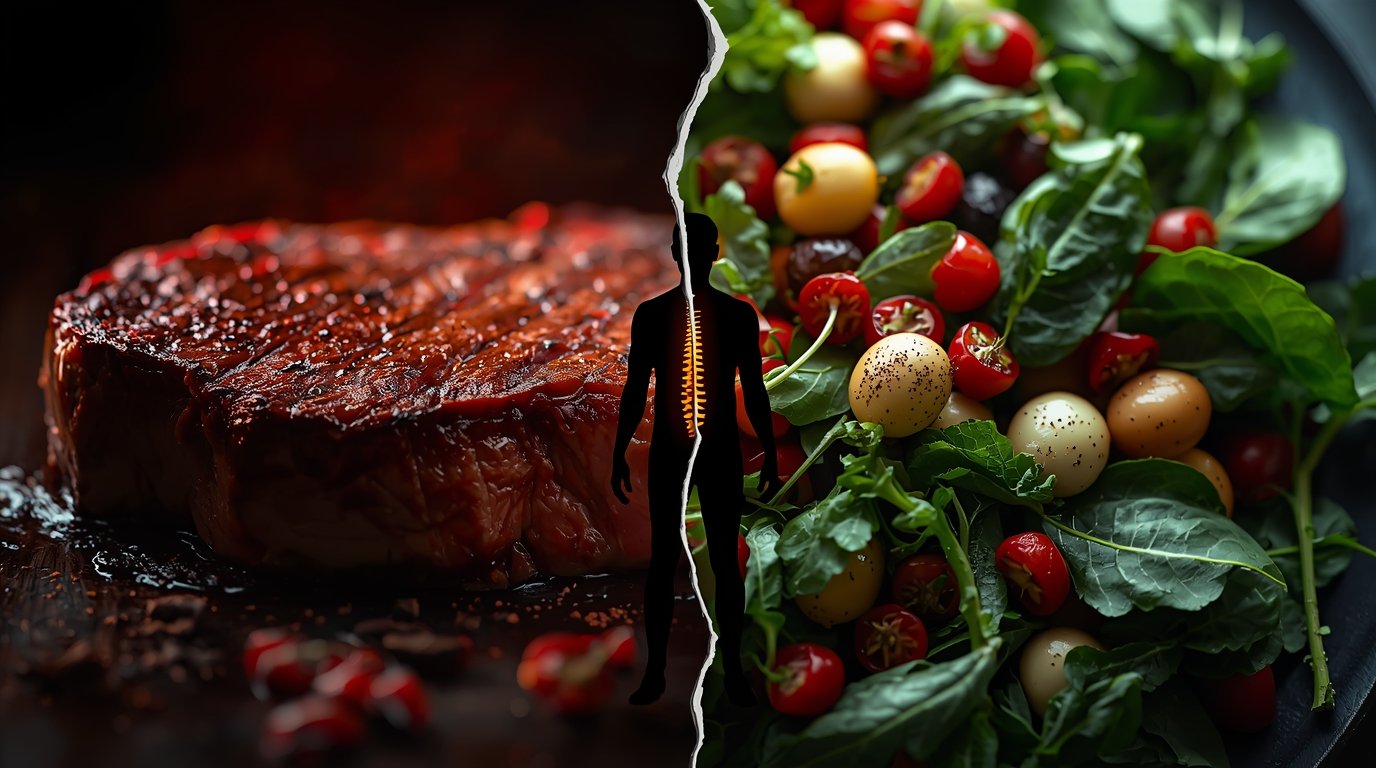
Animal vs. Plant Protein: The Longevity Verdict
Animal vs. Plant Protein debates drive people slightly insane—and for good reason. Everyone wants the magic macro that adds years to life, keeps muscle on autopilot, and doesn’t wreck labs by age 50. Instead, most advice feels cherry-picked, ideological, or straight-up outdated. I’ve watched smart people bounce between carnivore, vegan, keto, and back again like a nutritional pinball. Let’s stop the madness and talk longevity—cleanly, honestly, and without religion.
Table of Contents
- Why This Debate Even Matters for Longevity
- What Is the Real Difference Between Animal and Plant Protein? (Answer Target)
- The Amino Acid Truth Nobody Likes to Say Out Loud
- Animal Protein: Precision Fuel (When Used Correctly)
- Plant Protein: Longevity Signaling Tool (With Caveats)
- IGF-1, mTOR, and the Longevity Fear Narrative
- The Longevity Sweet Spot: Hybrid Strategy (My Verdict)
- The Optimal Framework
- How Much Protein Actually Supports Longevity?
- The Methionine Argument (And Why It’s Overhyped)
- Longevity Red Flags I See Constantly
- Animal vs. Plant Protein: Final Verdict
- Animal vs. Plant Protein isn’t a war—it’s a tool selection problem.
- What I’d Do If Longevity Was the Only Goal
Why This Debate Even Matters for Longevity
If protein only mattered for gym bros, we wouldn’t be here. But protein quality directly affects muscle preservation, insulin sensitivity, inflammation, IGF-1 signaling, and aging velocity. Translation: get this wrong long enough and you age faster—even if calories look “healthy” on paper.
Here’s what usually happens:
- People overconsume low-quality protein and age poorly.
- Or they underconsume protein, lose muscle, and age even worse.
- Or they obsess over source and forget context. Classic.
I’ve made all three mistakes at different points. FYI, none of them end well 🙂
What Is the Real Difference Between Animal and Plant Protein? (Answer Target)
Animal protein provides complete amino acids with high bioavailability, meaning your body absorbs and uses more of it per gram. Plant protein offers fiber, phytonutrients, and lower methionine density, which may benefit long-term aging pathways. Longevity hinges on dose, context, and metabolic health—not ideology.
That’s the 10,000-foot view. Now let’s get surgical.
The Amino Acid Truth Nobody Likes to Say Out Loud

Animal Protein: Precision Fuel (When Used Correctly)
Animal protein shines in one area: essential amino acid density, especially leucine. Leucine flips the muscle protein synthesis switch. That matters more as you age, not less.
Insider reality check:
- Older adults need more leucine, not less.
- Sarcopenia doesn’t care about your ethics.
- You don’t “optimize longevity” while losing muscle mass.
Key advantages:
- Complete amino acid profile
- Higher digestibility (DIAAS scores crush plants)
- Lower total calories needed to hit protein targets
But—and this is a big but—overdoing animal protein chronically raises IGF-1, which may accelerate aging if you’re sedentary, insulin-resistant, or overeating. Context always wins. If you want the “cleaner” longevity angle without playing nutrition roulette, build your plate around Lifestyle and longevity-focused meals and treat protein like a lever, not a religion.
Practical gear note: if you cook a lot of lean proteins, a fast-read digital thermometer saves you from dry chicken sadness. I like using a simple option like an instant-read thermometer to nail perfect doneness without guessing.
Plant Protein: Longevity Signaling Tool (With Caveats)
Plant protein earns points for:
- Lower methionine (linked to longevity pathways)
- Fiber and polyphenols
- Better gut signaling for some people
But here’s the myth I need to nuke: plant protein is not “equal” gram for gram. You absorb less. You miss certain amino acids. You often need blends or higher total intake.
Under-the-radar issue:
- Many plant-based adults quietly eat sub-optimal protein for years
- Muscle loss creeps in slowly
- Then people blame “aging” instead of nutrition
IMO, plant protein works best strategically, not exclusively.
IGF-1, mTOR, and the Longevity Fear Narrative
Let’s talk about the elephant everyone half understands.
Yes, animal protein stimulates IGF-1 and mTOR.
No, that’s not automatically bad.
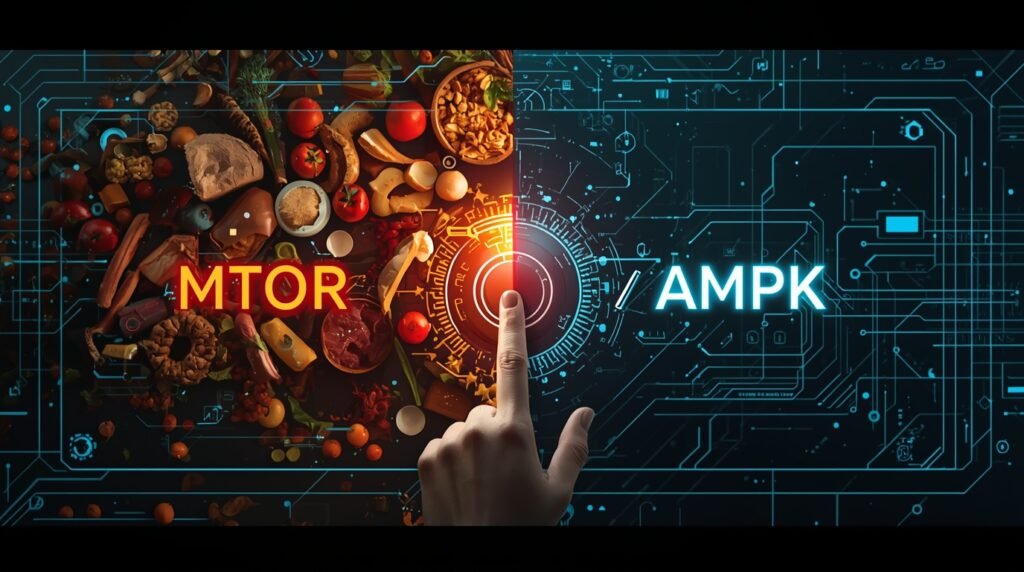
mTOR = growth
AMPK = repair
Longevity doesn’t mean shutting growth down forever. It means cycling intelligently. If you want to keep the “repair” side humming, meals that support your microbiome help a lot—especially if you lean animal-heavy sometimes—so I’d pair this mindset with a gut-healthy longevity meal approach instead of pretending fiber doesn’t matter.
What actually causes problems:
- Constant feeding
- No resistance training
- High protein + high calories + no fasting windows
What works better:
- Adequate protein
- Strength training
- Time-restricted eating or protein cycling
You don’t live longer by being fragile. You live longer by staying resilient.
The Longevity Sweet Spot: Hybrid Strategy (My Verdict)
If your goal is maximum lifespan and healthspan, I’ll say this plainly:
Binary thinking kills longevity.
Here’s what consistently wins in real-world data and practice:
The Optimal Framework
- Primarily plant-based diet
- Strategic animal protein inclusion
- Protein intake scaled to activity and age
- Resistance training non-negotiable
This approach:
- Preserves muscle
- Keeps IGF-1 in check
- Supports metabolic flexibility
- Avoids nutrient gaps
And yes, it lets you enjoy food without turning into a monk 😉
How Much Protein Actually Supports Longevity?
This is where most advice collapses.
Under-eating protein ages you faster than eating “too much.” Full stop.
General longevity-oriented targets:
- Sedentary adults: ~0.8–1.0 g/kg
- Active adults: 1.2–1.6 g/kg
- 60+ years old: closer to 1.5 g/kg
Plant-heavy diets usually need the upper end to compensate for absorption. If you want a smarter way to plan those “hybrid” weeks, I like using structured ideas (and yes, sometimes AI tools) to keep it simple—this AI driven longevity meal angle can help you build repeatable plates without mental burnout.
Bold truth: Muscle is an anti-aging organ.
The Methionine Argument (And Why It’s Overhyped)
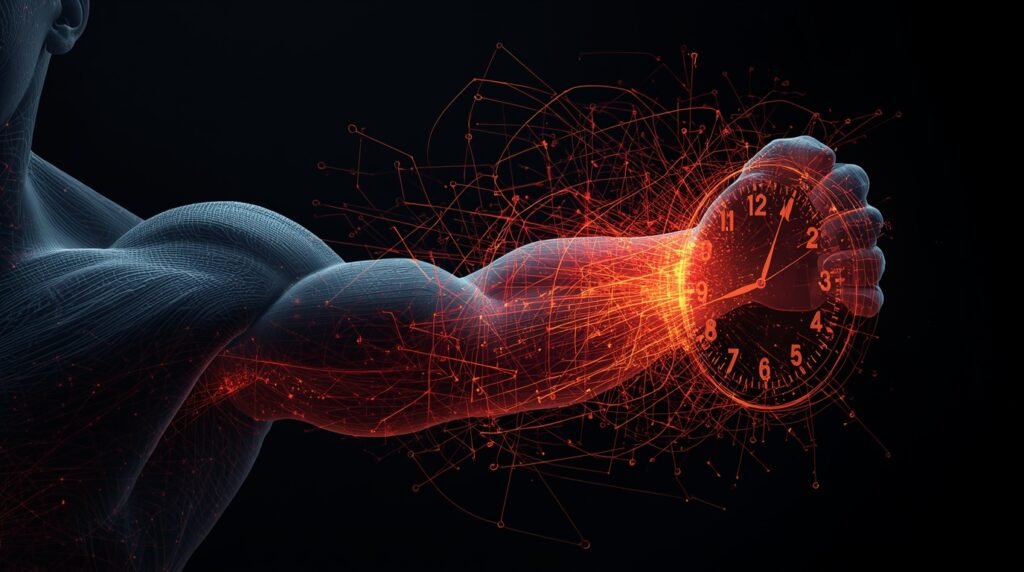
Yes, methionine restriction links to lifespan extension in rodents.
But rodents:
- Don’t lift weights
- Don’t live 80 years
- Don’t care about frailty
Humans benefit more from:
- Protein timing
- Calorie control
- Metabolic health
You don’t need to eliminate methionine. You need to avoid chronic excess.
Longevity Red Flags I See Constantly
If you want honesty, here it is:
- Vegans losing strength every year “for longevity”
- Carnivores ignoring fiber and gut health
- Biohackers tracking IGF-1 but skipping leg day
- People optimizing diet while sleeping 5 hours
Nutrition doesn’t exist in a vacuum. Longevity never came from a spreadsheet alone.
Animal vs. Plant Protein: Final Verdict
Animal vs. Plant Protein isn’t a war—it’s a tool selection problem.
Animal protein:
- Wins for muscle preservation
- Wins for amino acid efficiency
- Loses when overused without training or fasting
Plant protein:
- Wins for metabolic signaling
- Wins for gut health
- Loses when treated as “automatically superior”
The longest-living, healthiest people don’t pick sides. They pick systems.
What I’d Do If Longevity Was the Only Goal
Quick, practical, no fluff:
- Eat mostly plants
- Add animal protein intentionally
- Lift heavy things weekly
- Don’t snack all day
- Sleep like it’s your job
That combo beats any dogma. Every time.
Alright, I’m done preaching. If someone tells you there’s one protein source that guarantees longevity, smile politely and back away slowly 🙂
—Danilo
Products / Tools / Resources
If you want to make the “hybrid longevity” approach actually stick, you need a few boring-but-decisive tools that keep execution clean. I’m talking less friction, fewer ruined meals, more repeatable wins. Here are the ones I’d use (and yes, I’ve tested enough kitchen gadgets to qualify for emotional damages).
Instant-read thermometer — Helps you cook lean animal proteins perfectly without overcooking, and it keeps plant-based “protein bakes” from turning into dry bricks.
Shop instant-read thermometers
Glass meal prep containers with leak-proof lids — The unsexy longevity MVP. Prep a plant-heavy base (beans, grains, roasted veg) and add animal protein portions strategically. Less waste, more control.
Shop glass meal prep containers
High-powered blender — Makes plant protein easier to digest and enjoy (smoothies, sauces, blended soups). If you struggle to hit protein without chewing all day, this helps.
Kitchen scale — If you want protein targets to mean anything, you need reality. This keeps your “about 30 grams” from secretly being 14 grams.
As an Amazon Associate, I earn from qualifying purchases.





One Comment