

Best Meal Timing Tips for Night Shift Workers
In the U.S., up to 18% of the workforce alternates shift schedules. This comes with a serious cost: a 17% increased risk of all cardiovascular events and close to a 20% increased risk of death from cardiovascular disease.
The best meal timing for human body wasn’t designed for this. Our internal clock, or circadian rhythm, is wired to sync with sunlight. We function best during the day and recover at night.
Working against this rhythm throws your metabolism and health into chaos. This article is your witty survival guide for that exact battle.
We’ll explore how strategic eating isn’t just about fuel. It’s about outsmarting your biology to protect your health. Proper timing can be a powerful tool against the risks linked to odd hours.
You’ll learn to transform nutrition into your secret weapon. For a complete healthy meal plan for night shift, these time-based strategies are the crucial first step.
Table of Contents
Key Takeaways
- A significant portion of the American workforce faces unique health risks due to non-traditional schedules.
- The human body’s natural circadian rhythm is fundamentally mismatched with overnight work conditions.
- Strategic nutrition timing is a critical defense against increased cardiovascular and metabolic disease risks.
- This guide provides actionable, science-backed strategies to align eating patterns with shift work demands.
- Mastering when you eat can be as important as what you eat for maintaining energy and well-being.
- The goal is to use meal timing as a practical tool to support your body, not fight against it.
Understanding the Unique Demands of Night Shift Work
Working the graveyard shift puts you in a constant tug-of-war with millions of years of evolutionary programming. Your body is wired for a solar-powered schedule, not a 24/7 one. This fundamental mismatch creates a unique set of health and metabolic challenges.
Circadian Rhythm and Its Impact on Nutrition
Your circadian rhythm is your biological clock. It governs sleep, metabolism, digestion, and blood sugar regulation. This system expects you to be active and eat during the day.
When you’re awake and consuming food at night, this clock gets confused. Studies suggest eating at the wrong biological time can promote weight gain, as your body processes nutrients less efficiently.
Sleep Disruption and Energy Levels
Missing sleep does more than make you tired. It triggers hormonal chaos. This affects your hunger signals, stress responses, and overall energy levels.
The consequences of this disruption are well-documented for shift work:
- Increased fatigue and burnout
- Higher reported job dissatisfaction
- Greater family conflict
Your energy levels are fighting an uphill battle. This creates a perfect storm for poor health conditions over time. Smart eating, including healthy ingredient hacks, becomes a critical tool for damage control.
Best Meal Timing for Night Shift Longevity
Forget the standard three-meal day; your body clock needs a custom feeding plan. This isn’t about willpower at 3 a.m. It’s about smart strategy.
Your goal is to create a predictable routine your metabolism can recognize. This protects your energy and health.
Planning and Preparing Balanced Meals and Snacks
Preparation is your shield against poor choices. Pack your meals and snacks before your shift starts.
Aim for whole food options rich in protein and fiber. This combo provides lasting fuel without crashes.
Think a whole-grain wrap with turkey and veggies, or apple slices with almond butter. Having these ready makes healthy eating automatic.
| Traditional Day Schedule | Shift Worker Schedule |
|---|---|
| Breakfast: 7-9 AM | Breakfast: After shift (e.g., 8 AM) |
| Lunch: 12-1 PM | Lunch: After waking (e.g., 4 PM) |
| Dinner: 6-8 PM | Dinner: Before work (e.g., 10 PM) |
| Snack: Optional | Snack: Light option before sleep |
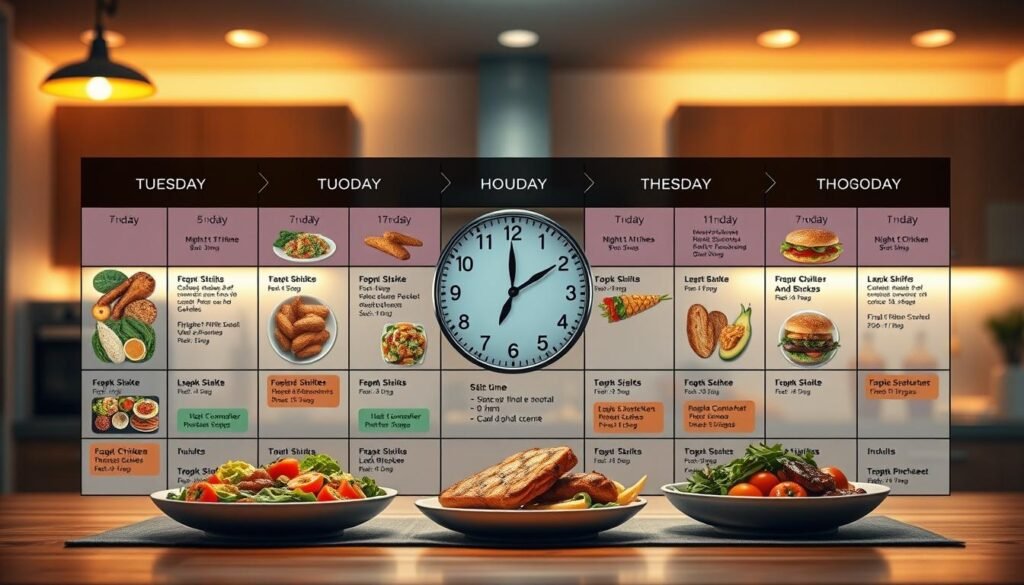
Timing Strategies for Pre-Shift and Post-Shift Eating
Flip the script. Have your main dinner 2-3 hours before you start work. This fills your tank for the long night ahead.
When you get home, eat your “breakfast.” After you wake up, have “lunch.” This creates a stable pattern your body can learn.
Overcoming Challenges with a Consistent Schedule
Stick to your schedule even on days off. Consistency tells your internal clock what to expect.
Before bed, have a light snack. This prevents hunger from disrupting your sleep. Think a small yogurt or a handful of nuts.
For a detailed guide on building this routine, explore our longevity nutrition meal plans. They provide the blueprint for sustained well-being.
Scientific Research and Meal Timing Strategies
A groundbreaking trial recently put night shift eating habits under the microscope, and the findings are a wake-up call. This science gives us clear results to work with.

Key Findings on Glucose Tolerance and Insulin Sensitivity
In a simulated study, 55 healthy participants stayed awake for four nights. They were split into groups: fasters, snackers, and full-meal eaters.
The outcomes were stark. Those who ate or snacked saw their blood glucose skyrocket. The fasting group, however, had a balanced insulin response that kept sugar levels in check.
Professor Leonie Heilbronn stated the connection plainly.
“We know shift workers are more likely to have diabetes, they’re more likely to have heart disease… Our research suggests that meal timing could be a major contributor.”
Insulin sensitivity was impaired in all participants. This confirms the work itself disrupts metabolism, but eating choices make it worse.
Translating Study Results to Daily Meal Planning
What does this mean for you? The core lesson is to avoid large overnight feeds. This body of research shows it’s a direct risk factor.
Studies link odd-hour schedules to poorer health conditions. Your daily plan should prioritize larger meals during daylight hours.
Future research is exploring if protein-only snacks could satisfy hunger without the glucose drama. For now, focusing on daytime nutrition is key. Tracking your response with tools like continuous glucose monitoring can offer personal insights.
Conclusion
Transforming your health starts with a simple shift in perspective and plate. Your new action plan is clear. Head straight to bed after your shift. Use blackout curtains to create a cave for 7-8 hours of sleep.
Eat your “breakfast” when you get home. Have “lunch” upon waking. Enjoy “dinner” before work. This isn’t just routine; it’s a strategic defense.
Recent research confirms that when you eat dramatically impacts glucose metabolism. Study participants who avoided food overnight had better blood sugar levels.
Consistency is your superpower. Stick to your schedule on days off. Pack smart snacks. Ask yourself, “What would an effective shift worker do?” Your decisions now protect your long-term well-being.
FAQ
What’s the single biggest mistake graveyard shift folks make with their food schedule?
Eating a huge “dinner” right before heading home to bed. Your internal body clock is screaming for rest, not digestion. Chowing down a large meal at 7 AM confuses your metabolism, disrupts quality sleep, and can lead to unwanted weight gain and poorer health outcomes over time.
I get ravenous at 3 AM. What’s a smart snack that won’t wreck my energy?
Ditch the vending machine run. Opt for a combo of protein and a complex carb. Think Greek yogurt with a few berries, a handful of nuts, or a slice of turkey on whole-grain bread. This helps stabilize blood glucose levels and keeps hunger at bay better than a sugar crash waiting to happen.
Should I even bother with “breakfast” when my day starts at night?
Absolutely, but rename it your “power-up meal.” Having a balanced, substantial meal at the start of your waking period (say, 6 PM) sets a positive tone. It fuels you for the hours of work ahead, helps manage stress, and tells your confused internal clock that your active phase is beginning.
Does science really back up all this talk about meal timing?
Yes, and the research is compelling. Studies show that glucose tolerance and insulin sensitivity naturally dip during our biological night. Eating the bulk of your calories when your body is primed for sleep increases the risk for conditions like diabetes and heart disease. Smart timing works *with* your biology, not against it.
How can I possibly stick to a consistent eating schedule with a rotating roster?
It’s the ultimate challenge, but planning is your secret weapon. On your days off, gently shift your main meals to align closer to your work schedule. Prep balanced meals and snacks in advance so you’re never at the mercy of the break room donuts. Consistency, even an imperfect version, helps regulate your circadian rhythms.



One Comment
Comments are closed.