
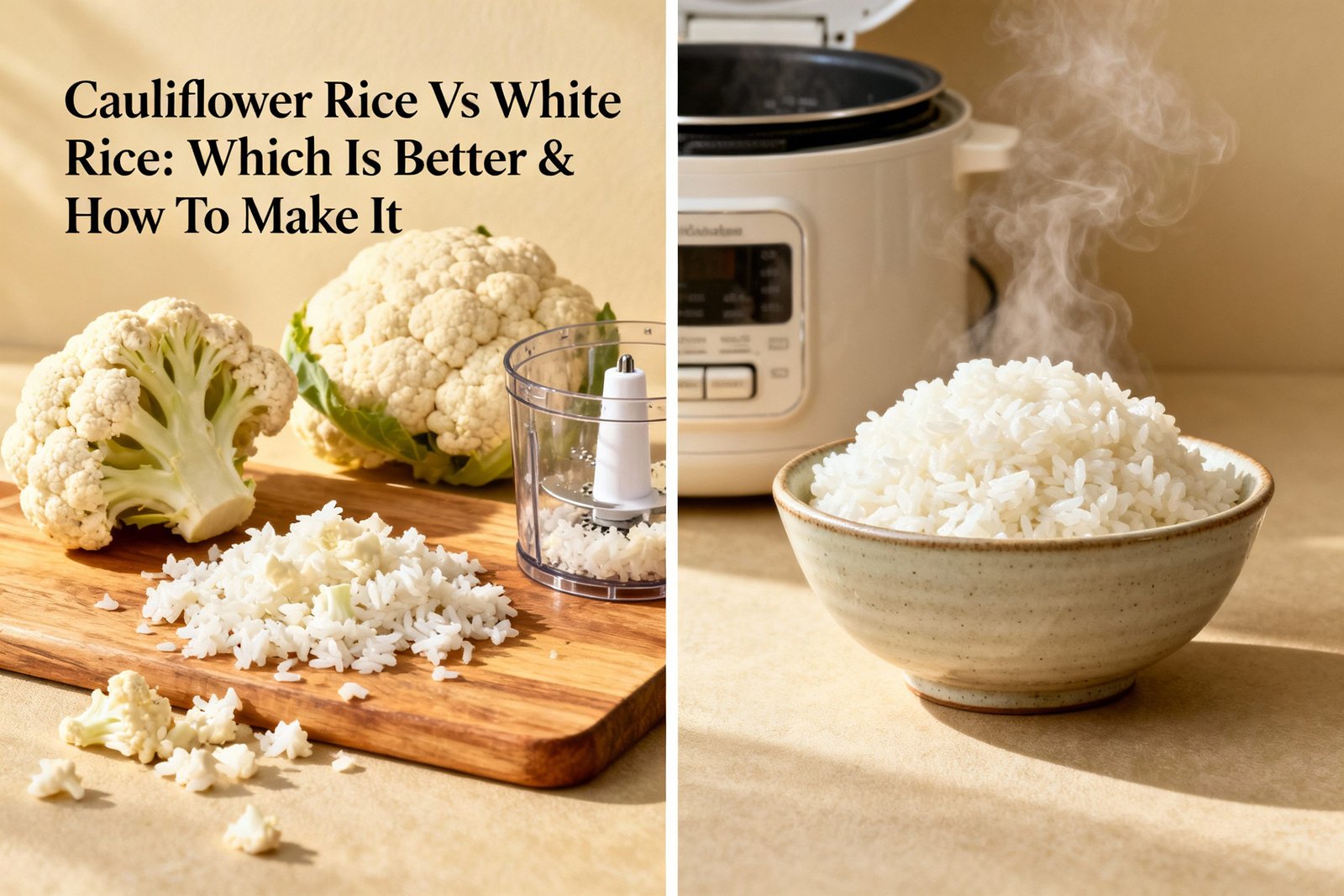
Cauliflower Rice Vs White Rice: Which Is Better & How To Make It
Some nights you want the fluffy comfort of rice. Other nights you want to feel virtuous and light. Enter the ultimate side-dish showdown: cauliflower rice vs white rice.
They look similar in the bowl, but they behave very differently on your plate. Let’s break down which one wins, when to use each, and exactly how to make both taste awesome.
The Big Picture: What’s the Difference?
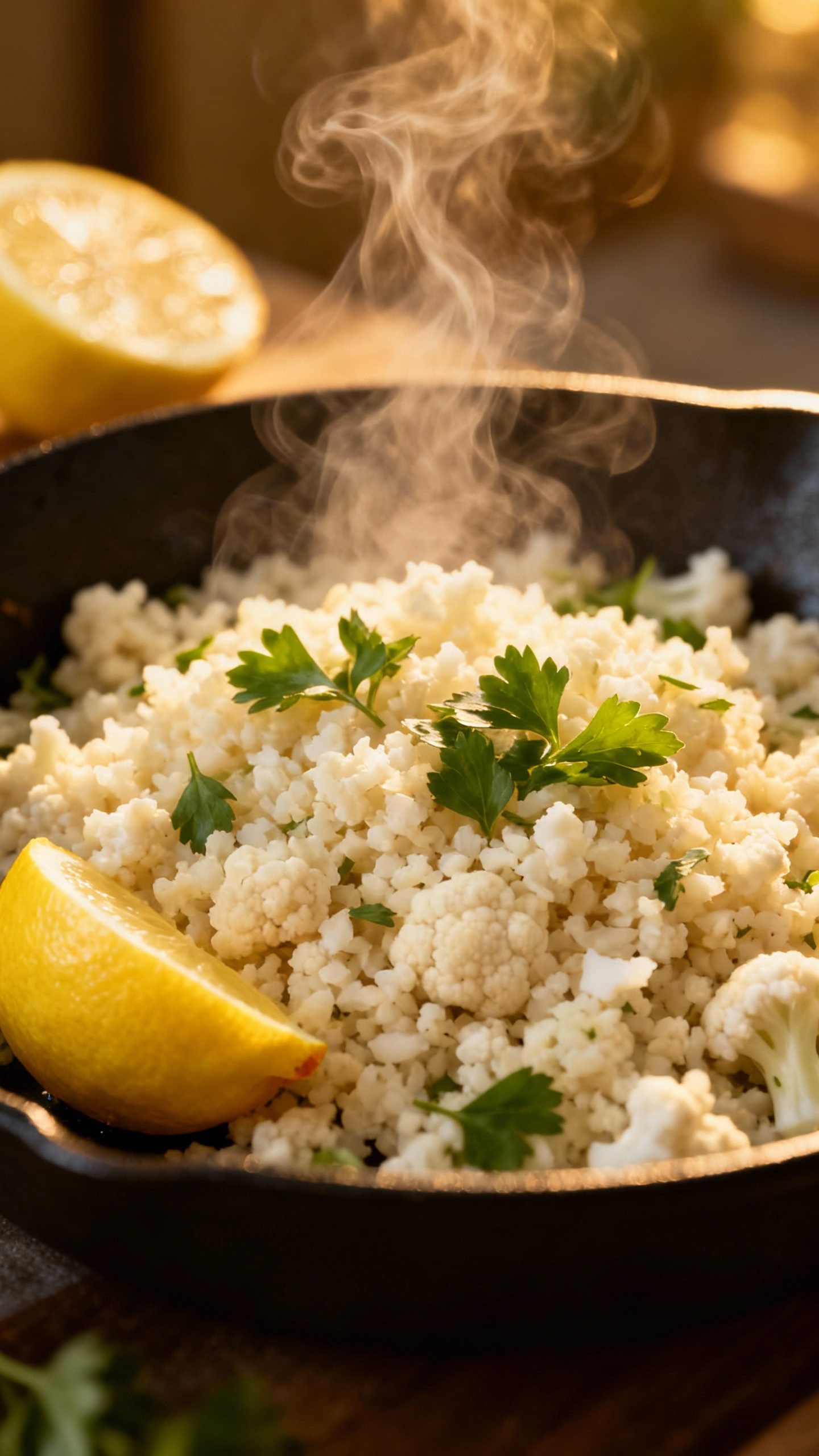
White rice is the classic. It’s simple, starchy, and soaks up sauces like a champ.
Cauliflower rice is basically finely chopped cauliflower that mimics the texture of rice with way fewer carbs and calories. Same shape, totally different vibe. – White rice: neutral flavor, fluffy texture, reliable comfort food. – Cauliflower rice: light, slightly nutty, and very low-carb. So which one is “better”?
Depends on your goal. Want energy and comfort? Rice.
Want volume with minimal calories? Cauli-rice. You’re not picking a soulmate.
You’re picking dinner.
Nutrition Showdown (No Boring Charts, Promise)
Let’s keep it quick and useful. Here’s what matters:
- Calories and carbs: Cauliflower rice wins. About a quarter of the calories and carbs of white rice.
Great if you track macros or you’re cutting.
- Fiber: Cauli-rice brings more fiber, which helps satiety and digestion.
- Micronutrients: Cauliflower offers vitamin C, K, and folate. Rice doesn’t bring much micronutrient firepower (unless it’s enriched, FYI).
- Protein: Both are low. Don’t rely on either for protein.
- Glycemic impact: Cauli-rice = lower.
White rice spikes blood sugar faster, especially on an empty stomach.
Bottom line: For weight management and blood sugar control, cauliflower rice takes it. For quick energy, white rice still shines.
Texture, Taste, and When to Use Each
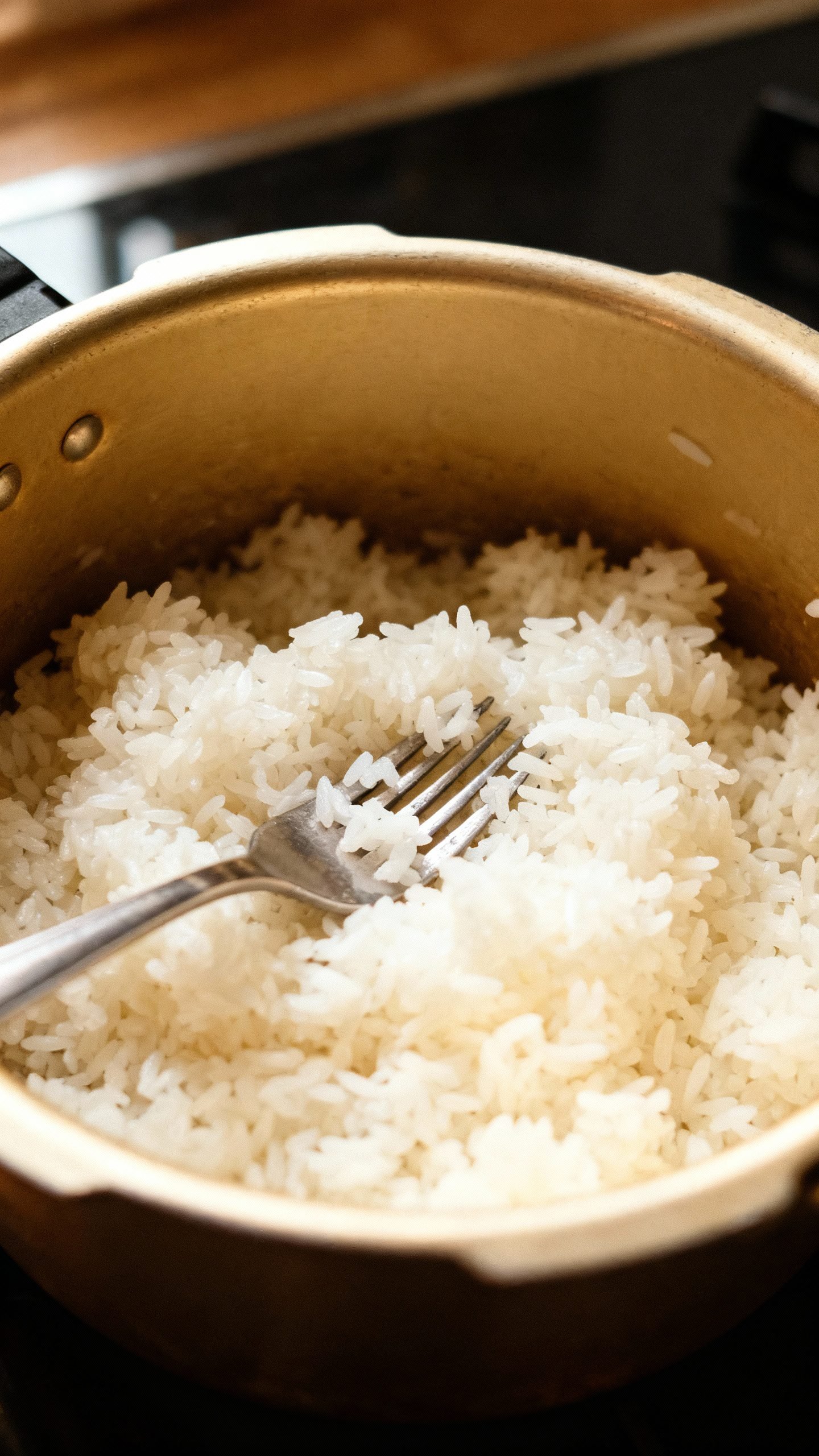
Let’s talk mouthfeel, because taste matters. – White rice: Fluffy, tender, absorbs sauces beautifully, plays nice in stir-fries, curries, burrito bowls. – Cauliflower rice: Light, slightly crunchy unless you cook it well, can taste a bit vegetal if under-seasoned.
When to choose white rice
- Heavy sauces or rich curries (butter chicken, anyone?)
- Fried rice where you want distinctly separate grains
- When you need post-workout carbs
When to choose cauliflower rice
- Low-carb or keto meals
- Huge bowls with lots of toppings (it adds volume without heaviness)
- Weeknights when you want something fast and veggie-heavy
IMO: Use cauli-rice as a texture stand-in, not a flavor stand-in. Season it like you mean it.
How to Make Cauliflower Rice (That Doesn’t Taste Like Sad Confetti)
You can buy it pre-riced, but homemade tastes fresher and has better texture. Here’s the move:
Option 1: Food Processor Method
- Chop a head of cauliflower into florets.
Pat dry (water = mush).
- Pulse in a food processor in small batches until it looks like rice. Don’t over-process.
- Spread on a clean towel and squeeze out excess moisture. This step matters.
Option 2: Box Grater Method
- Grate florets on the medium holes of a box grater.
- Again, squeeze out moisture with a towel.
How to cook it perfectly
- Heat 1-2 teaspoons oil in a wide skillet over medium-high.
- Add cauli-rice and a pinch of salt.
Toss and spread in a thin layer.
- Cook 5-7 minutes, stirring occasionally. Let steam escape so it doesn’t turn soggy.
- Finish with flavor: a squeeze of lemon, chopped herbs, or soy/tamari for savory dishes.
Pro tip: Add minced garlic and a little butter or ghee at the end for a richer flavor. Your taste buds will notice.
How to Cook White Rice So It’s Actually Good
Rice seems easy until it’s sticky in a bad way.
Do this:
Stovetop Method (for long-grain like basmati or jasmine)
- Rinse 1 cup rice until water runs mostly clear. This removes extra starch.
- Combine with 1.25 to 1.5 cups water, a pinch of salt, and 1 teaspoon oil or butter.
- Bring to a gentle boil, cover, and reduce to low. Cook 12-15 minutes (don’t peek).
- Turn off heat and rest, covered, 10 minutes.
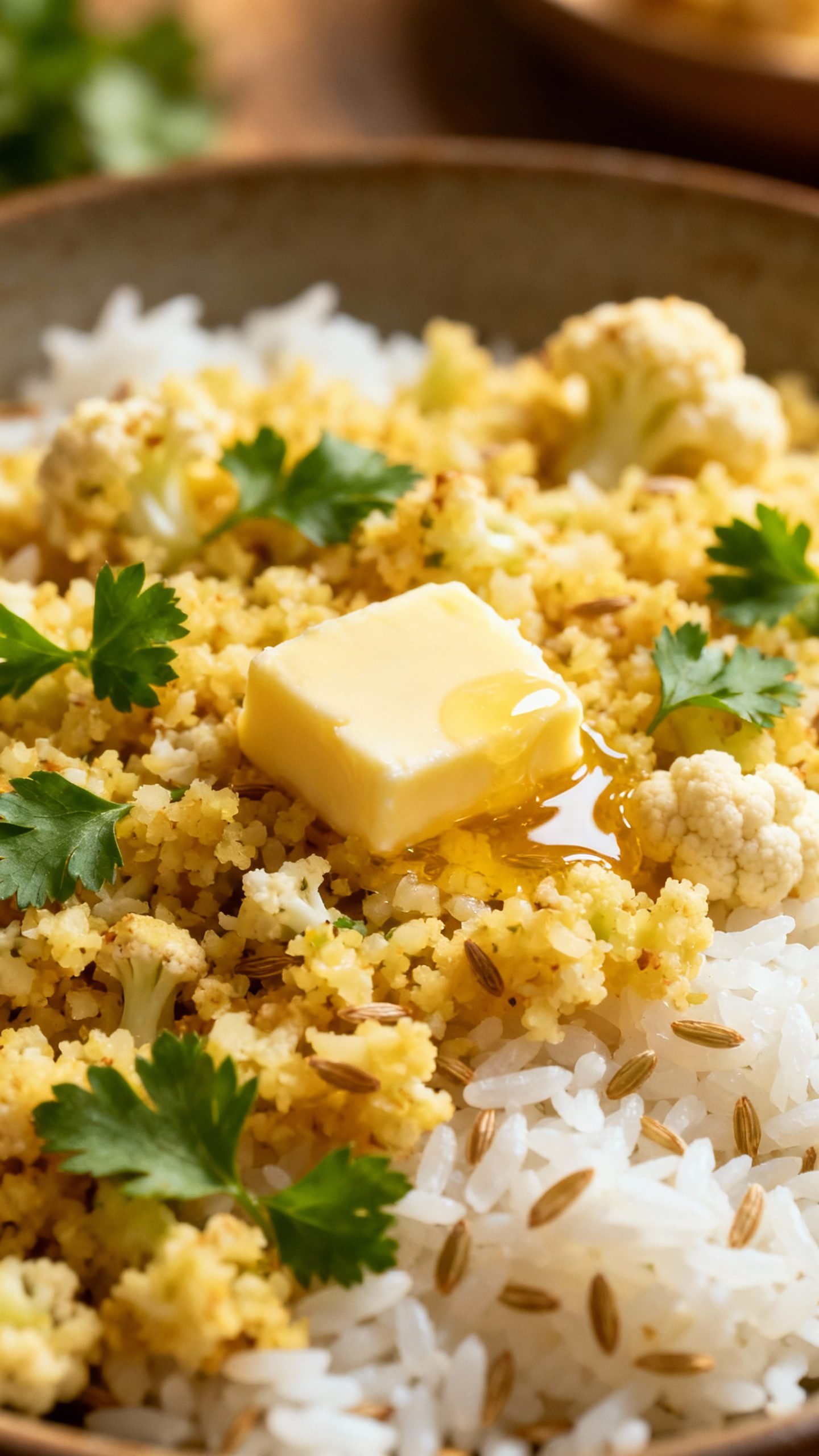
Fluff with a fork.
Fail-proof Oven Method
- Preheat to 375°F (190°C).
- Add 1 cup rice and 1.5 cups boiling water to a small baking dish with salt and a little oil.
- Cover tightly with foil. Bake 25 minutes. Rest 10 minutes, fluff.
FYI: Different rices = different water ratios.
Check the bag if you’re switching varieties.
Flavor Boosters So Neither Option Tastes Boring
If your “healthy” side tastes like cardboard, you won’t eat it. Fix that.
For cauliflower rice
- Garlic-lime cilantro with a pinch of cumin
- Sesame oil + soy/tamari + scallions + toasted sesame seeds
- Turmeric + ginger + coconut milk (small splash) for a golden vibe
For white rice
- Butter + minced garlic + parsley
- Coconut milk + a little salt for a creamy, tropical side
- Chicken or veggie broth instead of water, with bay leaf
IMO: A squeeze of acid (lemon or rice vinegar) at the end makes both versions pop.
Best of Both Worlds: Mix Them
Can’t choose? Don’t.
Mix cooked cauli-rice with cooked white rice in a 1:1 ratio. You’ll cut carbs and calories, keep the fluffy texture, and nobody at the table will complain. It’s sneaky, balanced, and perfect for bowls and stir-fries.
How to do it
- Cook white rice as usual.
- Sauté cauli-rice separately until just tender.
- Fold together with a knob of butter, pinch of salt, and herbs.
Serve immediately.
Bonus: Great way to ease into lower-carb meals without feeling deprived.
FAQ
Is cauliflower rice actually healthy?
Yes. It’s low in calories and carbs, and it delivers fiber and vitamins. It won’t replace protein or fat, but as a veggie base, it’s a win.
Just don’t drown it in oil and call it a day.
Does cauliflower rice taste like cauliflower?
A little, especially if you under-season it. Cook it hot and fast, use aromatics (garlic, onion, ginger), and finish with acid or umami. The flavor mellows and plays nicely with sauces.
Can I freeze cauliflower rice?
Totally.
Freeze it raw in flat bags. Don’t thaw before cooking—toss it straight into a hot pan to avoid sogginess. Add a minute or two to the cook time.
Is white rice bad for you?
Not inherently.
It’s a refined carb, so it spikes blood sugar more than whole grains. But in a balanced meal with protein, veggies, and healthy fats, it fits just fine. Context matters more than demonizing one food.
What about brown rice instead?
Brown rice brings more fiber and nutrients than white rice, but it cooks longer and tastes nuttier.
If you want a middle ground between white rice and cauli-rice nutritionally, brown rice works. Flavor-wise, it’s a different party.
Can I make “fried rice” with cauliflower rice?
Yes, and it’s great. Cook cauli-rice hot and dry first, then add veggies, scrambled egg, and sauce.
Keep it quick to avoid mush. Sesame oil at the end = chef’s kiss.
So… Which Is Better?
Both win in different lanes. Choose cauliflower rice when you want light, low-carb, veggie-forward meals and big bowls without the bloat. Choose white rice when you want comfort, clean flavor, and a reliable base that carries sauces like a pro. Or be a rebel and mix them for the best of both worlds.
Dinner doesn’t need drama—just flavor, balance, and a skillet that’s ready to go.




One Comment