

Clean and Simple Meal Prep for Busy Professionals
Clean and simple meal prep for busy professionals isn’t about cooking elaborate recipes or spending your Sunday trapped in the kitchen. It’s about building a repeatable system that survives packed calendars, long workdays, and decision fatigue—without relying on takeout or ultra-processed convenience food.
If your workday already demands most of your mental energy, your meals should run on autopilot. That’s exactly what a clean and simple approach delivers.
Important: This article shows you how to execute meal prep when time is limited. If you want the complete framework that scales across all lifestyles, start with the pillar guide: clean and simple meal prep.
Table of Contents
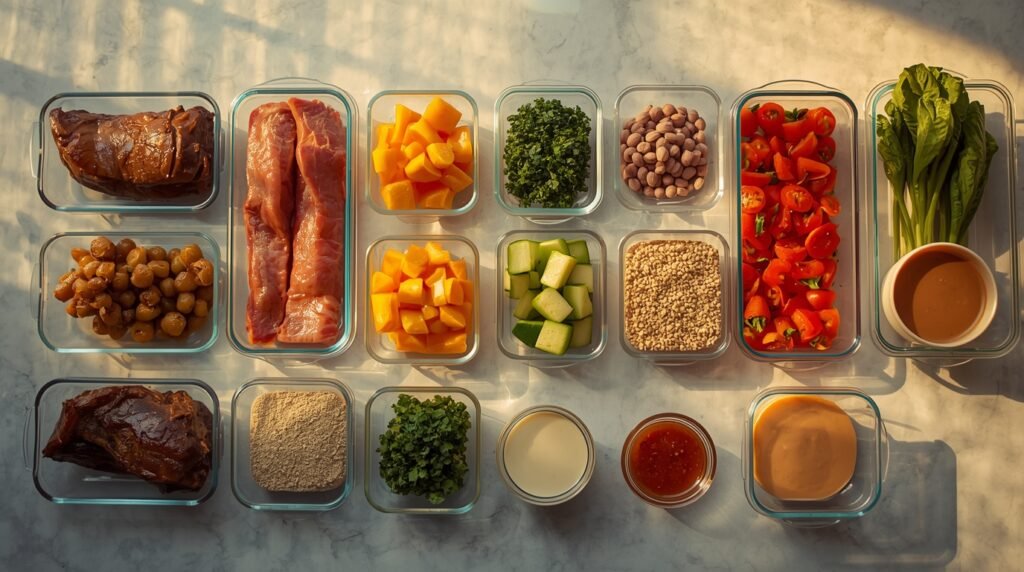
Quick Start: The 10-Minute Setup Busy Professionals Actually Use
This setup removes complexity before you ever touch a pan.
- Choose 2 proteins: chicken, eggs, tofu, fish, or lean ground meat
- Choose 2 sides: rice, potatoes, quinoa, roasted vegetables, or salad greens
- Choose 1 sauce: something versatile you won’t get bored of
That’s it. You are not building a menu. You are building a system.
This structure eliminates overthinking, keeps grocery lists short, and allows you to mix and match meals throughout the week without feeling like you’re eating the same thing every day.
The Work-Week Meal Prep Plan (Built for Real Schedules)
The mistake most professionals make is planning meals by day instead of by components. When meetings run late or priorities shift, rigid plans collapse.

Use the “Component Model”
- Protein base: batch-cooked once
- Carb or fiber base: cooked or prepped once
- Vegetable add-ins: roasted, raw, or frozen
- Flavor layer: sauces, herbs, spices
From these components, you can assemble lunches, dinners, or quick bowls in under two minutes. This is what makes meal prep sustainable during high-pressure weeks.
Example Workweek Setup
- Lunches: protein + carb + vegetable
- Dinners: protein + vegetable + different sauce
- Emergency meals: leftovers or freezer backup
This approach supports quick healthy meal prep without locking you into a rigid eating schedule.
Time-Saving Tactics That Actually Matter
Busy professionals don’t need more recipes. They need fewer friction points.
Batch Cooking Without Losing Your Weekend
Cook proteins and carbs simultaneously. Use the oven for vegetables while the stove handles grains. Parallel cooking cuts prep time nearly in half.
Sheet-Pan Meals Are Your Best Friend
One pan. One timer. One cleanup cycle. This method is ideal for meal prep for work week routines.
Sauce Rotation Beats Recipe Rotation
Changing sauces changes the entire meal experience. Keep the food simple and vary the flavor profile.
These tactics allow you to maintain time saving meal prep ideas even during deadline-heavy weeks.

Office Lunches That Don’t Feel Like a Chore
Lunch is where most professionals fall off track. Either they skip it, grab something expensive, or default to low-quality convenience food.
Meal prep solves this by making the healthy option the easiest option.
- Pack lunches in stackable containers
- Pre-portion meals to avoid overeating
- Keep lunches boring but reliable
The goal isn’t excitement—it’s consistency. Reliable lunches protect energy levels and decision-making capacity for the rest of the day.
Common Meal Prep Mistakes Busy Professionals Make
- Overplanning: Too many recipes creates burnout
- Underportioning: Leads to snacking or takeout
- No backup meals: One bad day derails the whole week
- Ignoring preferences: If you hate the food, you won’t eat it
Meal prep succeeds when it respects your schedule, not when it fights it.
FAQ: Clean and Simple Meal Prep for Busy Professionals

How many meals should I prep for a work week?
Start with lunches only. Once that becomes automatic, layer in dinners. Simplicity compounds faster than ambition.
What’s the fastest clean protein option?
Rotisserie chicken, eggs, canned fish, and pre-cooked legumes all qualify as clean when used intentionally.
How long should weekly meal prep take?
Most professionals can prep an entire week in 60–90 minutes once the system is established.
Next Steps: Upgrade to a Full System
This article gives you the execution plan. The pillar guide gives you the operating system.
If you want to build a version of meal prep that adapts to changing schedules, stress levels, and priorities, start here:
→ Clean and Simple Meal Prep (Complete Framework)
Once the system is in place, eating well becomes a background habit—not another item on your to-do list.





2 Comments