

Gut-Healthy Longevity Meal Recipes for Microbiome Support Explained
Gut-Healthy Longevity Meal Recipes for Microbiome Support sound polite. Clinical. Almost boring. Like something printed on the side of a probiotic bottle you stopped believing in sometime around your third month of bloating despite “doing everything right.”
But let’s be real for a second.
If your gut is compromised, longevity isn’t a distant goal—it’s already slipping. Quietly. Not with drama. More like a slow leak in a tire you swear you just filled. You’re eating clean. You’re hitting protein. You’re avoiding sugar like it personally wronged you. And still—fatigue. Brain fog. A low, humming inflammation that never quite leaves the room.
That’s the problem.
Not ignorance. Not discipline.
A system mismatch.
And it keeps aging people while they’re busy counting almonds.

Gut-Healthy Longevity Meal Recipes for Microbiome Support: Microbes Eat First
Here’s the thing: your gut microbes eat first.
Not metaphorically. Literally.
Before calories hit your bloodstream, before nutrients become you, they become them. And if what you’re feeding them is repetitive, sterile, macro-optimized nonsense—congratulations, you’ve built a microbiome that’s obedient, narrow, and fragile. Great for spreadsheets. Terrible for resilience. Worse for longevity.
Most so-called longevity diets worship at the altar of restriction. Less calories. Less time eating. Less joy. What they rarely interrogate—because it’s messy, hard to quantify, and refuses to sit still—is microbial diversity.
And diversity is the whole game.
Pro Tip: If you want “longevity” to be more than a personality trait, stop treating your gut like an afterthought. Start building a rotation strategy into your week and anchor it to your existing routines.
For more structured approaches, browse these longevity-focused meal recipes and steal the patterns that fit your real life.
Gut-Healthy Longevity Meal Recipes for Microbiome Support: Why “Healthy” Can Backfire

Fiber counts are seductive. Easy to track. Comforting. Thirty grams. Check the box. Move on.
But fiber isn’t a monolith. It’s a language. And most people are speaking one word over and over, wondering why the conversation died.
Oats every morning. Broccoli every night. Spinach until morale improves.
Your microbes get bored. They shrink. They cannibalize the gut lining when fermentable substrates run dry. (That part usually gets left out.)
Polyphenols—those bitter, colorful compounds plants use to defend themselves—are where the real action is. They’re not nutrients for you. They’re signals. Invitations. A slow expansion of microbial capacity that no capsule can replicate.
Blueberries don’t “add antioxidants.” They reshape ecosystems.
Key Takeaway: Quantity-based “fiber goals” are a beginner metric. Longevity-level gut support is about fiber variety plus polyphenol density—week after week.
If you’re navigating energy dips or digestion shifts as you get older, this piece on lifestyle nutrition after 30 connects the dots between gut signaling, energy metabolism, and what actually changes with age.
Gut-Healthy Longevity Meal Recipes for Microbiome Support: Meals That Don’t Announce Themselves
Breakfast Recipe: Resistant-Starch Overnight Oats (No Hostage Situation)
Overnight oats—yes, those again—but not the Instagram kind drowning in protein powder and monk fruit like a hostage situation.
Soaked. Cold. Resistant starch intact. Add chia. Flax. A handful of berries that stain the spoon and your fingers a little. Walnuts for bitterness. Cinnamon—not for blood sugar theatrics, but because microbes seem to enjoy complexity as much as humans do.
It’s quiet food. Which is usually the most effective kind.
Pro Tip: Keep two “base breakfasts” and rotate the add-ins weekly. Your gut notices variety more than your to-do list does.
- Week A: berries + walnuts + cinnamon
- Week B: cocoa + pumpkin seeds + orange zest
Lunch Recipe: Polyphenol Lentil Bowl That Respects Your Afternoon
Lentils. Green ones. Slightly firm. Radicchio. Arugula. Something sharp enough to remind you this isn’t comfort food.
Red onions, roasted until they go sweet and soft in that way that feels earned. Olive oil that tastes like olives actually lived a life before being pressed.
Lentils matter here not because they’re trendy, but because they refuse to be simple. Resistant starch. Oligosaccharides. Slow fermentation that feeds the right crowd instead of the loudest one.
This is the kind of meal that doesn’t knock you out at 2 p.m. Which should already tell you something.
Key Takeaway: If your “healthy lunch” makes you sleepy, that’s not a personality flaw. It’s meal architecture. Build for fermentation and steady glucose, not instant fullness.
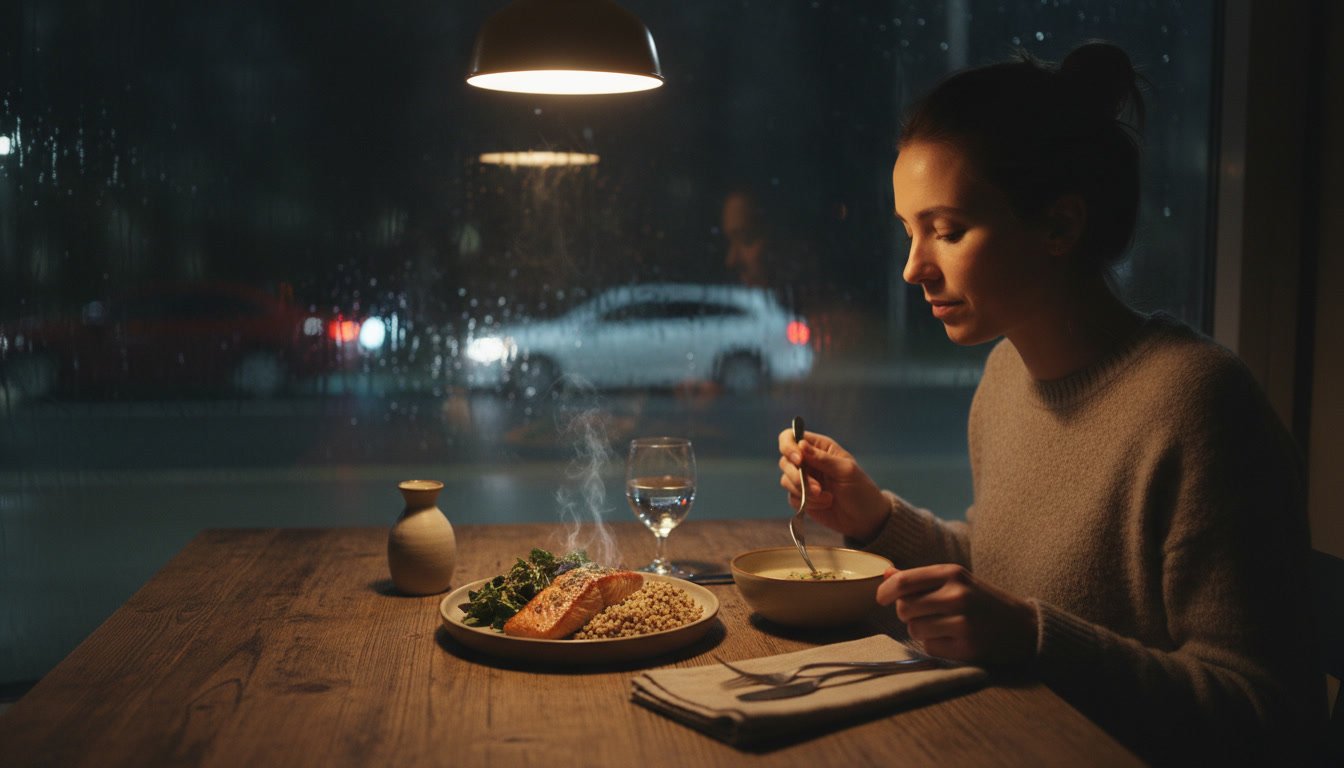
Dinner Recipe: Salmon + Cooled Quinoa + Broccoli (Sleep Does the Heavy Lifting)
Salmon. Wild if possible—not for purity points, but for the omega-3 profile microbes seem to respond to like a deep breath.
Quinoa cooked, cooled, reheated. Yes, reheated. Resistant starch doesn’t care about culinary aesthetics.
Broccoli, steamed just enough to smell like broccoli and not like regret. Garlic-infused oil—not raw garlic, unless you enjoy social isolation.
This is repair food. Not flashy. Not exciting. Effective in the way good infrastructure always is.
Pro Tip: Cook grains in batches, cool them overnight, and reheat portions through the week. It’s the lowest-effort way to stack resistant starch into a normal life.
If you train hard and you’re trying to reconcile performance with gut calm, you’ll get more mileage out of a targeted approach like this longevity diet for athletes guide—because “just eat clean” is not a strategy.
Gut-Healthy Longevity Meal Recipes for Microbiome Support: The Stuff That Rarely Makes Headlines

Microbes have circadian rhythms. So does digestion. So does inflammation.
Fiber earlier. Fermented foods later. It’s not a hack. It’s alignment.
Eating the same “perfect” meals every day shrinks microbial diversity the same way monoculture farming destroys soil. Rotate ingredients. Not macros. Ingredients.
Three days of lentils, then move on. Buckwheat. Black beans. Farro. Something unfamiliar enough to wake things up down there.
And fasting—ah yes, fasting. Short windows? Fine. Helpful even. Extended fasts without fiber reintroduction? That’s how you starve the very organisms you’re trying to protect.
Longevity doesn’t come from proving how little you can eat. It comes from how well you recover.
Pro Tip: Make a “rotation list” once. Put it on the fridge. Follow it when your brain is fried. The microbiome rewards boring consistency with quiet stability.
- Legumes: lentils, black beans, chickpeas, split peas
- Grains: oats, buckwheat, quinoa, farro
- Polyphenols: berries, cocoa, olive oil, citrus zest
Gut-Healthy Longevity Meal Recipes for Microbiome Support: The Close Nobody Wants
If your digestion feels brittle, your energy unpredictable, your “healthy” diet oddly exhausting—it’s not because you’re failing.
It’s because you’re feeding yourself like a machine and ignoring the ecosystem that keeps it running.
Gut-healthy longevity meals don’t shout. They accumulate. Quietly. Persistently. Over time.
And then one day—usually without ceremony—you realize you feel… steady.
Which is rarer than it should be.
Products / Tools / Resources
- Glass meal prep containers – because plastic and fermented foods don’t belong in the same conversation
- High-quality extra virgin olive oil – the kind that burns your throat a little (that’s a feature)
- A rotation list of legumes & grains stuck on the fridge so you don’t default to autopilot
- A decent steamer basket – boring, indestructible, wildly useful
- A notebook for tracking how food feels, not just what it weighs
Nothing exotic. Nothing branded as “longevity.” Just tools that let good systems run without friction.
Recommended Products (Amazon)

Glass Meal Prep Containers (Leakproof, Oven-Safe)
If you’re storing overnight oats, lentil bowls, or anything fermented-adjacent, glass keeps flavors clean and avoids that “plastic breath” taste that ruins otherwise good food.

Stainless Steel Steamer Basket
Steamed broccoli, greens, and quick veg sides become automatic when the tool is simple and indestructible. Less friction, more consistency—your gut wins by default.
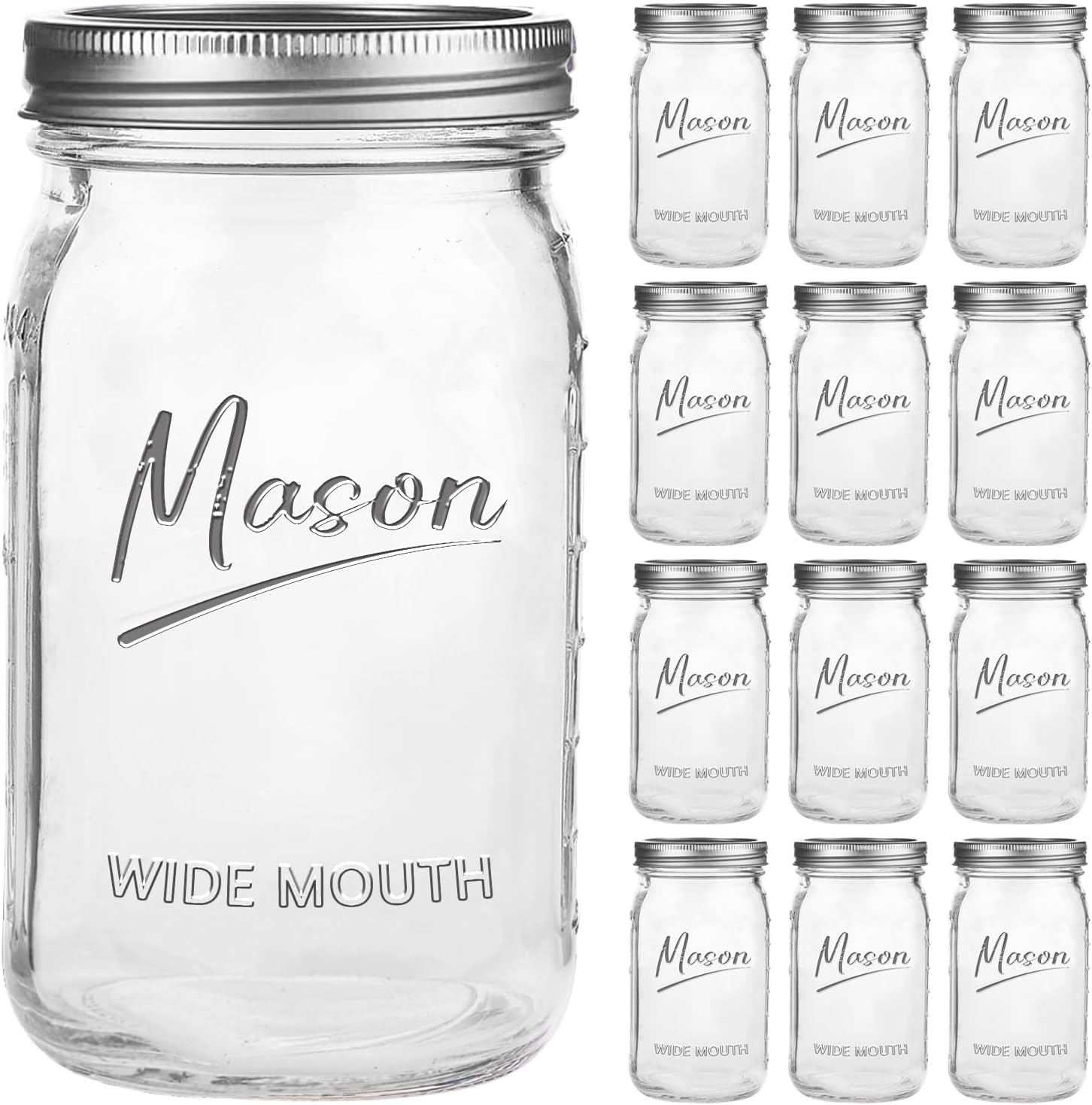
Wide-Mouth Mason Jars (Overnight Oats + Dressings)
Overnight oats, chia pudding, vinaigrettes, citrus-zest olive oil—mason jars keep prep clean, stackable, and weirdly satisfying. The simplest system is the one you repeat.

Digital Kitchen Scale (For Consistency, Not Obsession)
Not for micromanaging your life—just for making repeatable bowls and batch cooking consistent. Less guesswork means you can focus on rotation and variety.


