

Healthy Meals for Families and Kids Made Simple
Healthy Meals for Families and Kids don’t fail because parents are lazy, uninformed, or “bad at cooking.” They fail because the system is broken.
The problem? Time pressure. Picky eaters. Conflicting advice. Unrealistic Pinterest nonsense. One kid wants nuggets, another wants pasta, and you’re standing there wondering if cereal counts as dinner again.
It’s frustrating. It’s exhausting. And honestly, a lot of “healthy family meal” advice makes it worse by pretending families live in a meal-prep utopia where everyone loves quinoa, nobody has late soccer practice, and the sink magically cleans itself.
This guide fixes that.
I’ve spent over a decade building high-traffic food and nutrition content that actually works in real homes. Not influencer kitchens. Not test labs. Real families, real kids, real chaos. I care about what happens on a random Wednesday, not what looks good in a cookbook photo.
If you want a repeatable, low-stress, kid-approved framework for feeding your family well—without losing your sanity—stick with me. ☕🙂
Table of Contents
What Are Healthy Meals for Families and Kids (Really)?
Short answer:
Healthy meals for families and kids are balanced, flexible meals built around whole foods, age-appropriate nutrition, and routines that work on busy schedules—without requiring perfection.
Long answer? Let’s unpack it, because most people use “healthy” like it’s a personality trait instead of a practical goal.
The Definition Most Sites Get Wrong
Most articles define healthy family meals like this: “Nutritious meals that include lean protein, whole grains, fruits, and vegetables.”
Cool. Accurate. Useless.
That definition ignores:
- Child development (tiny humans don’t eat like tiny adults)
- Taste adaptation (liking food is a skill, not a switch)
- Family logistics (hello, schedules)
- Budget (yes, it matters)
- Energy needs at different ages (growth spurts don’t ask permission)
Healthy family meals aren’t just about nutrients. They’re about adherence. The best plan in the world doesn’t help if nobody eats it.
If a meal is “healthy” but your kid refuses it every time, it’s not healthy—it’s theoretical. And theories don’t keep anyone full.
A Practical Definition (The One I Use)
I define Healthy Meals for Families and Kids as meals that:
- Meet nutritional needs over time (not per plate, per night)
- Allow flexibility and swaps (because life happens)
- Support growth, focus, and energy (the real “performance metrics”)
- Reduce mealtime conflict (peace is nutritious too)
- Can be repeated weekly without burnout (sustainability beats novelty)
That’s the bar. Anything above that is a bonus.
Pro Tip: Nutrition works on averages, not moments. One “meh” dinner doesn’t matter. The weekly pattern does.
Myth Busting: Kids don’t need “perfect plates.” They need predictable exposure to good food, presented calmly, over time.
Child Nutrition Basics Explained Simply
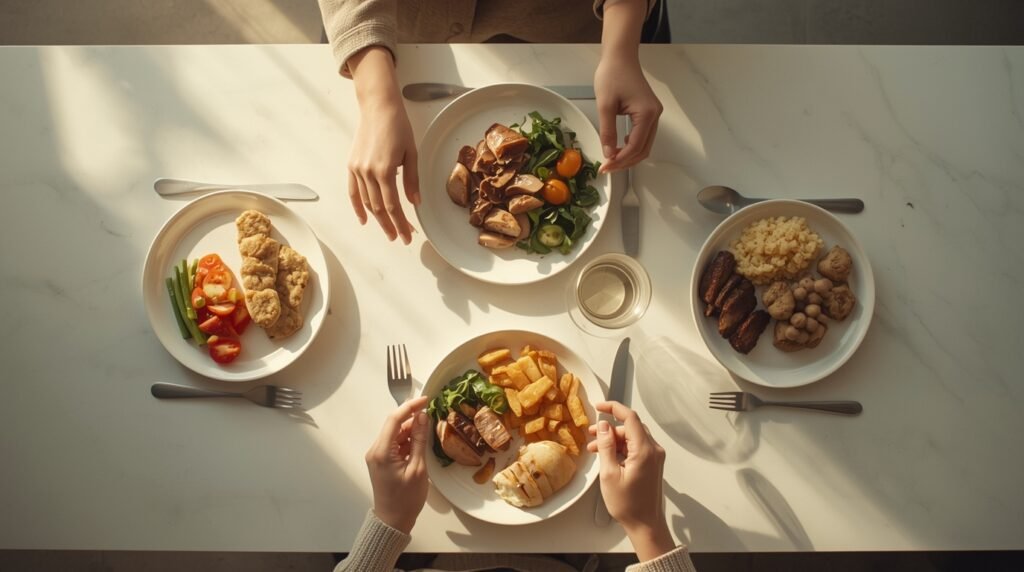
A Quick History Lesson (Why This Is Harder Than It Used to Be)
Let’s rewind for a second, because context makes everything feel less like a personal failure.
Thirty years ago:
- Fewer ultra-processed foods
- More home cooking by default
- Fewer snack options
- More consistent meal routines
Today?
- Hyper-palatable food everywhere (engineered to taste amazing)
- Screens competing with meals (attention is a battlefield)
- Parents juggling insane schedules (work, school, activities, life)
- Kids marketed to like mini adults (fun packaging, loud claims, nonstop ads)
So when parents say, “Why won’t my kid eat like I did?”—the answer is simple:
The environment changed. Your kid didn’t break.
Healthy meals now require intentional structure, not nostalgia. You don’t need to become a “perfect cook.” You need a plan that survives real life.
Why Healthy Family Meals Matter (More Than You Think)
This isn’t about abs, macros, or food guilt. It’s about outcomes—the day-to-day stuff that actually impacts your family’s mood, energy, and sanity.
The Real Benefits (Backed by Reality)
When families eat consistently balanced meals, you usually see:
- Kids focus better at school (less “brain fog,” fewer crashes)
- Energy levels stabilize (fewer dramatic dips)
- Mood swings decrease (not vanish, let’s be realistic)
- Snacking chaos drops (because meals actually satisfy)
- Parents stress less (quietly life-changing)
And no, this isn’t about forcing kale. It’s about blood sugar stability, protein sufficiency, and routine. When those three show up consistently, everything gets easier—especially behavior.
My opinion: People underestimate how much “bad behavior” is actually “hungry + tired + dysregulated.” Feed the system, and the system behaves better.
What Happens When Meals Are Random?
I see this pattern constantly:
- Skipped breakfasts
- Carb-heavy lunches
- Snack-based dinners
Result?
- Afternoon meltdowns
- “Always hungry” kids
- Parents feeling like short-order cooks
That’s not a discipline issue. That’s a meal structure issue. Kids can’t “choose better” when their bodies scream for fast energy.
Pro Tip: Most “picky eating” improves when protein and fats show up earlier in the day. Think eggs, yogurt, nut butter, cheese, beans—whatever fits your family.
The Core Principles That Make Family Meals Work
Before we get tactical, you need the rules of the game. Skip these and no recipe will save you.
1) Exposure Beats Enforcement (Every Time)
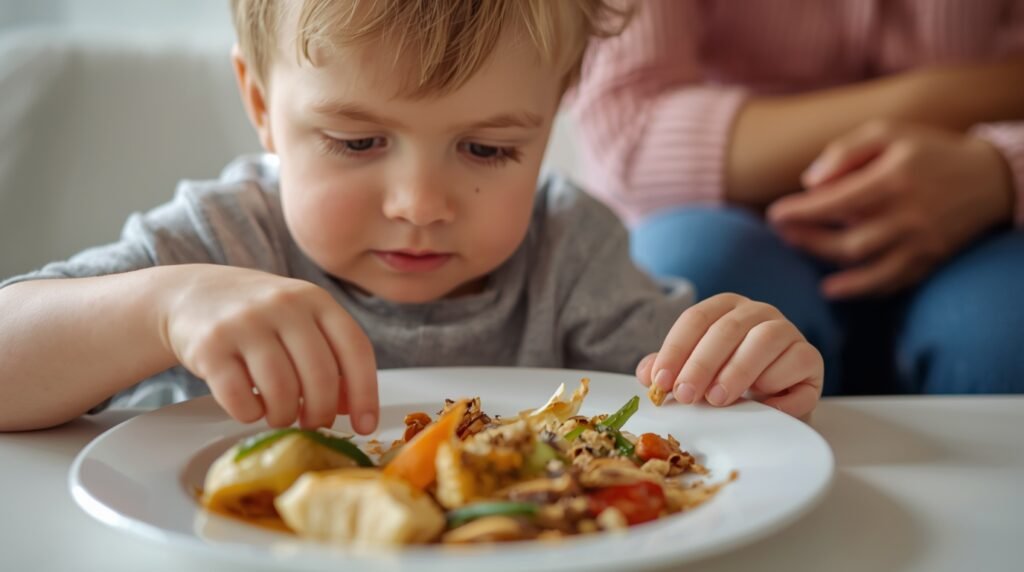
Kids learn to like foods through repeated, pressure-free exposure.
Not lectures. Not bribery. Not “just take one bite” battles. If you turn dinner into court proceedings, kids will treat food like evidence.
It can take 10–20 exposures before a child accepts a food. So yes—serving broccoli again matters, even if it comes back untouched. Your job is consistency, not instant conversion.
My Rule: Parents decide what and when. Kids decide if and how much. This removes the power struggle and keeps you in charge of the structure.
Under-the-Radar Tactic: Serve “new-ish” foods in tiny portions. A single broccoli floret counts as exposure. Nobody needs a mountain.
2) One Meal, Not Four Variations
This is non-negotiable.
Healthy meals collapse when parents cook:
- A “kid meal”
- A “parent meal”
- A “backup meal”
That’s how resentment grows. Also, it trains kids to hold out for the second menu.
Instead, build one flexible meal with:
- A safe food (something your kid already eats)
- A growth food (something new or less loved)
Same table. Same meal. Different choices.
Pro Tip: A “safe food” doesn’t mean “junk.” It means “reliable.” Rice can be safe. Bread can be safe. Fruit can be safe. Use what works.
3) Balance Over Perfection
Every solid family meal includes:
- Protein
- Fiber-rich carbs
- Fats
- Color (fruits/veggies)
Not perfectly. Just consistently.
Chicken nuggets + fruit + milk? Better than you think. Pasta + beans + olive oil + veggies? Solid win. A grilled cheese with tomato soup and a side of berries? Also a win.
Opinion: If Instagram wouldn’t like it but your family eats it—you’re doing it right.
Step-by-Step: How to Build Healthy Meals for Families and Kids (That Actually Get Eaten)
This is the part you’ll come back to. Save it.
Step 1: Start With Protein (Always)
Protein anchors meals. It keeps kids full, supports growth, and stabilizes energy. If you want fewer “I’m hungry” moments five minutes after dinner, protein is your best friend.
Kid-friendly protein options:
- Eggs
- Yogurt (plain or lightly sweetened)
- Chicken
- Ground beef or turkey
- Beans & lentils
- Fish sticks (yes, really)
Pro Tip: Aim for protein at every meal, not just dinner. Breakfast protein is a game-changer, especially for school days.
Quick template: protein + fruit + “something crunchy” = a breakfast kids accept more often than you’d expect. Think yogurt + berries + granola, or eggs + toast + apples.
[Link Opportunity] High-Protein Breakfasts for Kids
Step 2: Choose One Carb (Don’t Fear Them)
Carbs aren’t the enemy. Chaos is. Kids need carbs for energy and growth, but they do better when you pair carbs with protein and fat.
Good family-friendly carbs:
- Rice
- Potatoes
- Pasta
- Oats
- Bread
Pair carbs with protein and fat to avoid energy crashes. Example: pasta + meatballs + olive oil + a side veggie. Or rice + beans + avocado. Or toast + eggs + fruit.
Myth Busting: “Too many carbs” usually means too few proteins, not the other way around.
Step 3: Add Color Without Pressure
Veggies count even if they’re frozen, roasted with oil, or blended into sauces. Your kid doesn’t award you extra points for suffering, so don’t.
Serve them. Let kids decide.
No speeches. No negotiations. Just exposure.
Under-the-Radar Tactic: Put veggies on the table in a “grab bowl” format (like a small bowl of baby carrots). Kids eat more when food feels casual, not assigned.
Step 4: Use the “Deconstructed Plate” Trick
This works wonders with picky eaters, sensory kids, and basically any kid who hates when food touches other food (which is… a lot of them).
Instead of casseroles or mixed dishes:
- Serve ingredients separately
- Let kids assemble or choose
Examples:
- Taco night → meat, tortillas, cheese, veggies on the side
- Pasta night → noodles, sauce, protein separate
- Breakfast-for-dinner → eggs, toast, fruit, yogurt as “options”
Kids feel control. Parents keep nutrition intact. Everyone wins.
Pro Tip: Deconstructed plates also help you spot patterns. If your kid always eats the protein but skips the veg, you can gently increase exposure without fighting.
Step 5: Repeat Meals on Purpose
Repetition isn’t boring. It’s efficient. Your family needs reliable “defaults” the way your phone needs a charger.
Most families thrive on 10–15 repeatable meals. Rotate them. Tweak them. Don’t reinvent dinner nightly.
Efficiency Rule: If a meal works, put it on a 2-week rotation.
Under-the-Radar Tactic: Name your repeats. Seriously. “Taco Tuesday,” “Sheet Pan Thursday,” “Breakfast Night.” Kids love predictability when it’s branded like a tradition.
Step 6: Plan the Week Backwards
Here’s my favorite tactic: instead of asking, “What should we eat?” ask:
- What nights are chaotic?
- What nights allow cooking?
- When do leftovers help?
Then assign meals accordingly:
- Busy nights → simple, fast meals
- Calm nights → slightly more involved meals
Meal planning should reduce stress, not create it.
Under-the-Radar Tactic: Plan 3 dinners + 2 leftover nights per week. Instant sanity boost.
Example “real life” plan:
- Monday (chaos): rotisserie chicken + microwave rice + bag salad
- Tuesday (moderate): tacos (deconstructed)
- Wednesday (leftovers): taco bowls or quesadillas using leftovers
- Thursday (calmer): sheet pan sausage + potatoes + broccoli
- Friday (leftovers / freezer): soup from the freezer or “snack plate” dinner with structure
About “snack plate dinner” (when you’re out of energy): Do it on purpose, not as surrender. Build a plate with one protein (cheese, hummus, yogurt, deli turkey), one fiber carb (whole-grain crackers, toast, popcorn), one fruit/veg (berries, cucumbers, carrots), and one fun (a few pretzels, a square of chocolate). Kids feel like they’re getting a “treat dinner,” and you quietly hit the nutrition targets. This setup works as a reset button: it calms everyone down, avoids cooking a second dinner, and keeps the routine intact. If your kid asks for more, offer more protein or fruit first. If they want only the “fun,” stay neutral and keep portions small. You’re not policing—you’re steering.
Notice the theme: you’re not cooking from scratch every night. You’re managing a system.
Step 7: Get Kids Involved (Strategically)
You don’t need sous-chefs. You need buy-in. Kids who participate feel ownership, and ownership reduces resistance.
Age-appropriate involvement:
- Toddlers: washing produce, tearing lettuce
- Kids: stirring, choosing sides, making simple sauces
- Teens: planning one meal per week and executing it (with guidance)
Pro Tip: Give kids “bounded choice.” Ask: “Do you want broccoli or carrots?” not “What do you want for dinner?” That second question opens a portal to chaos.
Step 8: Stop Labeling Foods as “Good” or “Bad”
This one matters more than people admit.
Labeling creates:
- Food anxiety
- Secret eating
- Power struggles
Instead:
- Talk about “everyday foods” and “sometimes foods”
- Keep all foods neutral
Yes, even dessert. Especially dessert.
Opinion: Food morality messes kids up long-term. Don’t go there. Teach skills, not shame.
Step 9: Build a Default Grocery List
Decision fatigue kills consistency. If you decide your whole food identity every Sunday, you’ll quit by Wednesday.
Create a core grocery list with:
- 5 proteins
- 5 carbs
- 5 fruits
- 5 veggies
- 3 snacks
Rotate flavors, not foundations.
Example “default list” (steal this):
- Proteins: eggs, Greek yogurt, chicken thighs, ground turkey, canned beans
- Carbs: rice, pasta, oats, tortillas, potatoes
- Fruits: bananas, apples, berries (fresh or frozen), oranges, grapes
- Veggies: baby carrots, frozen broccoli, cucumbers, spinach, bell peppers
- Snacks: cheese sticks, nut butter, popcorn
Pro Tip: If it’s not in the house, it’s not an option. Environment beats willpower. You can’t “resist” what isn’t there.
Step 10: Measure Progress Weekly, Not Daily
If you judge meals daily, you’ll quit. Families don’t run on perfect streaks—they run on recovery.
Instead, ask weekly:
- Did we eat together more?
- Did meals feel calmer?
- Did nutrition improve overall?
- Did I rely less on last-minute panic food?
That’s the real scoreboard. If you’re improving the system, you’re improving health.
Tools & Tech Stack That Make Healthy Family Meals Easier (Not Fancier)
Let me be blunt: you don’t need more recipes. You need leverage.
The right tools reduce friction, save time, and eliminate decision fatigue. This isn’t about buying stuff. It’s about removing the tiny obstacles that make you quit.
The Only Kitchen Tools I Actually Recommend
1) Sheet Pans (Plural, Not One)
If you don’t own at least two rimmed sheet pans, you’re working too hard.
- One-pan meals
- Batch roasting veggies
- Protein + carb combos with zero babysitting
Pro Tip: Line them with parchment. Cleanup becomes a non-issue.
2) Slow Cooker or Pressure Cooker (Pick One)
You don’t need both. Choose based on lifestyle.
- Slow cooker: Great for hands-off days
- Pressure cooker: Faster, better for weeknights
Both excel at shredded chicken, stews, beans, and bulk proteins for leftovers.
Verdict: If your evenings are chaos, slow cooker wins. If you forget to prep, pressure cooker saves you.
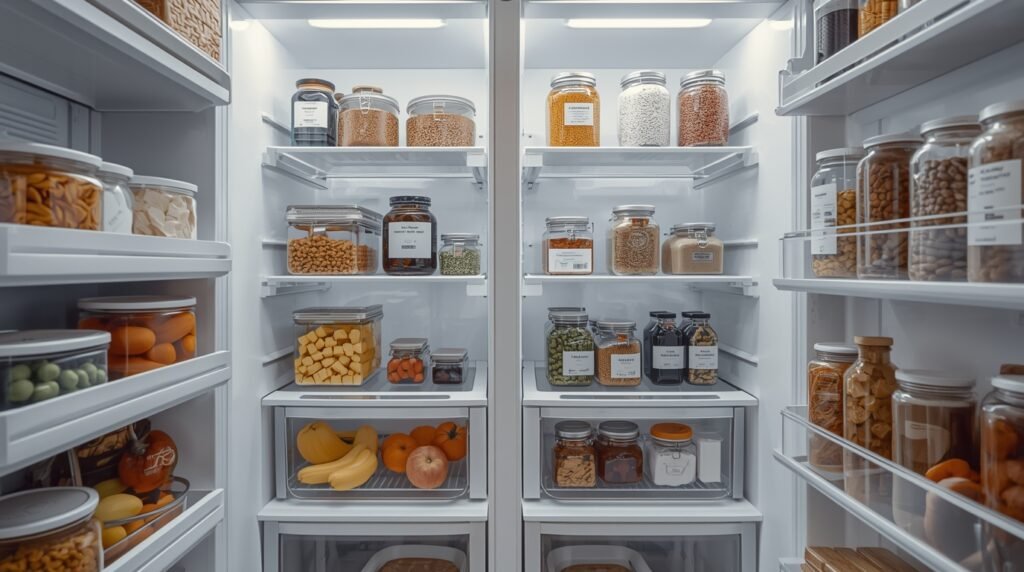
3) High-Quality Food Storage (Non-Negotiable)
Bad containers sabotage leftovers. If leftovers don’t work, you cook too much, spend too much, and stress too much. Containers sound boring until you realize they’re basically a financial strategy.
- Leak-proof lids
- Clear sides (visibility matters)
- Stackable shapes
Under-the-Radar Win: Kids eat leftovers more when they can see what’s inside.
4) A Decent Knife (One Is Enough)
You don’t need a set. You need one sharp chef’s knife. Faster prep = less resistance to cooking.
Digital Tools That Actually Help
- Notes app: For rotating meal lists (keep your “Top 15” meals here)
- Shared grocery list app: Cuts duplicate buying and last-minute store runs
- Calendar reminders: “Leftover night” deserves respect
That’s it. Skip the fancy meal-planning platforms unless you enjoy tinkering. The best system is the one you actually use.
Common Mistakes That Quietly Kill Healthy Family Meals
Mistake #1: Trying to Fix Everything at Once
Parents overhaul breakfast, lunch, dinner, and snacks all in one week. Result? Burnout by Friday.
Fix: Start with one meal. Dinner first. Then breakfast. Then snacks. Slow is fast.
Mistake #2: Negotiating at the Table
“If you eat three bites, you get dessert.” Congrats—you just turned food into a transaction.
Better Rule: Dessert exists sometimes. It’s not earned. Keep it boring and predictable, and it stops being the main character.
Mistake #3: Overreacting to Rejection
Kids refusing food isn’t feedback. It’s exposure in progress.
Pro Tip: Neutral reaction beats persuasion every time. You can say, “Okay,” and keep the table calm. That’s leadership.
Mistake #4: Confusing Snacks for Meals
If kids snack constantly, meals fail. Full stop.
Fix:
- Structured snack times
- Protein-forward snacks
- No grazing within 90 minutes of meals
Snack structure example: After school snack = yogurt + fruit, or cheese + crackers + cucumber. It’s not “tiny dinner,” but it has enough substance to prevent the 5pm meltdown spiral.
Suddenly, dinner works again. Magic? Nope. Biology.
Mistake #5: Letting Social Media Set the Standard
Instagram meals look great. They also use lighting, skip cleanup, and hide refusal.
Your kitchen isn’t a stage. It’s an operating system.
Opinion: If a meal feeds your family calmly, it’s elite—even if it’s ugly.
Advanced Strategies for Families Who Want the Next Level
Strategy 1: The “Meal Framework” Approach
Instead of recipes, use frameworks:
- Protein + carb + veg + sauce
- Build-your-own bowls
- Mix-and-match plates
Why this works: fewer decisions, endless variety, and kids get choice without control.
Flexible Meal Frameworks for Busy Families
Strategy 2: Rotate Flavors, Not Foods
Chicken again? Fine. Same seasoning? Boring.
Rotate sauces, spices, and cooking styles. Kids accept repetition when novelty sneaks in sideways.
Strategy 3: Nutrition Banking
Think weekly, not daily. If Monday’s dinner flops, no panic. Tuesday goes protein-heavy. Wednesday adds veggies.
Nutrition evens out when you stop micromanaging. This mindset removes guilt and improves consistency.
Strategy 4: Front-Load Nutrition Earlier in the Day
Breakfast and lunch carry more weight than dinner because kids eat better earlier. Less fatigue. Less resistance.
If dinner crashes, it matters less. A strong breakfast often “buffers” a weaker dinner.
[Link Opportunity] Balanced School Lunch Ideas That Kids Eat
Strategy 5: The “Always Available” Foods List
Create a short list of foods your kids can always eat:
- Fruit
- Yogurt
- Toast
- Cheese
- Eggs
When dinner doesn’t land, offer these without drama. No short-order cooking. No battles.
Advanced angle (for the top 1%): Use “always available” foods as a calm safety net, not a reward. If your kid learns that refusing dinner earns a special treat, you’ll fight this forever. If they learn that a simple, boring option exists, they relax—and paradoxically try more over time.
Calm Feeding Practices for Picky Eaters
Healthy Meals for Families and Kids: The Future (Next 1–5 Years)

Trend 1: Less Perfection, More Systems
Families are rejecting food guilt, macro obsession, and overplanning. The winners focus on repeatable routines.
Trend 2: Functional Nutrition for Kids
More parents pay attention to protein sufficiency, blood sugar balance, and gut health. Not trends. Fundamentals.
Trend 3: Kids as Participants, Not Passengers
The future isn’t hiding veggies. It’s teaching kids why food matters, slowly and age-appropriately.
Trend 4: Simpler Food, Better Outcomes
As food culture gets louder, families crave simpler meals, fewer ingredients, and clear rules. That’s a good thing.
The Ultimate FAQ (People Also Ask)
What are healthy meals for families and kids?
Answer Target:
Healthy meals for families and kids are balanced, flexible meals that provide protein, carbs, fats, and produce while fitting real schedules. They prioritize consistency over perfection and reduce stress by using repeatable systems instead of rigid rules.
Extra clarity: If your family eats a mix of simple home-cooked meals, smart shortcuts, and structured snacks, you’re already in the “healthy” zone. Don’t let perfectionism move the goalpost.
How do I get my kids to eat healthy meals?
You don’t force it—you design for exposure. Serve balanced meals consistently, include at least one safe food, remove pressure, and let time do the work.
Pro Tip: Your tone matters more than your seasoning. Calm meals build trust. Trust builds willingness.
How many vegetables should kids eat per day?
It depends on age, but aiming for 2–4 servings daily on average works. Some days will be zero. Others will compensate. That’s normal.
Reality check: If your kid eats fruit consistently, that’s still valuable. Keep veggies in rotation without turning them into a fight.
Are snacks ruining my family meals?
If snacks are unstructured, yes. Snacks should support meals, not replace them. Protein-forward, timed snacks fix most issues.
Easy rule: A snack should include at least two of these: protein, fiber, fat. It doesn’t need to be fancy. It needs to be steady.
What if my child is extremely picky?
Start with predictable meals, deconstructed plates, and zero pressure. Extreme picky eating improves when stress disappears.
Picky Eating vs Normal Development
Under-the-Radar Tactic: Track exposures, not bites. If you served the food calmly, you made progress—even if they didn’t eat it yet.
Do healthy family meals cost more?
Only if you chase trends. Staples like rice, beans, eggs, frozen veggies, and chicken are budget-friendly and nutrient-dense.
Pro Tip: Frozen fruit and frozen veggies often cost less and reduce waste. Waste is what makes “healthy eating” feel expensive.
Is it okay to repeat meals every week?
Absolutely. Repetition builds familiarity, reduces stress, and increases acceptance—especially for kids.
My opinion: Families with strong food routines usually repeat meals. They just rotate flavors and presentation so it doesn’t feel like a loop.

Final Word
Healthy meals for families and kids don’t require gourmet skills, perfect plates, or saint-level patience.
They require structure, repetition, flexibility, and calm leadership.
If your meals feel less chaotic, you’re winning. If your kids feel safe around food, you’re winning. If dinner doesn’t end in a negotiation, you’re really winning.
I’ve seen families transform not by doing more—but by doing less, better.
Now take this system, make it yours, and give yourself a break.
Dinner doesn’t need to be perfect. It just needs to happen. 😉
Products / Tools / Resources
Quick note: I only recommend tools that genuinely make family meals easier. If something reduces stress, speeds up prep, or makes leftovers actually happen, it earns a spot here. The best “healthy meal hack” is the one you’ll still use on a Tuesday.
Kitchen Essentials That Pay You Back Weekly
- Rimmed Sheet Pans (2-pack or 3-pack)
If you want weeknight wins with minimal cleanup, start here. Roast protein + veggies, or do freezer foods without shame. Two pans means you can cook a full meal at once instead of playing “pan Tetris.”
Shop rimmed sheet pan sets on Amazon - Parchment Paper or Silicone Baking Mats
This is the “I don’t hate doing dishes” upgrade. Parchment keeps things simple; silicone mats last forever. Either one turns cleanup into a 10-second job, which makes you more likely to cook again tomorrow.
Shop parchment paper on Amazon | Shop silicone baking mats on Amazon - Leak-Proof Glass Meal Prep Containers
Leftovers don’t work if containers stink, leak, or disappear into the cabinet abyss. Glass holds up, keeps food tasting normal, and makes it easy to see what you’ve got—so you actually use it.
Shop glass meal prep containers on Amazon - A Sharp Chef’s Knife (One good one)
A sharp knife makes prep faster and safer. A dull knife turns “quick dinner” into a long, annoying project. One good knife is the difference between “I can do this” and “let’s order pizza.”
Shop chef’s knives on Amazon
Cook-Faster Tools for Busy Nights
- Slow Cooker
Perfect for days when you know future-you will be too tired to care. Dump, set, and walk away like a responsible adult. Bonus: slow-cooked meals often taste better as leftovers, which helps your “leftover night” strategy actually happen.
Shop slow cookers on Amazon - Electric Pressure Cooker
The “I forgot to plan” hero. Great for shredded chicken, rice, soups, and quick batch cooking when time is tight. If you want weeknight speed without living on takeout, this tool pulls its weight.
Shop electric pressure cookers on Amazon - Air Fryer (Kid-Approved Crunch)
If your kids love crispy textures, an air fryer helps you get that vibe with less oil and less effort. It also reheats leftovers like a champ, which turns yesterday’s dinner into a lunch everyone actually eats.
Shop family-size air fryers on Amazon
Kid-Friendly Helpers That Reduce Mealtime Drama
- Bento Lunch Boxes
These make balanced lunches easier and reduce the “everything touched everything” complaints. Kids love compartments. It’s a whole thing. They also help you pack variety without packing five separate containers.
Shop bento lunch boxes on Amazon - Small Cutting Boards (One for produce, one for everything else)
This speeds up prep and keeps things cleaner. Also great for kids helping with “safe” tasks like fruit and veggies. If you want kids involved without feeling like you’re risking your fingers, this helps.
Shop small cutting board sets on Amazon - Digital Meat Thermometer
This ends the “is this chicken done?” anxiety. It also prevents overcooking, which—FYI—reduces kid complaints. Dry chicken creates drama. A thermometer avoids drama. Simple math.
Shop instant-read thermometers on Amazon
Affiliate Disclosure: Some links in this post are affiliate links. If you buy through them, I may earn a small commission at no extra cost to you. I only recommend products I genuinely believe help families eat better with less stress.





4 Comments