
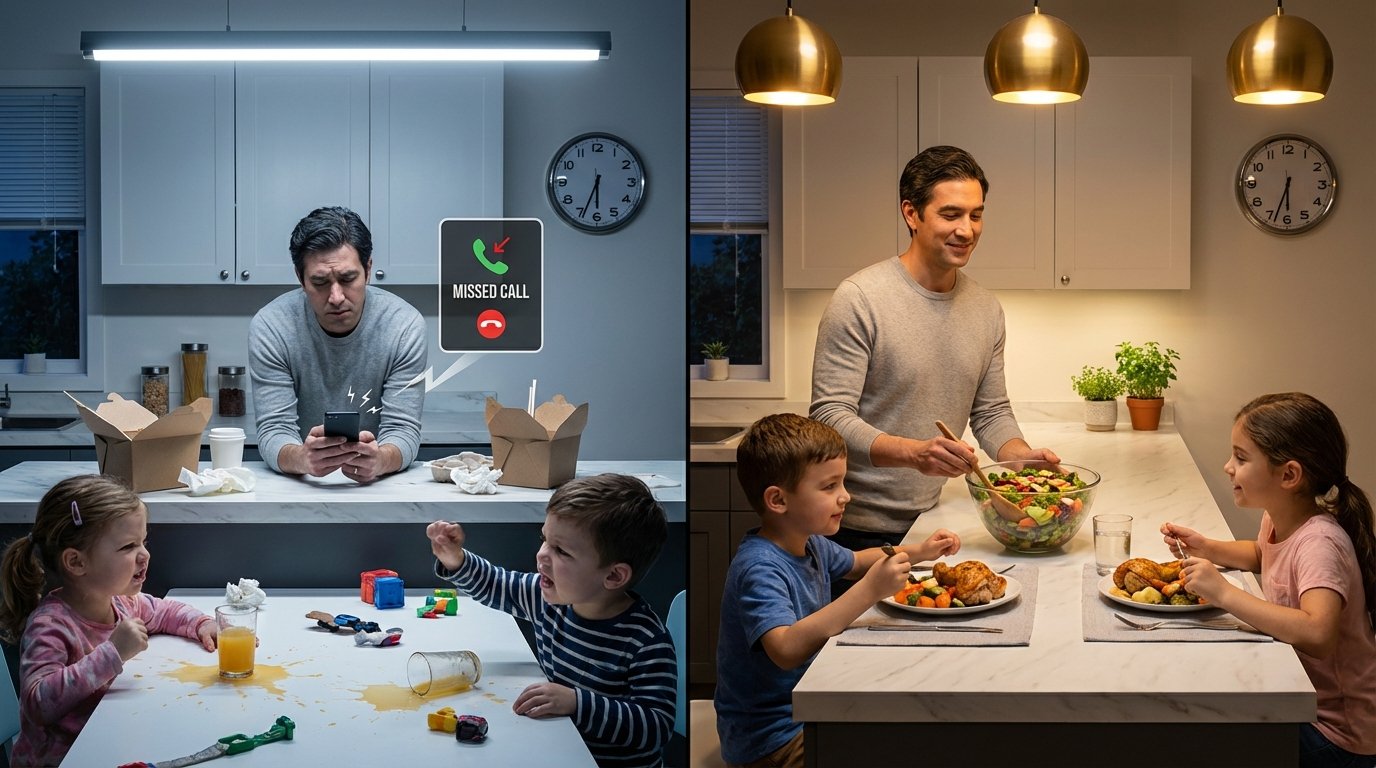
Healthy Meals for Families and Kids Recipes (Easy, Nutritious & Kid-Approved)
Healthy meals for families and kids. Dinner doesn’t fall apart because parents don’t care. It falls apart because most families are trying to solve a systems problem with good intentions and random recipes. This guide isn’t “inspiration.” It’s a repeatable framework for easy, nutritious, kid-approved meals that hold up on real weeknights—when time is short and energy is thinner.
What you’ll get: A parent-friendly “control system” that reduces dinner stress, improves nutrition consistency, and helps kids say yes to healthier food—without power struggles.
Table of Contents
- Why Most Family Dinners Fall Apart
- What “Healthy Meals for Families & Kids” Really Means
- The Family-Approved Meal Formula
- 15 Easy, Nutritious & Kid-Approved Dinner Ideas
- How Kids Learn to Say Yes to Healthy Food
- Tools That Make Healthy Family Meals Feel Effortless
- Weekly Family Meal Planning (Built for Real Life)
- Products / Tools / Resources
- FAQs
Why Most Family Dinners Fall Apart (And Where the System Breaks)
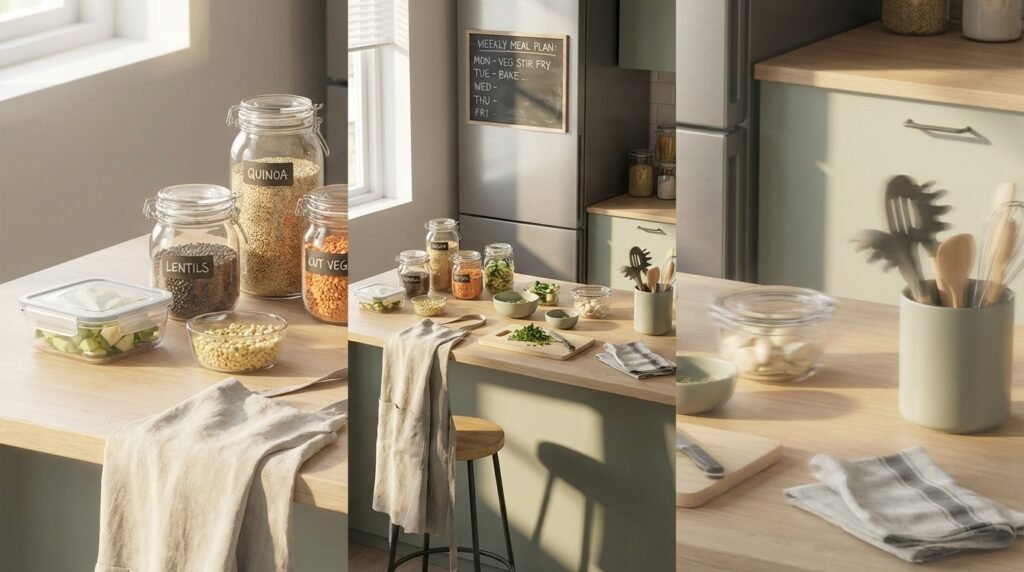
Time Scarcity vs. Nutrition Tradeoffs
Weeknights force a harsh trade: cook something wholesome and lose an hour, or grab something fast and feel the guilt creep in. That tension isn’t a personal failure—it’s a design flaw. A healthy family dinner system has to survive real constraints: school nights, tired parents, hungry kids, and limited attention.
- Fast to execute
- Forgiving when plans change
- Repeatable without boredom
Picky Eating Psychology (Taste Conditioning & Exposure Bias)
Kids aren’t “difficult eaters” by nature—they’re pattern learners. New textures and smells trigger caution, not defiance. The win isn’t pressure or bargaining; it’s neutral exposure and familiar formats. Over time, repeated calm exposures reduce resistance.
Parent shortcut: Aim for exposure without emotional charge. Serve a tiny portion alongside a safe food, and keep the vibe neutral. Consistency wins.
Decision Fatigue at Dinner Time
By evening, parents are cognitively spent. When every dinner requires new decisions—recipes, backups, negotiations—consistency collapses. A working system removes most decisions before hunger hits and replaces chaos with structure.
What “Healthy Meals for Families & Kids” Really Means (Without the Pinterest Fantasy)
Macronutrient Balance for Growing Bodies
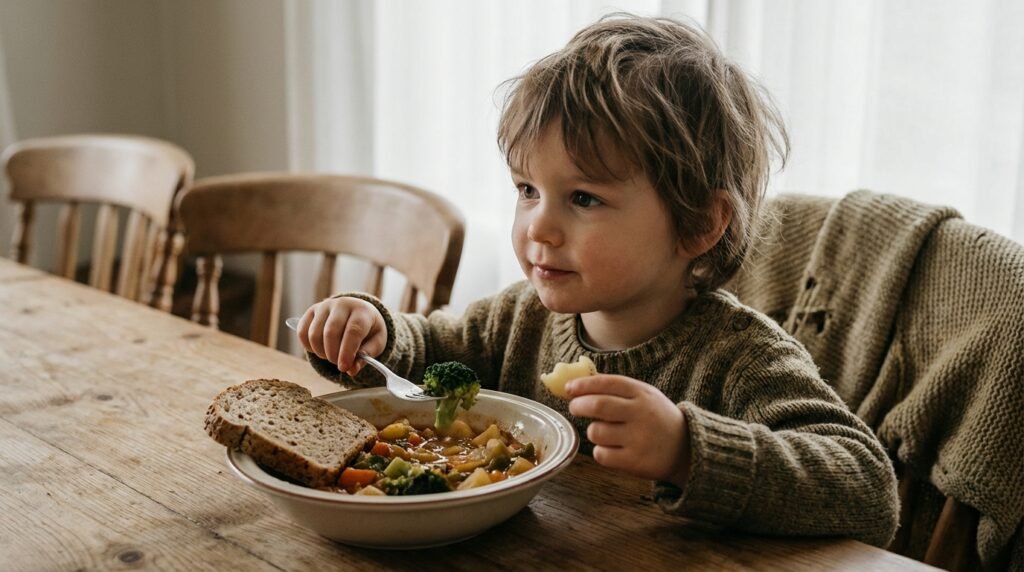
Healthy family meals don’t chase trends—they follow physiology. A balanced plate anchors on protein for satiety and steady energy, adds fiber-rich carbs for digestion, and includes healthy fats for brain development and satisfaction.
- Protein (chicken, eggs, yogurt, beans, fish, tofu)
- Fiber (vegetables, legumes, whole grains)
- Healthy fats (olive oil, avocado, nuts/seeds where age-appropriate)
Portion Sizing by Age (Not Appetite Policing)
Healthy doesn’t mean micromanaging bites. A simple boundary helps: parents decide what is served; kids decide how much to eat. This reduces power struggles and supports natural hunger cues.
Sugar, Sodium & Ultra-Processed Food Thresholds
The real issue is ultra-processing: foods engineered to be hyper-palatable can override hunger cues and make whole foods feel “boring.” The goal isn’t perfection—it’s displacement. Make real meals the default and ultra-processed foods lose their grip naturally.
The Family-Approved Meal Formula
Protein-First Kid Meals
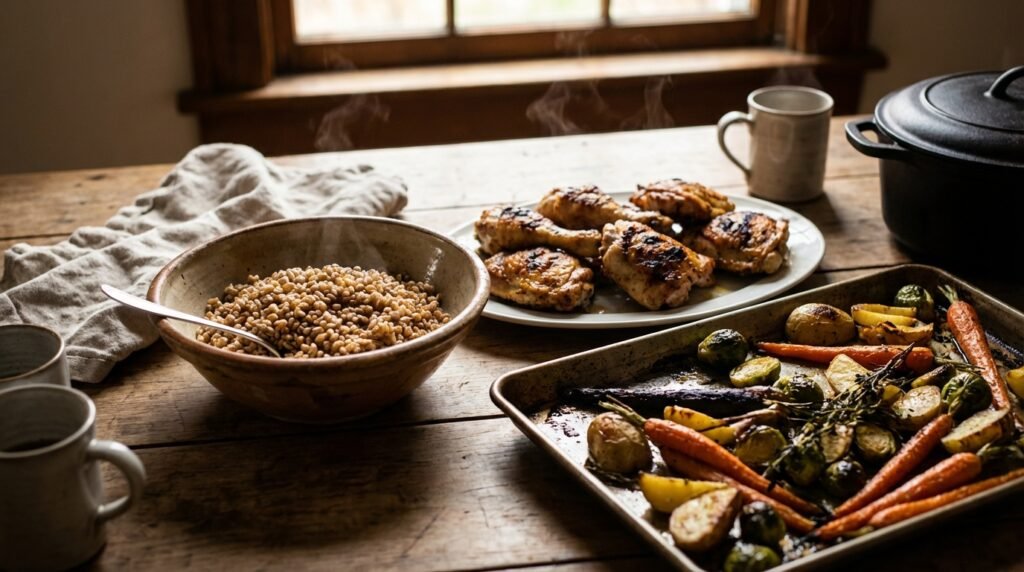
Start with a protein anchor. Protein supports growth and helps prevent post-dinner snacking spirals. It also makes vegetables easier to accept because the meal feels satisfying and familiar.
Hidden Vegetable Integration (Done Honestly)
This isn’t about tricking kids; it’s about lowering the barrier. Blended sauces, finely chopped vegetables in familiar textures, and soups/stews/casseroles create exposure without a fight.
Flavor Stacking Without Additives
Kids respond to comfort, not complexity. Garlic, onion, mild spices, cheese, and a squeeze of lemon build flavor depth without artificial enhancers. Familiar tastes build trust; trust opens the door to new foods.
15 Easy, Nutritious & Kid-Approved Dinner Ideas
System rule: Rotation beats novelty. Familiar meals repeated calmly outperform “new recipes” every time.
20-Minute Weeknight Staples
- Protein bowls with mix-and-match toppings (rice or quinoa + protein + veggies + sauce)
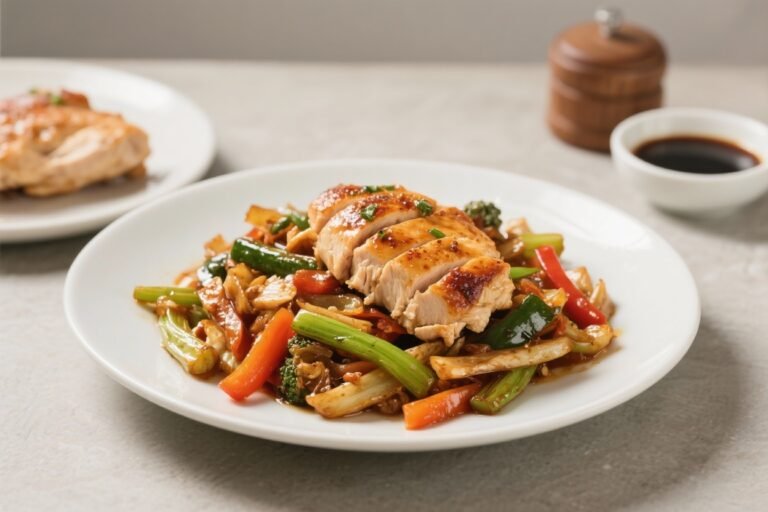
- Quick stir-fries using frozen vegetables and pre-cut proteins
- Egg-based meals: wraps, rice bowls, veggie omelets, or breakfast-for-dinner
- Greek yogurt “taco bowls” with seasoned turkey or beans
- Salmon or tofu with microwave-steam vegetables and olive oil
One-Pan & Sheet-Pan Family Dinners
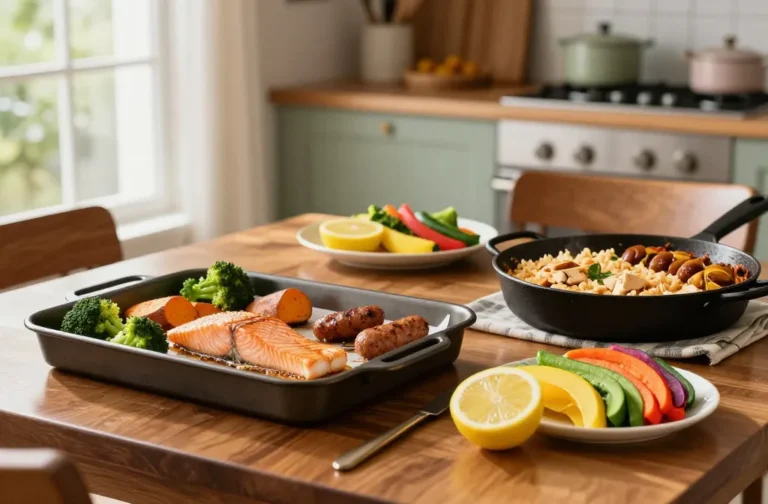
- Sheet-pan chicken + potatoes + broccoli (seasoned, roasted together)
- Baked salmon + sweet potatoes + green beans
- Sausage + peppers + onions over rice
- Roasted chickpeas + veggies + pita (kid-friendly “snack plate dinner”)
- One-pan turkey meatballs with marinara + hidden blended veggies
Freezer-Friendly Batch Meals
- Veggie-boosted lasagna (blend carrots/zucchini into sauce)
- Chili with beans + lean meat (or all-bean version)
- Chicken and vegetable soup (freeze in single-meal portions)
- Freezer burritos with eggs/beans/cheese + mild salsa
- Casserole night: quinoa or brown rice bakes with broccoli and chicken
Want more assets that connect? See also: Clean & Simple Meal Prep and Healthy Ingredient Hacks & Swaps.
How Kids Learn to Say Yes to Healthy Food

Choice Architecture at the Table
Instead of asking if they want vegetables, offer two choices: “Broccoli or carrots?” Choice creates autonomy without chaos. Structure stays intact.
Reframing Vegetables Through Identity Language
Kids eat what fits their identity. “This helps you run faster,” or “This is what strong kids fuel with” lands better than lectures. Identity sticks longer than instruction.
Family Rituals That Reinforce Habits
Weekly rhythms reduce resistance. Taco night, build-your-own bowls, and Sunday prep rituals turn dinner into something safe and predictable— which is exactly what picky eaters need to loosen their grip.
Tools That Make Healthy Family Meals Feel Effortless
Air Fryers, Slow Cookers & Meal Prep Containers
Tools don’t replace effort—they protect energy. The right gear removes friction on your busiest nights and keeps healthy meals for families and kids doable even when plans change.
Grocery Shortcuts & Smart Substitutions
- Frozen vegetables beat no vegetables
- Rotisserie chicken beats drive-thru
- Pre-washed greens beat skipped salads
Weekly Family Meal Planning (Built for Real Life)
Budget-Friendly Adjustments
- Rotate beans and lentils to stretch protein budgets
- Use seasonal produce to reduce costs
- Buy proteins in bulk and freeze portions
School-Night vs Weekend Rhythm
Keep weeknights fast and predictable. Save flexible, participatory meals for weekends. Planning doesn’t limit freedom—it restores it.
Printable tip: Create a “default week” meal plan with 5 repeatable dinners, 2 flexible nights, and 1 leftovers night. Then rotate sauces and sides to keep it fresh.
Products / Tools / Resources
These are “system stabilizers”—small upgrades that make healthy meals for families and kids feel easier on the hardest days. Each link opens in a new tab.
Air Fryer (Fast, Kid-Friendly Dinners)
Crisp veggies, quick proteins, and “weeknight wins” in minutes—without turning dinner into a project.
- Cuts cooking time for chicken, salmon, and roasted vegetables
- Great for reheating leftovers without sogginess
- Makes “healthy comfort food” easier to pull off
Slow Cooker (Hands-Off Dinner Automation)
Put dinner on autopilot. Ideal for soups, chili, shredded chicken, and busy school nights.
- Low-effort, high-consistency meals
- Perfect for freezer-friendly batch cooking
- Keeps dinner warm for staggered schedules
Glass Meal Prep Containers (Visibility = Consistency)
When leftovers are visible, they get eaten. When they’re stacked in random plastic, they get forgotten.
- Keeps food fresh and easy to reheat
- Helps meal planning actually stick
- Great for lunches and after-school snacks
Heavy-Duty Sheet Pans (One-Pan Dinner Workhorses)
One-pan meals are the backbone of low-stress weeknights. A sturdy sheet pan makes it easy—and easier to clean.
- Ideal for chicken, veggies, potatoes, and salmon
- Supports “set it and forget it” cooking
- Less cleanup = more consistency
Weekly Meal Planner (Decision Fatigue Killer)
When the plan is visible, dinner becomes automatic. When it isn’t, you’re back to last-minute scrambling.
- Makes your “default week” easy to follow
- Reduces stress and impulse takeout
- Supports kid buy-in through predictability
FAQs
What is a healthy meal for kids that they’ll actually eat?
One that feels familiar, satisfies hunger, and doesn’t come with pressure. Start with a protein anchor, add a familiar carb, and introduce vegetables in low-friction forms (blended sauce, finely chopped, or roasted). Repeat calmly and let exposure do the work.
How do I stop making separate meals for everyone?
Build dinners with a “safe base” plus optional add-ons. For example: taco bowls, pasta bars, or protein bowls where kids choose toppings. Keep the main meal consistent and offer one safe side if needed—then stop negotiating.
What if my kid refuses vegetables completely?
Reduce the “vegetable spotlight.” Serve tiny portions next to a safe food, and use blended sauces or soups for exposure. Focus on repetition without pressure. The goal is to normalize vegetables, not force them.
How do I make healthy family dinners faster on school nights?
Use a default weekly plan with 5 repeatable dinners, keep frozen vegetables on hand, and lean on one-pan cooking. Tools like an air fryer or slow cooker remove friction and protect your energy when schedules get tight.
As an Amazon Associate, I earn from qualifying purchases.



4 Comments