High Protein Meals Fatigue Ends Here — Try These 7 Neural Appetite Triggers
Table of Contents
Tired of eating the same high protein meals on repeat? Learn how to fix high protein meal boredom with simple, psychology-backed tweaks that make clean eating feel exciting again.
There’s a moment — and if you’ve been eating high-protein for a while, you’ve probably felt it — when you look down at your plate and feel absolutely nothing. Not hunger. Not excitement. Just… stillness. The chicken breast that once made you feel disciplined now feels like homework. The eggs you could cook blindfolded? Suddenly the smell alone makes you want to skip breakfast altogether.
And here’s the part that no one says out loud: you’re not tired of eating healthy. You’re tired of eating predictably.
Somewhere along the way, the routine that kept your life structured quietly turned into a loop your brain stopped rewarding. One day you wake up and realize you can meal-prep an entire week with your eyes closed — but you can’t bring yourself to care about any of it. That spark is gone. The anticipation evaporates. And without anticipation, even the cleanest meal feels dull on arrival.
If you’ve ever wondered how to fix high protein meal boredom, you’re not alone. This is one of the most common breaking points in fitness nutrition — not because high-protein eating is difficult, but because the human brain is wired to rebel against sameness. Even the most disciplined people get bored. Especially the most disciplined people.
The good news? Boredom isn’t a signal that you’re doing something wrong. It’s a sign your brain is asking for something different — not something less healthy, just something more stimulating.
What you’ll find in this guide isn’t another forgettable list of “meal ideas.” Instead, you’re getting a set of psychology-backed, sensory-driven strategies designed to reignite desire, rebuild anticipation, and make high-protein meals feel satisfying again — without derailing your diet, macros, or goals.

Why Your Brain Rebels Against Routine Meals
If you’ve ever felt your appetite quietly evaporate at the sight of another high-protein meal, it wasn’t a failure of discipline. It was biology tapping you on the shoulder, whispering, “We’ve done this too many times.” The human brain is built to crave stability — and then, paradoxically, to resent it. That tension is exactly why even perfectly clean meals start to feel lifeless when they never evolve.
High-protein eaters run into this wall more than anyone else, because protein often comes from the same handful of foods. Your body loves the predictability, but your brain? Not so much. It wants variation, contrast, and tiny flashes of novelty to stay engaged. When meals stop changing, your neural reward system goes quiet — and once that happens, even the healthiest food feels strangely heavy.
The reward erosion effect of clean eating
There’s a reason your once-satisfying chicken breast now feels like cardboard: your dopamine response has dulled over time. Dopamine isn’t just a “pleasure chemical” — it’s the signal that makes food feel rewarding and worth repeating. But repeat a meal enough times, and the dopamine curve flattens.
Nothing’s “wrong” with the food. Nothing’s “wrong” with you. Your brain simply stopped being surprised. And when there’s no surprise, there’s no spark. Without that spark, even the most perfectly macro-balanced plate loses its pull.
This is why boredom hits harder for people who are consistent. The more disciplined you are, the faster your reward system adapts.
How sensory repetition triggers diet fatigue
Food is a sensory conversation — and your senses start speaking up when the script never changes.
Your eyes predict the color. Your nose predicts the aroma. Your mouth predicts the texture. Your brain predicts the entire experience before you even sit down.
The moment your brain can predict a meal completely, your appetite drops. That’s not weakness. That’s your sensory system trying to protect you from stagnation.
This is why high-protein eaters often say things like:
- “I’m not hungry, but I know I should eat.”
- “I can’t even smell this right now.”
- “I wish I wanted it — I just don’t.”
Your appetite hasn’t disappeared. It’s simply asking for something your current routine isn’t giving it: novelty, contrast, and sensory stimulation.
Oddly enough, your macros don’t matter here. Your psychology does. And once you understand how your brain responds to food patterns, you can break out of repetition without abandoning the structure that keeps you on track.

The Science of Craving Diversity: What Keeps Meals Exciting
There’s a small moment right before you eat — a tiny sliver of time — when your brain is already deciding whether the meal will feel satisfying. That moment is built on anticipation, and anticipation is built on diversity. When your senses detect novelty, even subtly, your brain leans in with curiosity instead of leaning away with boredom.
This is the secret most diet advice ignores: your appetite doesn’t respond to macros — it responds to stimulation. The more senses a meal engages, the more magnetic it becomes.
Cross-modal flavor stimulation (color, aroma, crunch)
Your senses want to work together. When they don’t, food tastes muted.
A bright pop of color wakes up your visual cortex. A fragrant spice blend tickles your scent pathways. A contrast of textures — crunchy, soft, crisp, creamy — lights up the oral somatosensory system.
Individually, none of these details seem important. Together, they create a meal that feels alive.
This is why a high-protein bowl with vibrant toppings and contrasting textures feels indulgent, while the exact same ingredients, tossed together blandly, feel like drudgery. Your senses shape the story your brain tells about your food — and that story determines satisfaction before the first bite.
The psychology of anticipation in meal satisfaction
Anticipation is dopamine. And dopamine is desire.
When your meals offer a touch of unpredictability — a new spice, a different aroma, a surprising texture — your brain releases dopamine in advance. This “pre-reward” feeling is what makes you look forward to eating instead of trudging through it out of obligation.
High-protein eaters often forget this because their routines become rigid. They stick to the “safe foods,” the known quantities, the macros they trust.
But trust without excitement is a short-term strategy. Your brain needs freshness to stay invested. And diversity isn’t the enemy of consistency — it’s what protects it.

The 7 Proven Hacks to Fix High Protein Meal Boredom
This is where everything shifts — practical, sensory, psychological tools designed to snap your appetite awake without blowing up your diet. Each hack is simple, but deceptively powerful, because it works with your brain’s reward system instead of against it.
Hack 1: Flavor stacking — the neuroscience of taste layering
A single flavor gets boring fast. But when flavors layer — salty, acidic, sweet, spicy, umami — your brain lights up like a switchboard.
Try adding:
- Lime or lemon for brightness
- A touch of honey for softness
- Fresh herbs for aromatics
- Chili flakes for a hint of heat
- Garlic or miso for umami depth
Even the driest chicken becomes interesting when flavors build in waves.
Hack 2: Texture contrast — how crisp meets creamy reignites desire
Texture is the unsung hero of excitement. When your bite moves from crisp → tender → creamy in one sequence, your brain can’t predict what comes next. And unpredictability fuels engagement.
Quick upgrades:
- Toasted nuts over salads or bowls
- Crispy chickpeas on top of stews or soups
- Sear marks for caramelized edges on meat or tofu
- A dollop of Greek yogurt for cool creaminess
Texture contrast turns “I have to eat this” into “wait, that was actually good.”
Hack 3: Thermal variety — hot-cold pairings that reset appetite
Temperature is a powerful sensory lever. Pairing something hot with something cool can instantly break monotony.
Try pairing:
- Hot grilled turkey with chilled cucumber-mint sauce
- Warm omelet with cool smashed avocado
- Hot salmon with cold mango or pineapple salsa
The thermal contrast snaps your senses awake — resetting appetite in a single plate.
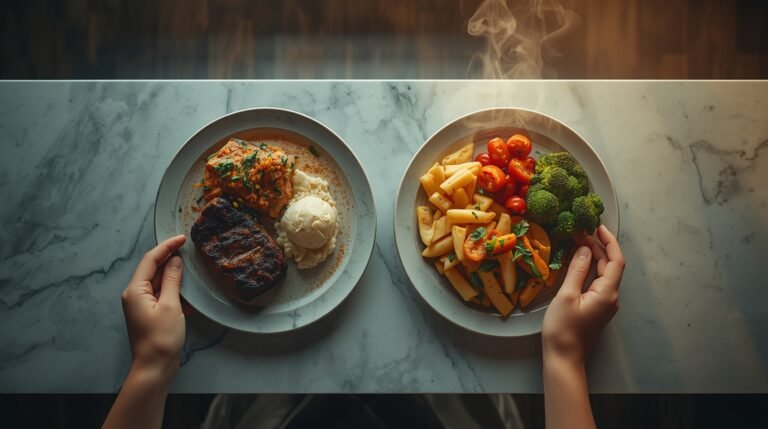
Hack 4: Visual priming — plating as dopamine architecture
Before your taste buds react, your eyes make the first judgment. A visually flat meal tastes flat; a vibrant meal tastes promising.
Even small details matter:
- Herbs scattered loosely on top
- Color from pickled onions or roasted peppers
- Height and spacing on the plate
- A swirl or drizzle of sauce added at the end
Beautiful food is not vanity. It’s an appetite multiplier.
Hack 5: Functional world fusion — adding spice and novelty
Global flavors are built for excitement. Switching cuisines gives you dopamine without cheating on your diet.
Ideas to rotate:
- Korean gochujang turkey or chicken
- Mediterranean lemon-herb bowls with olive oil
- Thai basil stir-fry with lean beef or tofu
- Japanese soy-ginger salmon with sesame
- Moroccan-spiced chickpeas with yogurt sauce
The world is full of high-protein templates. Use them.
Hack 6: Cognitive reframing — treating meals as creative expression
Something strange happens when you stop seeing your meals as obligations and start seeing them as experiments: your brain starts enjoying the process again.
You don’t need to be a chef. You just need to approach cooking with curiosity instead of duty.
Try this identity shift: instead of “I need to stay on track,” think “I’m building fuel that feels good.” That tiny mental pivot has massive emotional impact.
Hack 7: Ritual cues — how pre-meal triggers deepen satisfaction
Rituals anchor anticipation.
A specific playlist. A scent you associate with cooking. A favorite bowl. A Sunday prep ritual that feels grounding instead of draining.
The ritual becomes a cue for satisfaction — and satisfaction becomes a cue for consistency. This is why some meals feel comforting even when the ingredients are simple. Ritual rewires your appetite from the inside out.

Rapid Fire Solutions for the Time-Starved
Some days you don’t want a strategy. You want something that works right now.
One-pan flavor systems
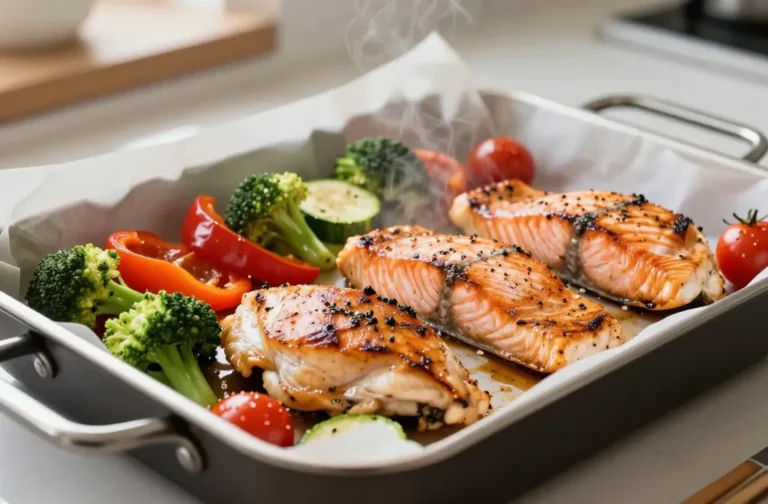
Choose any protein and apply the formula: acid + aromatic + spice. Done. No overthinking. Just flavor.
Examples:
- Chicken + lime + garlic + smoked paprika
- Salmon + lemon + dill + mustard
- Turkey + vinegar + onion + curry powder
- Tofu + rice vinegar + ginger + sesame oil
It’s fast, clean, and rewarding — exactly what you need on overloaded days.
10-minute remix recipes
Don’t cook more. Remix what you already made.
Add crunch. Add acid. Add herbs. Add sauce. Change the base. Swap the spice blend. Micro shifts keep your brain engaged — even when the protein stays the same.
Micro-FAQ: Answering the Questions You’re Actually Asking
“Is meal boredom actually messing with my diet, or am I overthinking it?”
You’re not overthinking it. Boredom doesn’t change how your body absorbs protein, but it absolutely changes how consistently you eat it. When food stops feeling rewarding, you eat less, delay meals, downgrade quality, or reach for easier shortcuts. Consistency suffers long before macros do.
“What’s the quickest way to fix protein fatigue when I’m halfway through the week?”
Add something bright or crunchy. A splash of lemon, a handful of pickled onions, crispy chickpeas, toasted nuts, or a fresh herb blend can transform a meal instantly. When you feel fatigued, don’t change the protein — change the stimulus.
Products / Tools / Resources
You don’t need a full kitchen overhaul to make high-protein meals exciting again. A few smart tools and pantry upgrades can do most of the heavy lifting for you. Here are some practical resources that make it easier to add crunch, color, and flavor without adding stress.
Air Fryer or Crisper Basket
Turn plain chicken, tofu, or chickpeas into crispy, high-protein toppings that instantly break monotony. Perfect for texture contrast without deep-frying. View Air Fryers on Amazon
Citrus Press or Juicer
A simple squeeze of lemon or lime is one of the fastest ways to fix high protein meal boredom. A good citrus press makes it effortless to add brightness to every plate. Browse Citrus Press Options
Global Spice Blends
Pre-made blends like shawarma, taco seasoning, za’atar, or curry powder are shortcut keys to world fusion flavor without recipe overwhelm. Explore Spice Blends
Pickling Jars & Lids
Quick-pickled onions, carrots, or cucumbers add tang, color, and crunch to any bowl. Having jars ready makes it easy to keep a few bright toppings in the fridge. Shop Pickling Jars
Herb Scissors
Fresh herbs change the aroma and look of a dish in seconds. Herb scissors make chopping fast and mess-free, so you actually use them. View Herb Scissors
Matte or Dark-Colored Plates
Visual priming matters. Dark plates with colorful ingredients make high-protein meals look more dramatic and satisfying before you even take a bite. See Plate Options
These tools are optional, but they make it much easier to keep your high-protein meals visually interesting, texturally satisfying, and mentally rewarding — day after day.
As an Amazon Associate, I earn from qualifying purchases.