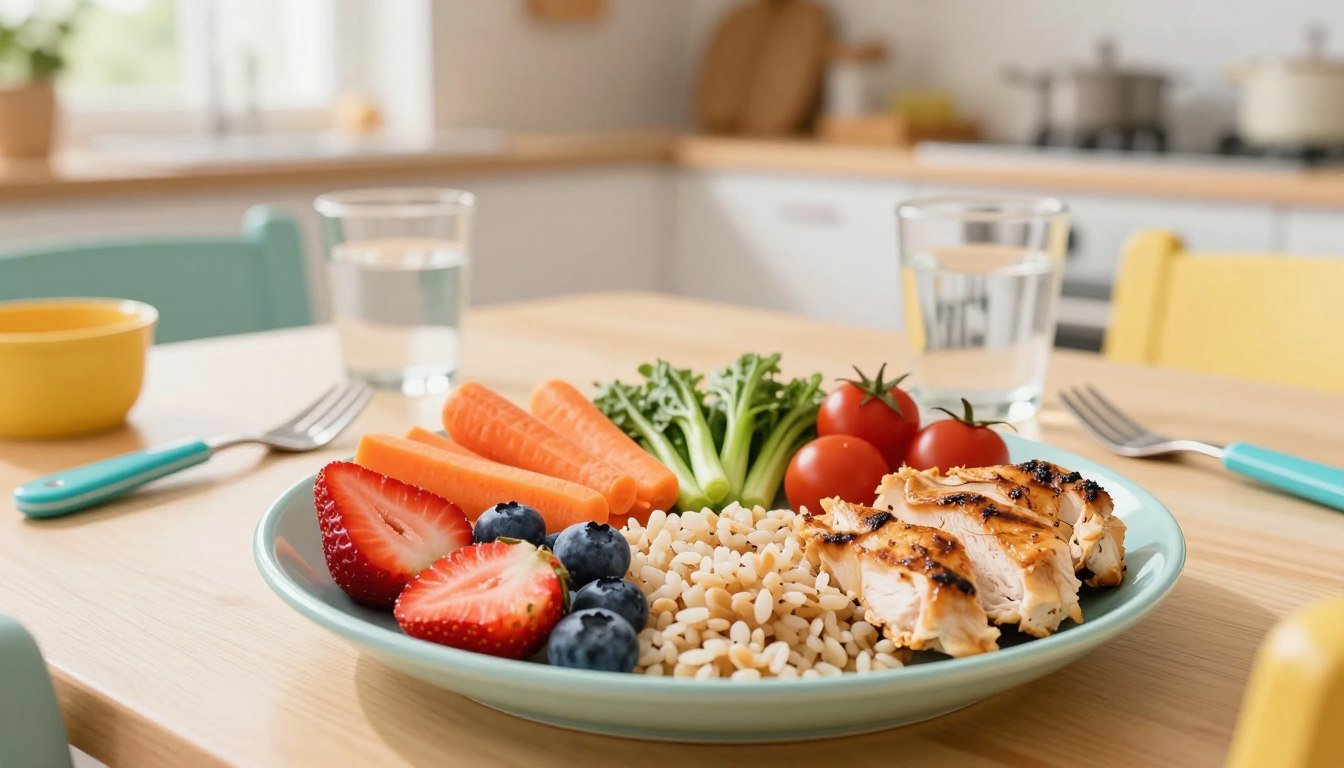
How to Build a Balanced Plate for Kids: The Ultimate Guide to Healthy Eating
What if making nutritious meals for your children was simple, enjoyable, and free from daily stress?
This guide empowers you with practical knowledge. It ensures your little ones get optimal nutrition during their critical growth years.
You will discover that creating wholesome meals does not have to be complicated. With the right approach, it becomes second nature.
Understanding proper nutrition is one of the most valuable gifts you can give. The foods they eat today impact their development, energy, and lifelong well-being.
We break everything down into easy steps. You will learn about essential food groups, portion sizes, and smart meal planning. Creative ideas will help get kids excited about healthy eating.
Whether it’s breakfast, lunch, or dinner, you can construct a plate that provides all the necessary nutrients. It accommodates different tastes and dietary needs. Resources like the MyPlate guide offer excellent visual frameworks.
By the end, you will feel confident making informed decisions. Transform mealtime into quality family bonding. Inspire a positive relationship with food that lasts a lifetime. For more practical strategies, explore these simple meal strategies.
Table of Contents
Key Takeaways
- Providing proper nutrition is a foundational gift for a child’s growth and long-term health.
- Creating balanced meals can be straightforward and stress-free with the right knowledge.
- Understanding portion sizes and food groups is key to building a healthy plate.
- Mealtime is an opportunity for family connection and positive food experiences.
- Practical tools and guides, like MyPlate, can simplify meal planning.
- Involving children in the process can increase their excitement about healthy eating.
- Focus on progress over perfection to build sustainable habits.
Introduction to Balanced Nutrition and Healthy Eating Habits
Why does the composition of your child’s meal matter so much for their growth and daily vitality? A solid foundation in nutrition is about more than just filling their stomach. It’s about fueling their development, mood, and learning with the right foods.
This foundation is built through consistent, healthy eating habits. These patterns shape their relationship with food for years to come.
Why a Balanced Plate Matters for Kids
A well-rounded diet delivers the complete spectrum of nutrients young bodies crave. Macronutrients provide steady energy for play and study. Essential micronutrients, like vitamins and minerals, directly support immune function, bone strength, and brain health.
Children who enjoy balanced meals show noticeable benefits. They often have more stable energy, better focus in school, and improved mood regulation.
The Benefits of Variety and Nutrient Diversity
Prioritizing variety is the smartest strategy. No single food contains every nutrient. By offering a colorful mix of foods, you ensure your child gets a diverse range of nutrients from different sources.
Experts, like those behind Harvard’s Kid’s Healthy Eating Plate, stress that diet quality trumps simple calorie counting. The goal is nutrient-dense whole foods.
This approach to healthy eating does more than support physical growth. It teaches children valuable information about how food makes them feel. These early lessons empower them to make positive choices independently as they grow.
Exploring Essential Food Groups and Nutrients
Navigating the world of children’s nutrition starts with understanding the core food groups. Each one delivers unique nutrients vital for development.
Fruits and Vegetables: Building Blocks of Vitamins and Antioxidants
Colorful vegetables and fruits should fill half of every meal. They are packed with vitamins, minerals, and antioxidants.
Dark greens like spinach and orange carrots offer different benefits. A wide variety ensures a full spectrum of nutrition.
Always choose whole fruit over juice. Juice has more sugar and less fiber.
Whole Grains, Proteins, and Dairy for Energy and Growth
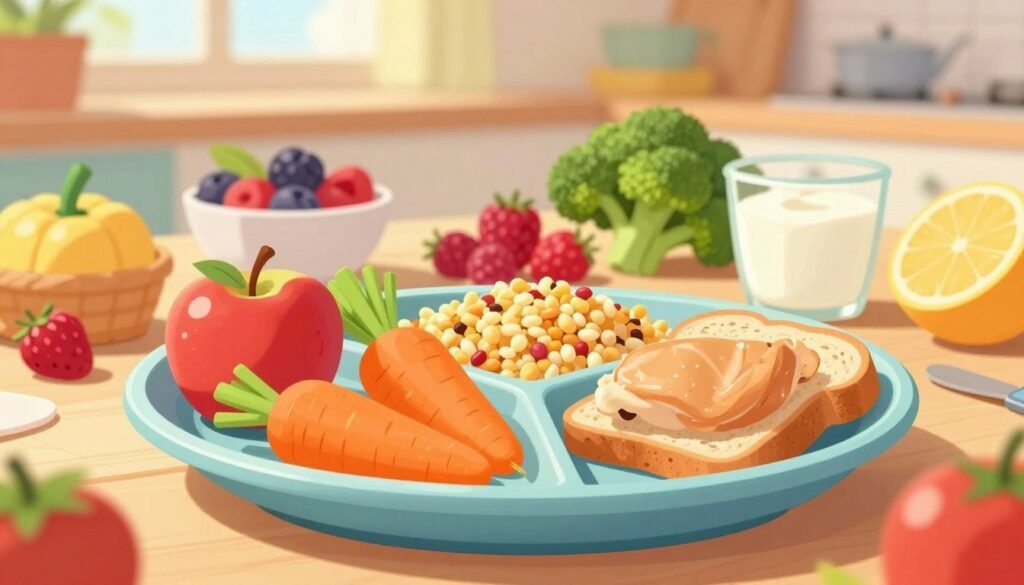
The other half of the meal combines energy and growth foods. Whole grains like brown rice and wheat bread provide lasting energy.
Protein sources build muscle. Excellent choices include beans, nuts, fish, eggs, and poultry. Limit red meats.
Dairy products like milk and yogurt support strong bones. Pick plain versions to avoid added sugar.
“The more veggies and the greater the variety, the better.”
| Food Group | Key Examples | Primary Benefits |
|---|---|---|
| Vegetables | Broccoli, Carrots, Spinach | Vitamins, Antioxidants, Fiber |
| Fruits | Berries, Apples, Oranges | Vitamin C, Potassium, Natural Sugars |
| Whole Grains | Oatmeal, Quinoa, Whole-wheat pasta | Sustained Energy, B Vitamins, Fiber |
| Protein | Lentils, Eggs, Chicken | Muscle Growth, Tissue Repair |
| Dairy | Plain Yogurt, Cheese, Milk | Calcium, Vitamin D for Bones |
Combining these groups creates complete meals. For easy nutritious kid-approved recipes that put it all together, explore our collection.
How to Build a Balanced Plate for Kids with Step-by-Step Guidance
Getting portions right is less about strict measuring and more about understanding your child’s unique needs. This step-by-step approach makes creating wholesome meals straightforward.
First, visualize the layout. Then, fine-tune amounts and include all essential components.
Understanding Portion Sizes and Food Layouts
Start with a simple visual. Fill half the plate with colorful vegetables and fruits. Split the other half between whole grains and lean protein.
A proper serving is not fixed. It changes with your child‘s age, activity level, and growth patterns. Younger children need smaller amounts.
Active teenagers require larger portions. Teaching kids to recognize their own hunger and fullness cues is a vital part of healthy eating.
| Child’s Age & Activity | Grain Serving | Protein Serving | Key Consideration |
|---|---|---|---|
| 3-5 years (Moderate) | 1/2 slice bread | 1 oz chicken | Small, frequent meals |
| 6-8 years (Active) | 1 slice bread | 1.5 oz fish | Support steady growth |
| 9-12 years (Very Active) | 1.5 cups pasta | 2 oz beans | Fuel for sports & play |
Incorporating Healthy Fats and Hydration Tips
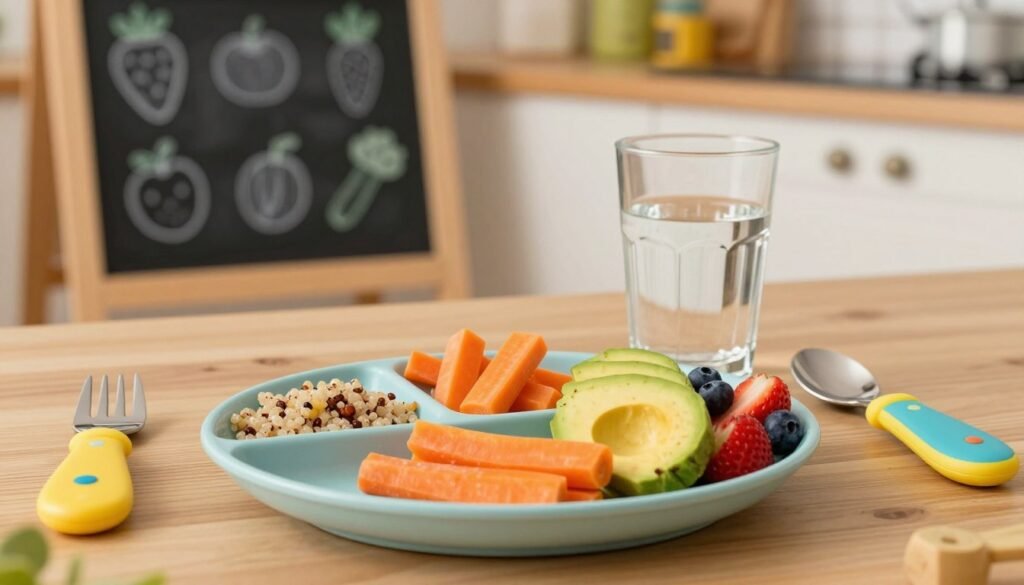
Dietary fats are essential. They support brain development and help kids feel truly satisfied. Focus on foods with healthy unsaturated fats.
“Fat is a necessary part of our diet, and what matters most is the type of fat we eat.”
Include avocados, nuts, seeds, and plant oils. For detailed guidance, see the Harvard Kid’s Healthy Eating Plate.
Hydration is critical. Make water the drink of choice at every meal and snack time. It has zero calories and supports the body.
Limit fruit juice to one small glass daily. It packs concentrated sugar and calories without filling fiber. Avoid sugary drinks entirely.
For dairy, choose unflavored milk, plain yogurt, and small amounts of cheese. This avoids extra sugar while providing key nutrients. Find family-friendly recipes that put these tips into practice.
Practical Tips for Meal Planning and Involving the Family
The secret to consistent, wholesome meals lies in smart planning and making the process a family affair. When everyone participates, healthy foods become a source of joy, not a chore.
These simple tips can transform your weekly routine. They help children develop a positive relationship with nutrition.
Creating Fun, Themed Meals and Involving Kids in Preparation
Get your kids involved from the start. Let them pick colorful vegetables at the store or help wash fruits in the kitchen.
This hands-on activity builds their investment in the final meal. They become truly excited to eat what they helped create.
Establishing themed nights adds predictable fun. Try “Taco Tuesday” with a rainbow of veggie toppings or “Fruit Friday” for a sweet, nutritious dessert.
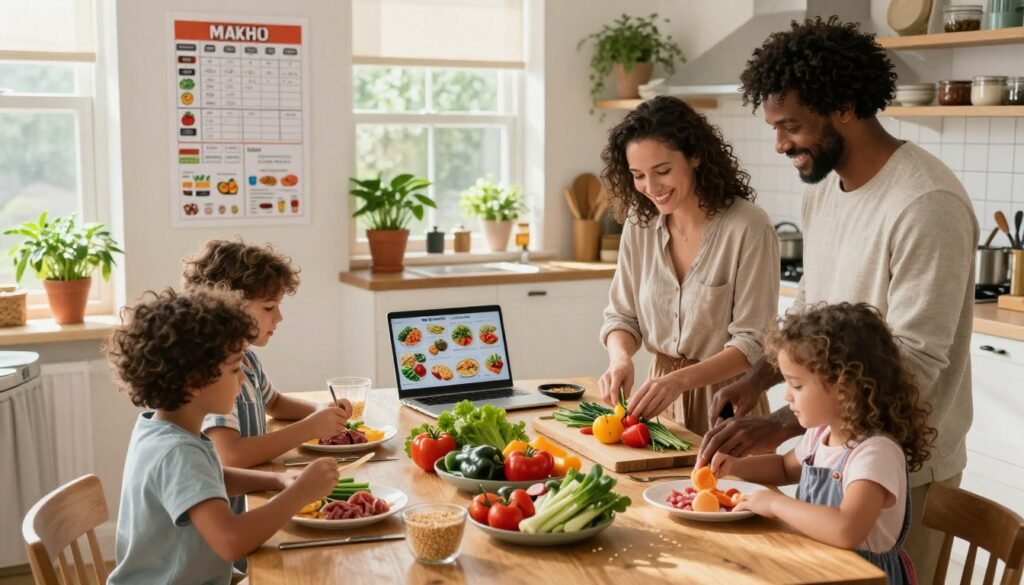
Sitting down together for family meals is powerful. It allows parents to model good eating habits and strengthens bonds.
Using Visual Guides like MyPlate and the Kid’s Healthy Eating Plate
Tools like MyPlate offer brilliant, simple information. They turn portion control and food groups into an easy visual lesson.
Children can see that half their plate should be vegetables and fruits. They learn that at least half of their grains should be whole, and water is the best drink.
“Think of the plate as an entire day’s worth of eating.”
This means the goal is balance over time, not perfection in one sitting. For more detailed tips, consult the official dietary guidelines.
Keeping a variety of healthy foods stocked makes putting a plate together easy, even on busy nights. It ensures your family gets the protein and nutrients they need.
Conclusion
Every nutritious meal you serve shapes your child’s future health and happiness. Your consistent effort with healthy eating builds a foundation for lifelong wellness. This practical information empowers you to support optimal growth at every age and activity level.
Remember that colorful vegetables and fruits should fill half the plate. Include whole grains like brown rice and wheat bread. Add quality protein sources such as beans, nuts, poultry, and fish.
Dairy products like milk, yogurt, and cheese provide calcium. Limit sugary juice and empty calories. Focus on wholesome foods most of the time.
Stay flexible as your children grow. Celebrate small wins in your family’s diet. For more on essential nutrients for growing kids, explore this detailed guide. Find clean, simple meal prep ideas to make meals easier.
Your care today creates healthier tomorrows for your child. Keep building positive food relationships through joyful family eating.