

Lifestyle Nutrition & Longevity-Focused Meal Recipes Most People Miss
Lifestyle Nutrition & Longevity-Focused Meal Recipes aren’t built for trends, challenges, or short bursts of motivation. They’re built for the quiet, long stretch of real life—where energy matters, stress shows up uninvited, and you want your body to keep cooperating year after year.
Fast win:
If your meals don’t keep blood sugar steady, protect muscle, and feel repeatable on a busy week, they won’t compound into longevity—no matter how “clean” they look.
Most people don’t want a perfect diet. They want steady energy, clear thinking, digestion that doesn’t fight them, and a body that feels sturdy—not fragile. And yet, “healthy eating” advice often feels like a grind. Not because you’re weak… because the design is wrong.
Below is a practical, high-leverage framework that leads with the highest-value moves first, then backs them up with the structure and detail that makes this sustainable.
Table of Contents
- Why “eating healthy” gets harder over time
- What lifestyle nutrition really is
- Meal structure: the underused lever
- Longevity-focused meal recipes in real life
- Why extremes backfire
- FAQs (real-reader questions)
- How to make it stick in real life
- Products / Tools / Resources
Why “Eating Healthy” Feels Harder the Longer You Do It
In the beginning, it’s easy to ride momentum. You clean up meals. You follow rules. You feel a few quick wins. Then life arrives with receipts: deadlines, family dinners, travel, stress, unpredictable sleep. Suddenly every choice feels like a negotiation.
Here’s what’s actually happening: most nutrition plans are engineered for short-term compliance. They assume unlimited willpower, unlimited time, and a life that doesn’t change. Real life changes constantly—so the plan collapses. Then you blame yourself.
Reframe: When a system fails under normal conditions, it’s not your character—it’s the blueprint. Lifestyle Nutrition & Longevity-Focused Meal Recipes eating is built to survive messy weeks.
Lifestyle Nutrition Is Not a Diet—It’s a Long Game Strategy
Lifestyle Nutrition & Longevity-Focused Meal Recipes shifts the focus from restriction to alignment. Instead of asking, “What can I cut out?” it asks, “What pattern can I live with for years while my health markers keep improving?”
Lifestyle Nutrition & Longevity-Focused Meal Recipes aim for stability: steadier blood sugar, lower inflammatory load, stronger gut function, cognitive clarity, and muscle preservation as you age. This is why the structure of a meal matters as much as the ingredients.
If you’re building out a broader system, you may also want to explore supporting pillars like clean meal prep routines and ingredient swaps that reduce friction.

The Quiet Power of Meal Structure (Not Just Ingredients)
Two meals can have the same calories and completely different outcomes depending on how they’re built. Longevity isn’t just “what you ate.” It’s the downstream effect on appetite, insulin response, inflammation, and recovery.
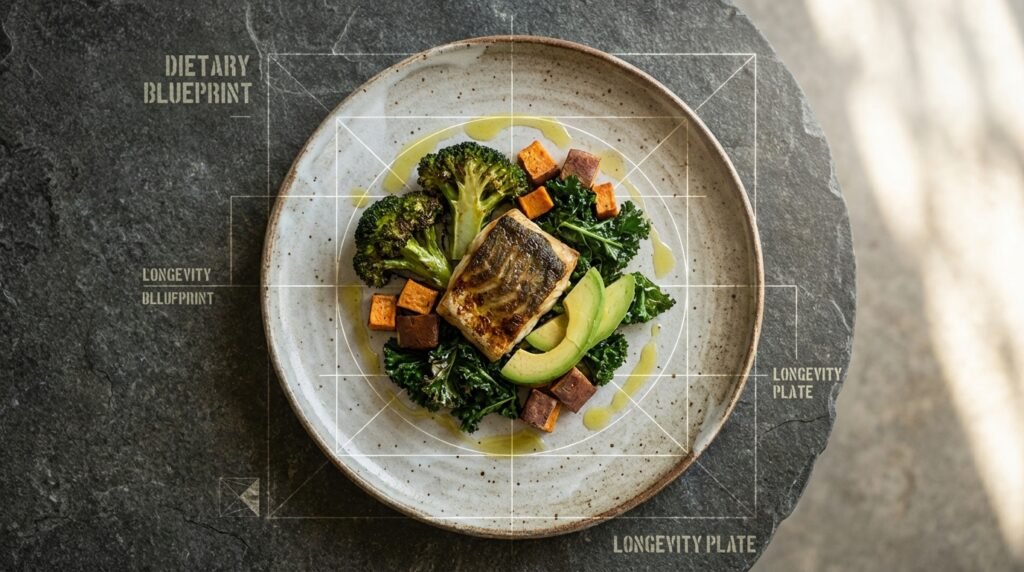
The Longevity Meal Blueprint
A longevity-leaning plate usually includes four anchors:
- Protein anchor to support muscle and metabolic health
- Fiber-rich plants to slow digestion and feed the microbiome
- Quality fats to support hormones and brain function
- Micronutrient density from minimally processed foods
What this does in the real world: less snacking, fewer crashes, steadier mood, and meals that feel “done” instead of leaving you chasing something an hour later.

Lifestyle Nutrition & Longevity-Focused Meal Recipes in Real Life
These meals aren’t flashy. They’re dependable. They work on a Tuesday when your brain is tired and your schedule doesn’t care. That’s the point.
Protein-Forward Meals That Age Well
- Grilled fish with bitter greens + extra-virgin olive oil
- Lentil and vegetable stew finished with herbs + lemon
- Eggs with leafy greens + avocado (or olive oil) for fats
Protein here isn’t about aesthetics. It’s about preserving strength, mobility, and independence. Longevity gets real when you realize muscle is a health asset—not just a gym goal.
Breakfasts That Don’t Hijack Your Morning
- Greek yogurt + nuts + berries (simple, fast, stable)
- Vegetable omelet + avocado (savory + satisfying)
- Warm oats built with seeds + protein + texture
The goal is calm energy. No spike-and-crash drama. No “why am I starving again?” by mid-morning.
Fiber-First Lunches That Feed the Gut (and the Future You)
- Chickpea + quinoa bowls with crunchy vegetables
- Bean-based soups with olive oil + spices
- Big salads with mixed textures + protein
Fiber is a long-horizon nutrient. It shapes gut bacteria, and gut bacteria influence immunity, mood, and inflammation. That’s why fiber-rich meals are quietly “longevity-coded.”

Dinners That Support Recovery, Not Overload
Strong dinners tend to be easy to digest and rich in micronutrients:
- Baked fish + roasted vegetables
- Tofu stir-fry with greens + sesame
- Slow-cooked legumes with herbs
When dinner supports sleep, everything improves—hunger regulation, cravings, recovery, stress response. You don’t feel it in one night. You feel it when it becomes your baseline.
Why Extremes Quietly Undermine Longevity
Extreme plans often look impressive on paper and miserable in practice. Ultra-restriction can spike stress, erode flexibility, and turn food into a constant mental load. Highly processed “diet foods” can disconnect appetite from nourishment.
Longevity-focused nutrition aims for sufficiency: enough protein, enough fiber, enough healthy fats, enough micronutrients—and enough enjoyment to keep going. That’s not soft. That’s how you win the long game.
FAQs (The Questions People Actually Mean)
“What makes a meal ‘longevity-focused’… for real?”
A meal earns that label when it supports steady blood sugar, lowers inflammatory load, protects muscle mass, and delivers micronutrients with minimal processing.
“Are carbs bad for longevity?”
Not by default. Quality and context matter. Whole-food carbs paired with protein and fiber behave very differently than refined carbs eaten alone.
“How often should I eat?”
Many people do best with 2–3 structured meals a day and minimal grazing. Your ideal rhythm depends on activity, stress, and schedule—more than dogma.
Turning This Into a Lifestyle That Sticks
Information doesn’t change behavior. Systems do. The people who win long-term aren’t more disciplined—they’ve engineered fewer daily decisions.
The “Low-Friction” Execution Framework
- Rotate 5–7 core meals you genuinely enjoy
- Batch-cook proteins and fiber bases (beans, grains, roasted veg)
- Use herbs, spices, acids (lemon/vinegar) for variety without ultra-processed sauces
- Keep weekdays predictable; let weekends be flexible
Small but powerful: A handful of repeatable meals beats a “perfect” plan you can’t sustain. Longevity is consistency wearing a disguise.

Products / Tools / Resources
If you’re building a lifestyle nutrition system, the right tools reduce friction and make longevity-focused meal recipes easier to execute on autopilot. These are practical upgrades—more “infrastructure” than luxury.
Extra-Virgin Olive Oil
A daily, high-impact fat source that fits effortlessly into salads, roasted vegetables, soups, and protein plates.
- Supports heart-friendly eating patterns
- Easy “finishing move” for vegetables and legumes
- Helps meals feel satisfying and repeatable
Shop extra-virgin olive oil options on Amazon
Glass Food Storage Containers
Batch cooking becomes realistic when storage is leak-resistant, fridge-friendly, and doesn’t stain or hold odors.
- Makes meal prep feel organized (not chaotic)
- Great for proteins, grains, roasted veg, soups
- Helps portion meals without “diet vibes”
Find durable glass meal prep containers on Amazon
Instant Pot or Electric Pressure Cooker
If legumes and high-protein staples are part of your longevity plan, this turns “someday” meals into weeknight meals.
- Fast beans, lentils, soups, shredded proteins
- Hands-off cooking reduces decision fatigue
- Supports repeatable, nutrient-dense routines
Browse Instant Pot-style cookers on Amazon
Digital Kitchen Scale
Not for obsession—just for calibration. It helps you learn protein portions and meal consistency without guessing.
- Improves portion accuracy (especially protein)
- Useful for meal prep batching and macro balance
- Reduces “I thought this was enough” drift
See top-rated digital kitchen scales on Amazon
Spices, Herbs & Flavor Boosters
The easiest way to keep meals repeatable without boredom: spices, dried herbs, and simple acids like lemon or vinegar.
- Keeps healthy meals exciting (consistency driver)
- Reduces reliance on sugary sauces
- Upgrades legumes, vegetables, and proteins fast
Shop versatile spice sets on Amazon
As an Amazon Associate, I earn from qualifying purchases.





4 Comments