
Longevity Meal Recipes for Menopausal Women: What to Eat Now to Age Strong
Menopause rarely arrives like a storm. It arrives quietly—then rewires the system underneath you. This guide turns that silent drift into a plan: longevity meal recipes for menopausal women built to protect muscle, brain clarity, and blood sugar stability now, so your future self isn’t left paying the bill later.
Quick intent match: If you’re searching “what should I eat during menopause for longevity,” “foods to protect muscle after menopause,” or “menopause brain fog and insulin resistance,” you’re in the right place.
Table of Contents
- The Silent Longevity Threat of Menopause
- Nutrition as Preventive Medicine
- Longevity Meal Recipes for Menopausal Women (Preventive Focus)
- Longevity Nutrients You Can’t Ignore
- Shopping List + Kitchen Stack
- Long-Term Questions You’ve Probably Asked Yourself
- Products / Tools / Resources
The Silent Longevity Threat of Menopause
Menopause doesn’t flip a switch. It rewires the system slowly—so slowly that many women don’t notice until the pattern has already shifted: strength feels harder to keep, energy feels less predictable, and blood sugar becomes less forgiving. The danger isn’t drama. The danger is drift.
Muscle Loss and the Subtle Drift Toward Frailty
After menopause, muscle protein synthesis becomes less responsive. Translation: you can eat “normally,” stay active, even exercise—and still lose lean muscle over time. This isn’t just about body composition. Muscle is a longevity organ. It helps regulate glucose disposal, stabilizes joints, protects against falls, and preserves independence later in life.
Future-self framing: If you don’t defend muscle now, you’re not staying “neutral.” You’re quietly borrowing weakness from the future.
Cognitive Drift, Blood Sugar, and Insulin Resistance
Brain fog often isn’t random. It’s metabolic. As estrogen shifts, insulin sensitivity can decline. Blood sugar swings become more pronounced, and the brain—dependent on stable energy—feels the impact: focus slips, mood feels less steady, and mental clarity becomes harder to access.
Why These Changes Start Before You Feel “Old”
The uncomfortable truth is that these systems can degrade before the symptoms feel urgent. That’s why longevity meal recipes for menopausal women aren’t reactive; they’re early intervention. Nutrition here is preventive medicine—quiet, repeatable, and powerful precisely because it starts early.

Nutrition as Preventive Medicine
“Healthy eating” is too vague to protect you. Longevity nutrition is targeted signaling: you repeatedly send the body messages that preserve muscle, reduce inflammatory load, and stabilize blood glucose—so metabolic health stays intact and the brain stays sharp.
Protein Timing and Muscle Protein Synthesis
Protein matters, but timing matters too. Postmenopausal muscle responds best when protein is distributed across the day—especially at breakfast and lunch. Waiting until dinner to “catch up” is a classic way to lose the consistency your body needs.
- Aim for a protein anchor at breakfast.
- Repeat the signal at lunch.
- Use dinner for repair—not overcompensation.
Inflammation, Food Load, and Cellular Aging
Chronic inflammation isn’t always loud. It often shows up as stiffness that lingers, fatigue that doesn’t fully resolve, and recovery that takes longer than it used to. The meals you repeat most often shape your inflammatory load more than any occasional “perfect day.”
Blood Sugar Stability and Brain Longevity
Stable blood glucose protects neurons. Meals built around protein, fiber, and healthy fats slow absorption and reduce spikes and crashes. Over time, this steadiness supports cognitive energy, mood regulation, and long-term metabolic health.
Longevity Meal Recipes for Menopausal Women (Preventive Focus)
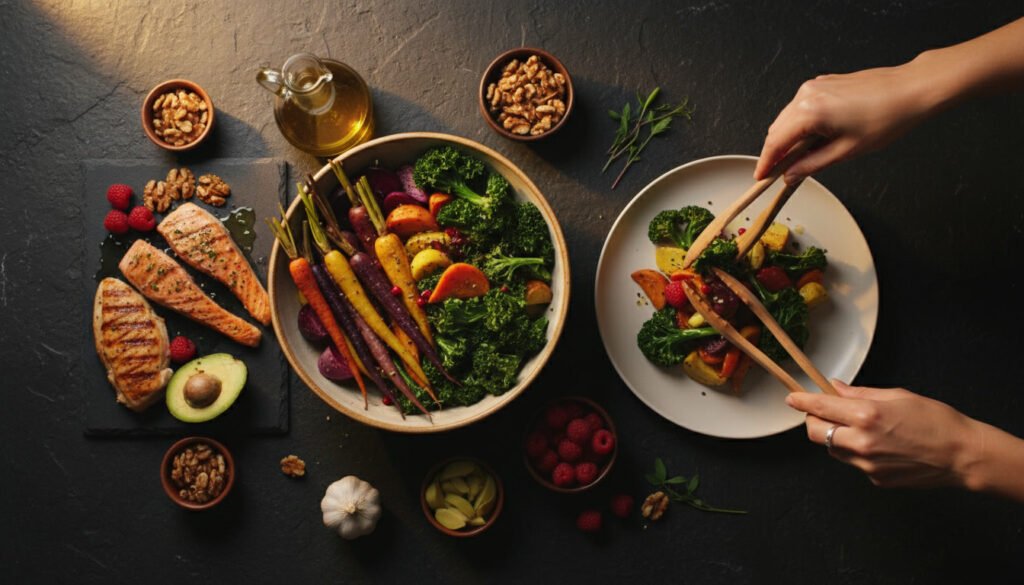
These aren’t “diet recipes.” They’re resilience recipes—built to preserve muscle, reduce inflammation, and stabilize blood sugar. Think repeatable, not complicated.
Muscle-Preserving Breakfasts
Breakfast sets the metabolic tone for the day. A protein-forward morning reduces cravings later and triggers muscle protein synthesis when the body is receptive.
- Greek yogurt bowl: berries + ground flax + walnuts or almonds
- Eggs + greens: sautéed spinach or kale with olive oil
- Stability smoothie: protein + fiber + healthy fats (no sugary “dessert shake” trap)
Anti-Inflammatory Lunches
Lunch should sustain you, not sedate you. Balanced plates built around lean protein, vegetables, whole grains, and healthy fats keep energy steady and inflammation low.
- Salmon + quinoa: roasted vegetables, herbs, olive oil
- Lentil bowl: vegetables + olive oil + spices + fermented side
- Chicken or tofu salad: mixed greens + seeds + extra-virgin olive oil
Sleep-Supporting Dinners
Dinner is where you signal repair. Keep it balanced and easy to digest: adequate protein for overnight recovery, cooked vegetables for micronutrient density, and fewer ultra-processed carbs that can disrupt sleep and blood sugar.
Sleep-friendly rule of thumb: If dinner feels like a spike-and-crash waiting to happen, it probably is. Choose meals that land softly.

Longevity Nutrients You Can’t Ignore
Some nutrients do disproportionate work in postmenopausal health. They support muscle preservation, brain function, inflammation control, and metabolic stability—the exact targets longevity meal recipes for menopausal women should hit.
Leucine, Magnesium, Omega-3s
- Leucine: a key amino acid signal for muscle repair and maintenance
- Magnesium: supports sleep quality, insulin sensitivity, and nervous system regulation
- Omega-3s: support brain health, joint comfort, and inflammation balance
Fiber, Fermented Foods, Polyphenols
- Fiber: stabilizes blood sugar and feeds beneficial gut bacteria
- Fermented foods: support gut–brain signaling and digestion
- Polyphenols: help defend cells against oxidative stress (berries, cocoa, herbs, colorful plants)
Longevity is rarely built in isolation. It’s built in ecosystems—starting in the gut, then expressed through energy, mood, and metabolic control.
Shopping List + Kitchen Stack
Consistency dies when you rely on motivation. Systems win. A longevity pantry and a simple kitchen stack reduce decision fatigue so the right meal becomes the default.
Longevity Pantry Staples
- Protein anchors: eggs, Greek yogurt, legumes, fish, lean poultry, tofu
- Fiber-forward carbs: oats, quinoa, lentils, beans, berries, vegetables
- Healthy fats: extra-virgin olive oil, nuts, seeds
- Fermented support: yogurt, kefir, sauerkraut, kimchi
- Polyphenol boosters: herbs, spices, cocoa, colorful plants
Cooking Tools That Reduce Nutrient Loss
How you cook matters. Gentle methods preserve nutrients. Quality cookware reduces unnecessary oxidation. And simple prep tools make repeatability realistic—especially on days when you’re tired and tempted to quit.
Internal link idea (optional): If you publish related content, link from here to your meal prep system and high-protein breakfast guides to strengthen topical authority and improve session depth.
Clean & Simple Meal Prep • High-Protein & Functional Meals
Long-Term Questions You’ve Probably Asked Yourself

Can diet during menopause actually slow aging?
It can’t stop time, but it can change how your body responds to it. Strategic nutrition supports muscle retention, metabolic flexibility, inflammation control, and cognitive resilience. Those four levers shape how aging feels—strength, clarity, mobility, and independence.
Which foods best protect muscle after menopause?
Protein-rich foods spaced throughout the day—especially those that help deliver a strong muscle-building signal—plus adequate calories and resistance training. Think: eggs, Greek yogurt, fish, legumes, poultry, tofu, and fiber-rich plants that stabilize blood sugar so your body can actually use what you eat.
Products / Tools / Resources
If you want this to be sustainable (not aspirational), reduce friction. The right tools make it easier to repeat the habits that protect muscle, memory, and metabolic health later.
Meal Prep Containers (Consistency Insurance)
Portioning removes guesswork. When protein and fiber are prepped, you’re far less likely to default to ultra-processed convenience.
- Makes protein distribution across the day easier
- Reduces decision fatigue
- Supports blood sugar stability
Shop meal prep containers on Amazon
Non-Reactive Cookware (Nutrient-Friendly Cooking)
Gentle cooking supports micronutrient preservation. A reliable skillet or pan makes “real food” easier to repeat.
- Supports daily vegetables and protein cooking
- Helps reduce overcooking and nutrient loss
- Makes healthy fats (like olive oil) easier to use well
Browse non-reactive skillets on Amazon
Blender (Breakfast Automation)
Smoothies can be a metabolic weapon when built correctly: protein + fiber + healthy fats, not sugar.
- Makes protein-first mornings easier
- Pairs well with berries, flax, and yogurt
- Supports blood sugar stability and appetite control
Find high-power blenders on Amazon
Omega-3 (Brain + Inflammation Support)
If fatty fish isn’t consistently practical, omega-3 supplementation can help support brain health and inflammatory balance.
- Supports cognitive clarity and mood stability
- Helps manage inflammatory load
- Complements anti-inflammatory lunches
Magnesium (Sleep + Recovery Support)
Magnesium is a practical support when sleep quality dips. Better sleep improves recovery, appetite regulation, and overall resilience.
- Supports sleep quality and relaxation
- Complements sleep-supporting dinners
- Helps reduce the “wired but tired” feeling
Browse magnesium options on Amazon
Tip: If you want a lower-effort system, start with just two upgrades—containers for consistency and a reliable pan for repeatable dinners. The goal is fewer decisions, not more.
As an Amazon Associate, I earn from qualifying purchases.