

Longevity Nutrition Meal Plans: A Science-Backed 7-Day Blueprint
Evidence-led, habit-ready, and designed to be followed today—not someday.
Jump to:What Longevity Nutrition Really Means • The Nutritional Framework • 7-Day Meal Plan • Supplementation & Smart Stacking • Personalization (DNA & Lifestyle) • FAQs
If “eat healthy” feels vague, “eat for longevity” gives you a system. This blueprint translates lab-grade nutrition insights into practical daily meals that help stabilize glucose, reduce inflammation, and support cellular repair—without turning your life into a science project. You’ll get a structured framework and a realistic 7-day plan, plus smart supplement pairings and personalization levers to keep it sustainable.
Important: Nothing here is medical advice. Use this as an education-forward template and adapt with your clinician if you have conditions or are on medication.
What Longevity Nutrition Really Means (And Why Most People Get It Wrong)
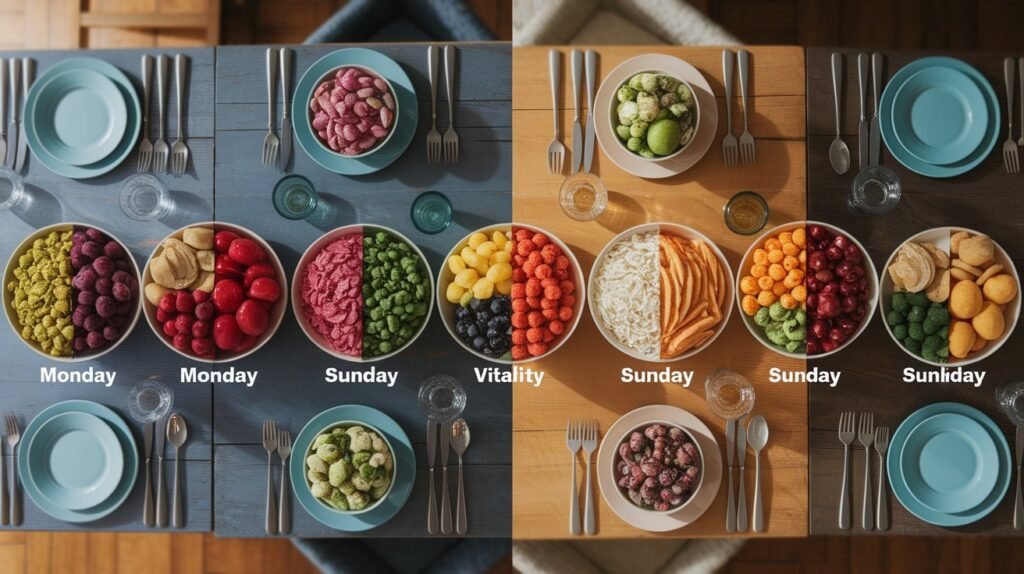
The difference between eating healthy and eating for lifespan extension
“Healthy” often stops at weight or macros. Longevity nutrition optimizes for cellular function over decades: steadier glucose, less chronic inflammation, balanced anabolic/catabolic signaling, and nutrient density that feeds mitochondrial efficiency. The outcomes you’re after: consistent energy, joint-friendly inflammation levels, good sleep, and body composition that preserves lean mass as you age.
Core biomarkers influenced by longevity nutrition (inflammation, insulin sensitivity, telomere dynamics)
- Inflammation tone: dietary patterning that favors omega-3s, polyphenols, fiber, and lower ultra-processed load helps keep systemic inflammation in a healthier range.
- Insulin sensitivity: balanced meals (protein + fiber + healthy fats) and smart timing blunt glucose spikes and reduce the glycemic variability linked to accelerated aging.
- Cellular maintenance dynamics: patterns that allow for regular cellular “clean-up” cycles (e.g., overnight fasting windows) support repair processes.
The Blue Zone model decoded for modern life
Common threads from long-lived populations include plant-forward eating, legumes, intact grains, nuts, olive oil, modest animal protein, and social eating patterns. This blueprint carries those principles into a modern, shoppable plan with simple breakfast, lunch, and dinner archetypes.
The Nutritional Framework for Extended Vitality
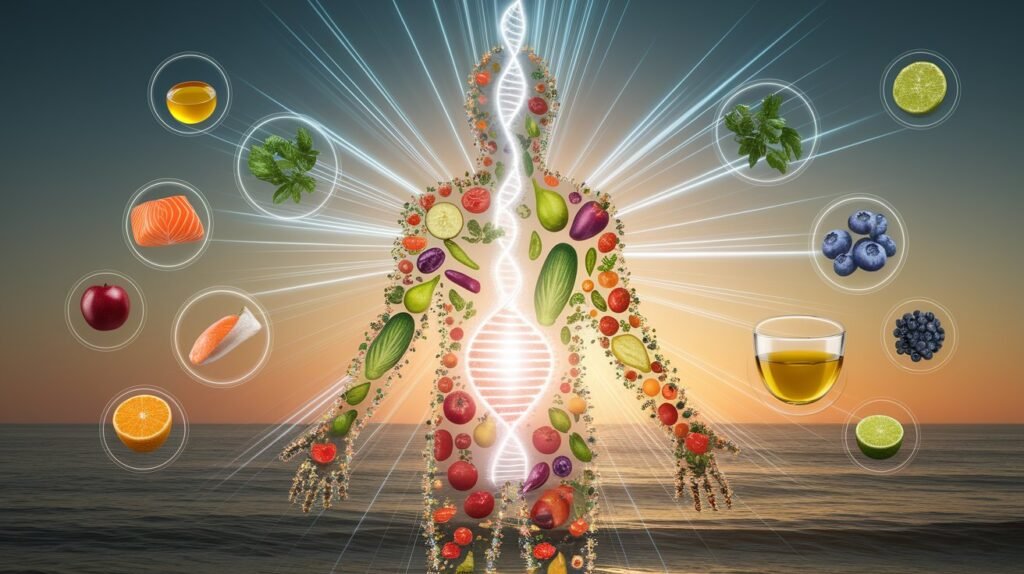
Macronutrient balance for mitochondrial efficiency
Each meal targets a protein anchor (for muscle retention and appetite control), fiber + polyphenols (for microbiome and inflammation tone), and healthy fats (for absorption and satiety). Carbs are mostly slow-release and intact (oats, quinoa, sweet potato, legumes).
Micronutrients & phytonutrients tied to healthy aging dynamics
- Polyphenols from berries, olive oil, herbs/spices, green tea, and cocoa.
- Omega-3s from oily fish, walnuts, flax/chia; supports inflammation balance.
- Minerals like magnesium and potassium from greens, beans, seeds, tubers.
- Cruciferous compounds from broccoli, kale, arugula for cellular resilience.
How timing meals impacts cellular repair cycles
Build a consistent daytime feeding window and avoid heavy late-night meals. A simple, sustainable baseline: finish dinner 3+ hours before bed and keep an overnight fasting window (e.g., 12 hours) most days to support routine repair processes and sleep quality.
The 7-Day Longevity Nutrition Meal Plan (Science in Action)
This plan pairs realistic recipes with shoppable staples. Each product link opens in a new tab. Wherever possible, we’ve chosen whole-food, minimally processed items.
Core Pantry (Shoppable)
- Extra Virgin Olive Oil — Shop EVOO
- Old-Fashioned Oats — Shop Oats
- Chia & Flax Seeds — Shop Chia • Shop Flax
- Walnuts/Almonds — Shop Walnuts
- Quinoa — Shop Quinoa
- Canned Wild Salmon/Sardines — Shop Salmon • Shop Sardines
- Green Tea — Shop Green Tea
- Spices (Turmeric, Cinnamon) — Shop Turmeric • Shop Cinnamon
Tip: buy core pantry in bulk once; weekly fresh items are produce, fish, yogurt, and greens.
| Day | Breakfast (Glucose-steady, polyphenol-rich) | Lunch (Anti-inflammatory, fiber-first) | Dinner (Repair-forward, sleep-friendly) |
|---|---|---|---|
| Mon | Overnight oats, berries, chia; green tea | Quinoa bowl with chickpeas, arugula, EVOO-lemon | Salmon, broccoli, sweet potato; olive oil drizzle |
| Tue | Greek yogurt, walnuts, cinnamon; pear | Lentil soup + side salad; whole-grain toast | Tofu stir-fry with mixed veg; brown rice |
| Wed | Spinach omelet; avocado; herbal tea | Sardine & white bean salad; tomatoes, olives | Turkey chili with kidney beans; side greens |
| Thu | Oatmeal, blueberries, flax; green tea | Farro tabbouleh; hummus; cucumbers | Grilled mackerel; roasted carrots; quinoa |
| Fri | Berry-spinach kefir smoothie; almonds | Chickpea & kale stew; whole-grain pita | Chicken thigh, Brussels sprouts; olive oil |
| Sat | Eggs, tomatoes, olives; orange | Brown rice sushi (salmon/avocado); miso soup | Minestrone with beans; arugula-parmesan salad |
| Sun | Protein oats; cocoa nibs; banana | Mediterranean tuna salad; beans; greens | Roasted veggie platter; lentils; tahini sauce |
Breakfasts that support healthy aging (polyphenol-rich, glucose-steady)
- Blueberry Chia Overnight Oats — ½ cup oats, 1 tbsp chia, ¾ cup unsweetened milk, ½ cup blueberries; a dash of ceylon cinnamon. Pair with green tea.
- Greek Yogurt Parfait — ¾ cup plain Greek yogurt, ¼ cup walnuts, mixed berries, drizzle of EVOO for fat-soluble phytonutrient uptake.
Midday meals that help prevent inflammation crashes
- Mediterranean Quinoa Power Bowl — 1 cup cooked quinoa, chickpeas, cherry tomatoes, cucumber, arugula, olives, lemon + EVOO.
- Sardine & White Bean Salad — sardines in olive oil, cannellini beans, red onion, parsley, lemon, capers; serve on greens.
Dinner routines that support nightly repair
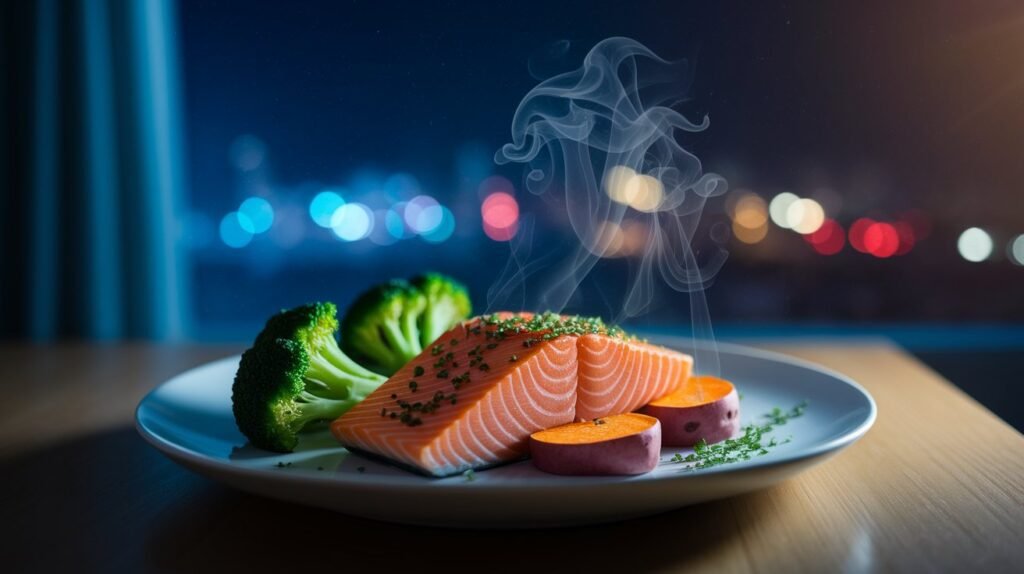
- Salmon, Broccoli, Sweet Potato — Baked salmon (or canned wild salmon for budget), steamed broccoli, roasted sweet potato; finish with EVOO.
- Tofu-Veggie Stir-Fry — Extra-firm tofu, bell peppers, bok choy, mushrooms; garlic/ginger/low-sodium tamari; serve over brown rice.
Jump to the shopping links or view smart supplement stacks.
Supplementation & Smart Stacking for Nutritional Longevity
Food first. Supplements can fill gaps and support specific outcomes. Always check interactions with your clinician, especially if you’re pregnant, nursing, or on medication.
Synergistic compounds (example stacks)
- Omega-3 (EPA/DHA) — Consider a quality fish oil: Shop Omega-3.
- Magnesium (evening) — Often taken for relaxation and sleep quality: Shop Magnesium Glycinate.
- Curcumin + Piperine — For polyphenol support: Shop Curcumin.
- Resveratrol — Polyphenol found in grapes/berries: Shop Resveratrol.
- Vitamin D3 + K2 (context-dependent) — Consider testing first: Shop D3+K2.
When and how to integrate functional supplements
- Anchor most capsules with breakfast or lunch to reduce GI upset.
- Use evening magnesium for wind-down if tolerated.
- Reassess quarterly; supplements should map to goals and labs, not habit for habit’s sake.
Hydration & electrolytes for longevity
Front-load hydration earlier in the day. If you sweat or train, consider a clean electrolyte mix: Shop Electrolytes. Add citrus and a pinch of sea salt to water for minerals during long, hot days.
How to Personalize Your Longevity Meal Plan Based on DNA & Lifestyle
Genetic variations that modify nutrient metabolism
Genetics can influence caffeine clearance, lactose tolerance, lipid handling, and folate pathways. Consider this plan your default template; adjust based on your responses, preferences, and professional guidance.
AI-based nutrition tracking for biofeedback loops
Pair this blueprint with smart tracking to monitor trends (e.g., energy, sleep, and steady glucose patterns). Use your data to iterate—consistency beats perfection.
Calorie cycling & fasting strategies to refresh metabolic health
- Baseline: 12-hour overnight fast (finish dinner 3+ hours before bed).
- Optional: 1–2 lower-calorie, plant-forward meals weekly for dietary variety and a metabolic “reset” feel.
- Training days: keep protein steady; bias carbs earlier in the day around activity.
Where to go next
- Longevity Nutrition Ideas
- Anti-Inflammatory Grocery List
- High-Protein Breakfasts for Stable Energy
- Better Sleep via Nutrition: A Simple Protocol
Longevity Nutrition FAQs

What is longevity nutrition?
A pattern of eating designed to support long-term cellular health: steady glucose, lower chronic inflammation, nutrient density, and routines that allow the body to repair daily.
What are the best foods for longevity?
Vegetables (especially crucifers), berries, legumes, intact whole grains, nuts/seeds, olive oil, herbs/spices, seafood rich in omega-3s, and modest portions of minimally processed animal protein.
Do I need supplements?
Not necessarily. Prioritize food first. Supplements can be helpful for specific goals or gaps—omega-3, magnesium, vitamin D (if low), or polyphenols like curcumin—pending professional guidance.
How fast will I notice changes?
Energy and digestion can improve within days to weeks. Body composition, labs, and sleep trends typically shift over weeks to months with consistent habits.
Shop the Longevity Pantry & Tools
See Mediterranean Pantry Staples
Upgrade to Glass Meal-Prep Containers
Medical Disclaimer: This content is for educational purposes only and does not substitute for professional medical advice. Consult your healthcare provider before making dietary or supplement changes.
Amazon Associates Disclosure: As an Amazon Associate, I earn from qualifying purchases.




3 Comments