The Low-Friction, High-Consistency Meal Prep System
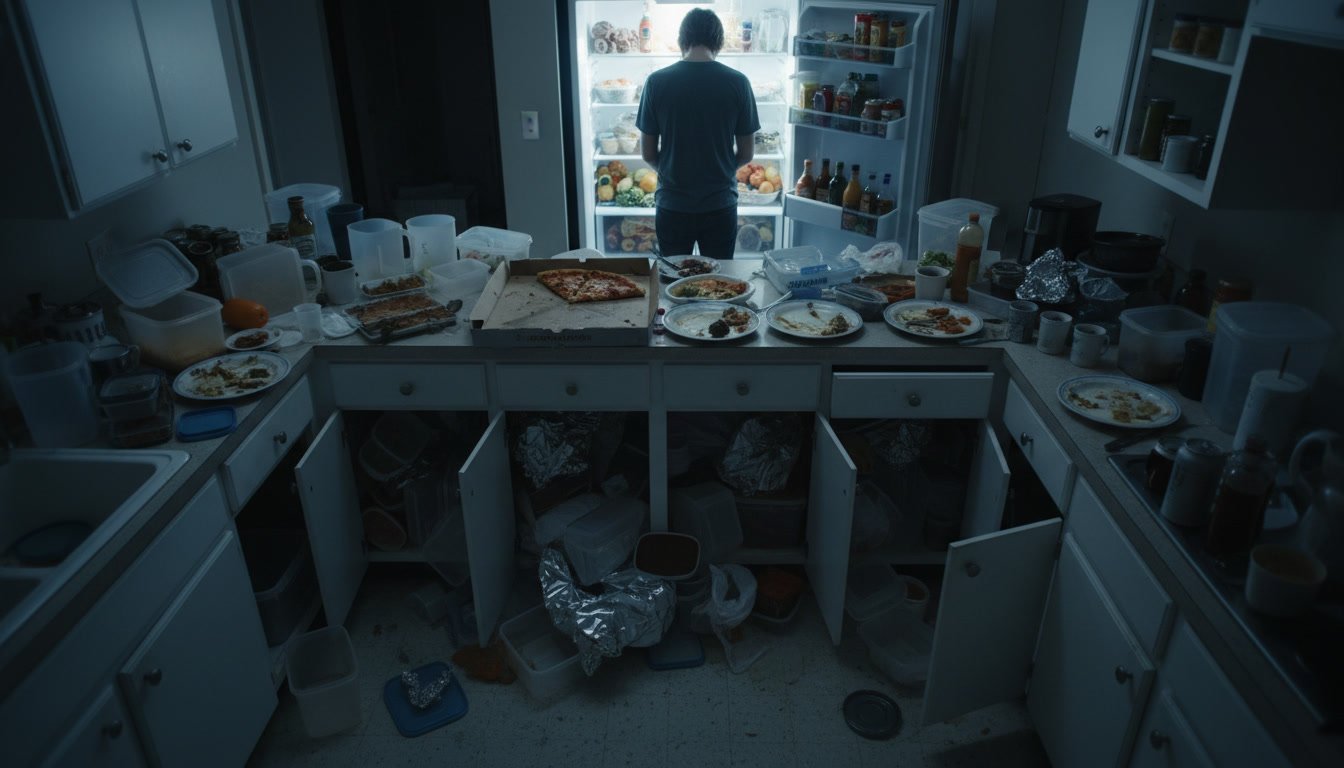
Clean eating doesn’t usually fall apart because you “lack motivation.” It falls apart because your setup quietly fights you: too many decisions, too much prep, too much cleanup, and that nagging “is this still safe?” moment when you’re tired and hangry.
Key takeaway: A system that feels almost boring (in a good way) is the one you’ll repeat. The goal isn’t “perfect meal prep.” The goal is low friction + high-consistency meal prep system.
Table of Contents
- Why Meal Prep Advice Sounds Smart (But Fails)
- Friction Is the Enemy. Consistency Is the Goal.
- Templates Beat Recipes (Every Time)
- The Weekly Prep Window (Time-Boxed Cooking)
- Batch by Process, Not by Meal
- Storage & Food Safety: The Confidence Layer
- Containers: The Silent Saboteur
- Flavor Without Chaos
- Decision Elimination Is the Real Win
- Feedback Loops Beat Rules
- Products / Tools / Resources
Why Meal Prep Advice Sounds Smart but Fails in Real Life
Most high-consistency meal prep content is built around recipes, macros, or “newness.” Novelty feels exciting for a week, and then it becomes clutter—especially mental clutter. When your brain is already taxed, the last thing you need is another complicated plan.
The most common breakdown points are simple and predictable: too many choices, too much prep time, too much cleaning, too much remembering. Even if the plan is “healthy,” friction piles up until it snaps.
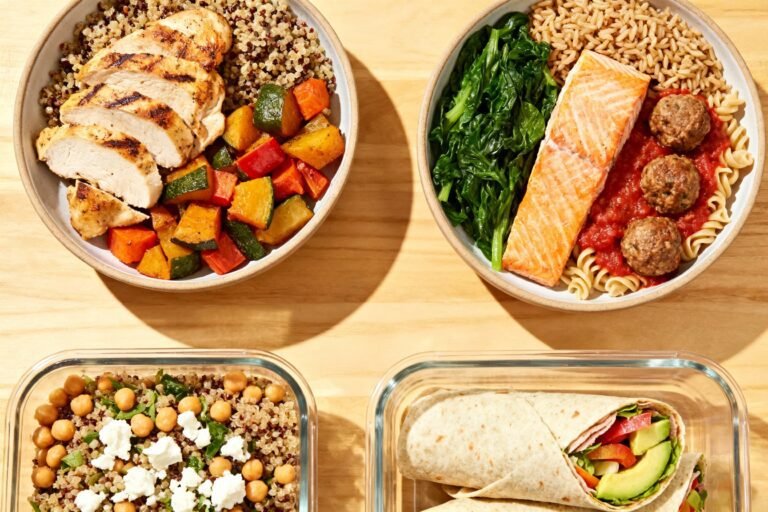
If you want a practical reference for meals that are designed to hold up under real life, bookmark Recipes Built For Real Life and use it as a plug-and-play library when you need something fast that still feels clean.

Friction Is the Enemy. Consistency Is the Goal.
This sounds backwards, but consistency usually doesn’t come from “being more disciplined.” It comes from removing obstacles so discipline isn’t constantly required. Like driving: you don’t prove you’re a better driver by navigating potholes. You build smoother roads.
Pro Tip: If you’re frequently asking “what should I eat?” your system is under-designed.
A strong high-consistency meal prep system answers questions before they even show up.
Low-friction meal prep reduces the number of failure points—logistically, emotionally, and hygienically. That last one matters more than most people admit. Food safety uncertainty quietly wrecks adherence. If you’re unsure, you won’t eat it. You’ll order something else. Done.
If you want a full framework that’s built specifically for hectic evenings, plug in Meal Prep System for Busy Nights as your baseline and then upgrade it using the workflow principles below.
Templates Beat Recipes. Every Time.
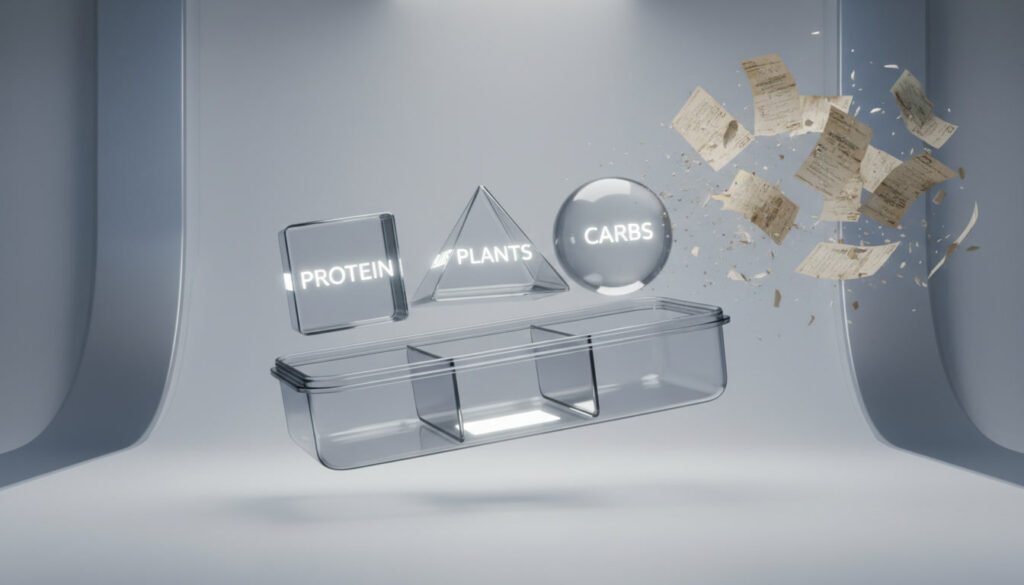
Recipes can be brittle. Miss one ingredient and the whole plan suddenly feels ruined. Templates are forgiving. They bend. Instead of asking “What am I cooking this week?” ask, “Which structure am I running?”
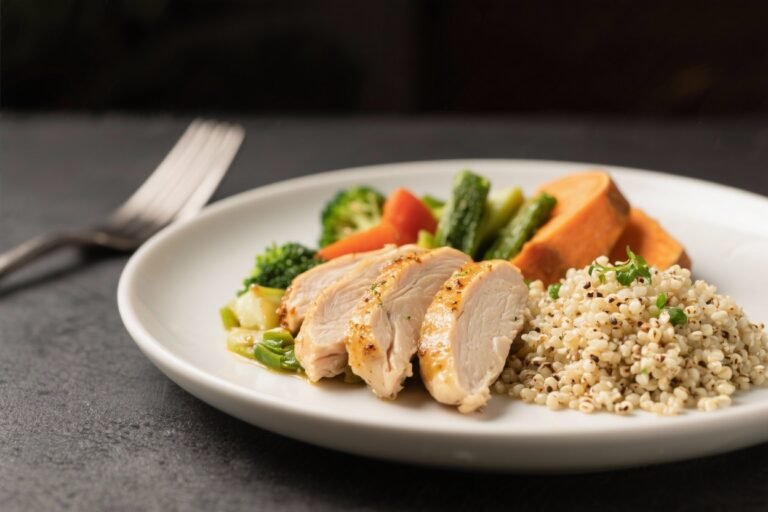
The clean meal template (simple, research-aligned)
- Protein anchor (the non-negotiable)
- Fiber-dense plants (volume + digestion support)
- Controlled carb source (optional; depends on your needs)
- Functional fat (flavor + absorption)
Same structure, different inputs. Chicken becomes lentils. Rice becomes potatoes. Olive oil becomes tahini. The system survives the swap—which is why it lasts.
Pro Tip: Build 2–3 “default meals” you like enough to repeat.
Consistency loves “good enough” options that are always ready.
The Weekly Prep Window (and Why Longer Isn’t Better)
There’s a myth that “real” meal prep takes hours. Entire Sundays lost. Twenty containers. Total chaos. In practice, that’s a burnout engine.
A tight prep window—about 60 to 90 minutes—forces smart decisions and respects your attention span. One session. Same day each week. Same workflow. Muscle memory kicks in.
If you want a step-by-step rhythm you can copy, read Time-Boxed Cooking and use it as your weekly anchor.
For faster “cook + crisp” wins during that same window, rotate in Air Fryer Meal Prep Recipes when you want less mess and more speed.
Batch by Process, Not by Meal
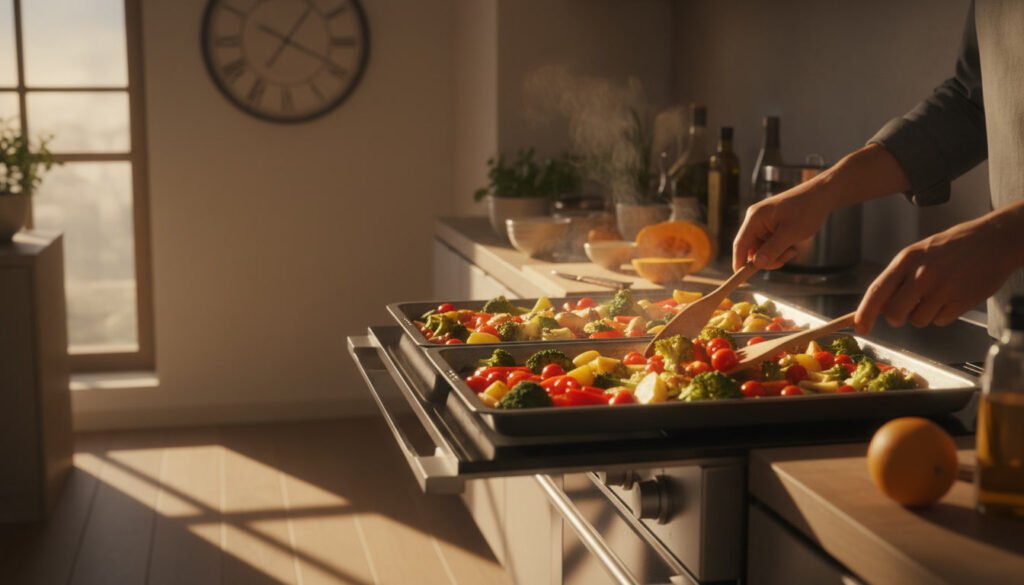
Here’s the shift that makes the whole operation feel lighter: don’t cook meals. Cook components. Proteins together. Vegetables together. Carbs together. One pan type at a time. One temperature range at a time.
This reduces cleanup, yes—but more importantly it reduces mental switching. You stop bouncing. You start flowing. It feels oddly calm, like an assembly line with better lighting.
Key Takeaway: Fewer task transitions = fewer mistakes.
From a food safety standpoint, cleaner workflow paths reduce cross-contamination risk.
Storage Isn’t Sexy. But It’s Everything.
Most people abandon prepped food because they don’t trust it anymore. Was this cooked Tuesday or Wednesday? Why does it smell different? Is that condensation or danger?
Food safety isn’t just about pathogens. It’s about confidence. If you don’t trust it, you won’t eat it. That’s why cooling and storage practices matter.
Evidence-based storage habits that reduce waste
- Use shallow containers so foods cool faster.
- Let hot food stop steaming heavily before sealing (avoid trapping excess moisture).
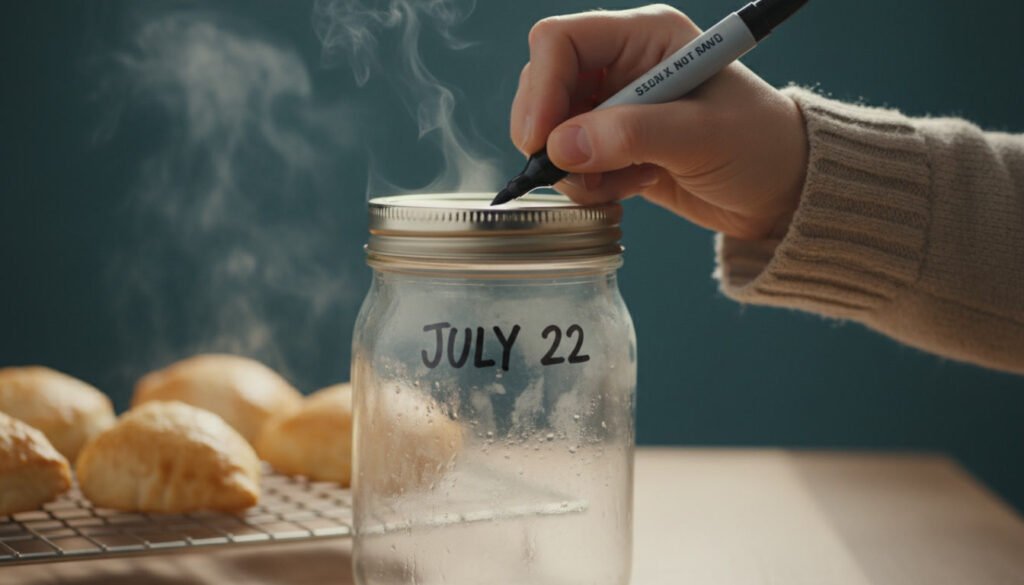
- Label containers with the prep date (low-tech, high impact).
- Plan refrigerated meals for 3–4 days of best quality; freeze components for longer.
Pro Tip: Freeze components, not fully assembled meals, when texture matters.
You’ll get better reheats and less “sad leftovers” energy.
Containers: The Silent Saboteur
This part feels petty until you fix it. Mismatched containers slow everything down. They don’t stack. Lids vanish. Portions drift. Visual clutter increases stress—and stress nudges people toward convenience food.
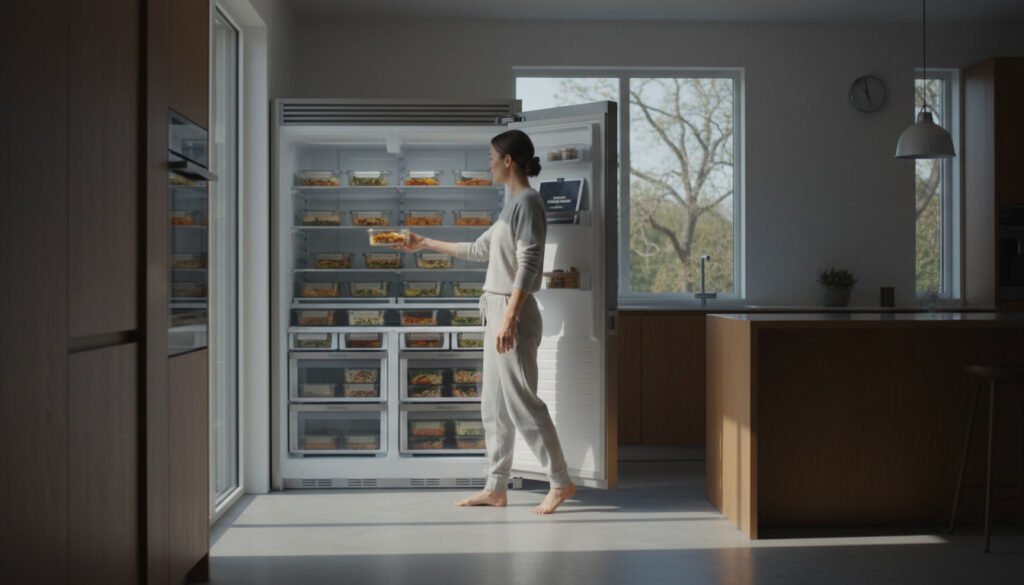
Standardize your containers. Same size. Same shape. Same lid. You’ll pack faster, store smarter, and waste less. Your future self will thank you in weirdly emotional ways.
Flavor Without Chaos
Bland food kills consistency. Over-seasoned, complicated food kills prep momentum. Both are bad. The compromise is modular flavor.
The “flavor matrix” that keeps you interested
- Cook proteins with a simple base seasoning (salt, pepper, garlic, paprika).
- Add acid later (lemon, vinegar) to brighten without extra cooking steps.
- Use one or two finishing sauces strategically (enough variety, not chaos).
Key Takeaway: Small flavor contrasts keep meals satisfying without adding prep time.
You’re not chasing “perfect.” You’re building repeatable enjoyment.
Decision Elimination Is the Real Win
The best systems quietly answer questions before they arise. What’s lunch? Already done. What do I eat after work? Grab-and-go. What if I’m tired? Especially then.
You don’t rise to the occasion. You fall to the default. So make the default decent: breakfast rotations, template-based lunches, flexible dinners made from prepped components.
Feedback Loops Beat Rules (Every Time)
Rules are brittle. Life breaks them. Feedback adapts.
Once a week—five minutes—notice what didn’t get eaten, what ran out first, and what felt annoying. Then tweak the system. Not your willpower. The system.
Pro Tip: Track “friction points,” not calories.
The fastest improvements come from removing the annoying steps you keep avoiding.
Products / Tools / Resources
These aren’t “must-haves,” but they reduce friction in real, tangible ways—especially on busy weeknights. Consider them upgrades that make your system easier to repeat.
1) Stackable Glass Meal Prep Containers (Uniform Set)
Faster cooling, easier stacking, fewer missing lids, and a calmer fridge. Uniform containers are a sneaky consistency tool.
- Helps foods cool more evenly
- Makes portioning more predictable
- Reduces visual clutter (and “where’s the lid?” frustration)
Shop Glass Meal Prep Containers
2) Digital Food Thermometer
Removes the guesswork. Helps you cook proteins safely and consistently (especially chicken and reheats).
- Improves food safety confidence
- Prevents overcooking (dry chicken is a compliance killer)
- Speeds decision-making: “Is this done?” becomes instant
Browse Digital Food Thermometers
3) Sheet Pans with Raised Edges
Your batch-roasting workhorse. Fewer spills, easier cleanup, and faster “cook components” workflows.
- Makes batch cooking smoother and cleaner
- Great for vegetables, proteins, and “one-temperature” efficiency
- Pairs perfectly with time-boxed prep sessions
4) Freezer Labels + Marker (Low-Tech, High Impact)
Dating your food sounds intense until it saves you money and stops the “is this safe?” spiral. Find Freezer-Safe Labels
5) Simple Finishing Sauces (For Variety Without Extra Work)
Keeps repeat meals interesting. A small sauce rotation can make the same base template feel brand new. Browse Finishing Sauces
Want more “plug-in” meal ideas that match this workflow style? Start with Recipes Built For Real Life and rotate in Air Fryer Meal Prep Recipes when you need speed.
As an Amazon Associate, I earn from qualifying purchases.