Pumpkin Cottage Cheese Mousse: 5 Genius, Delicious Tips
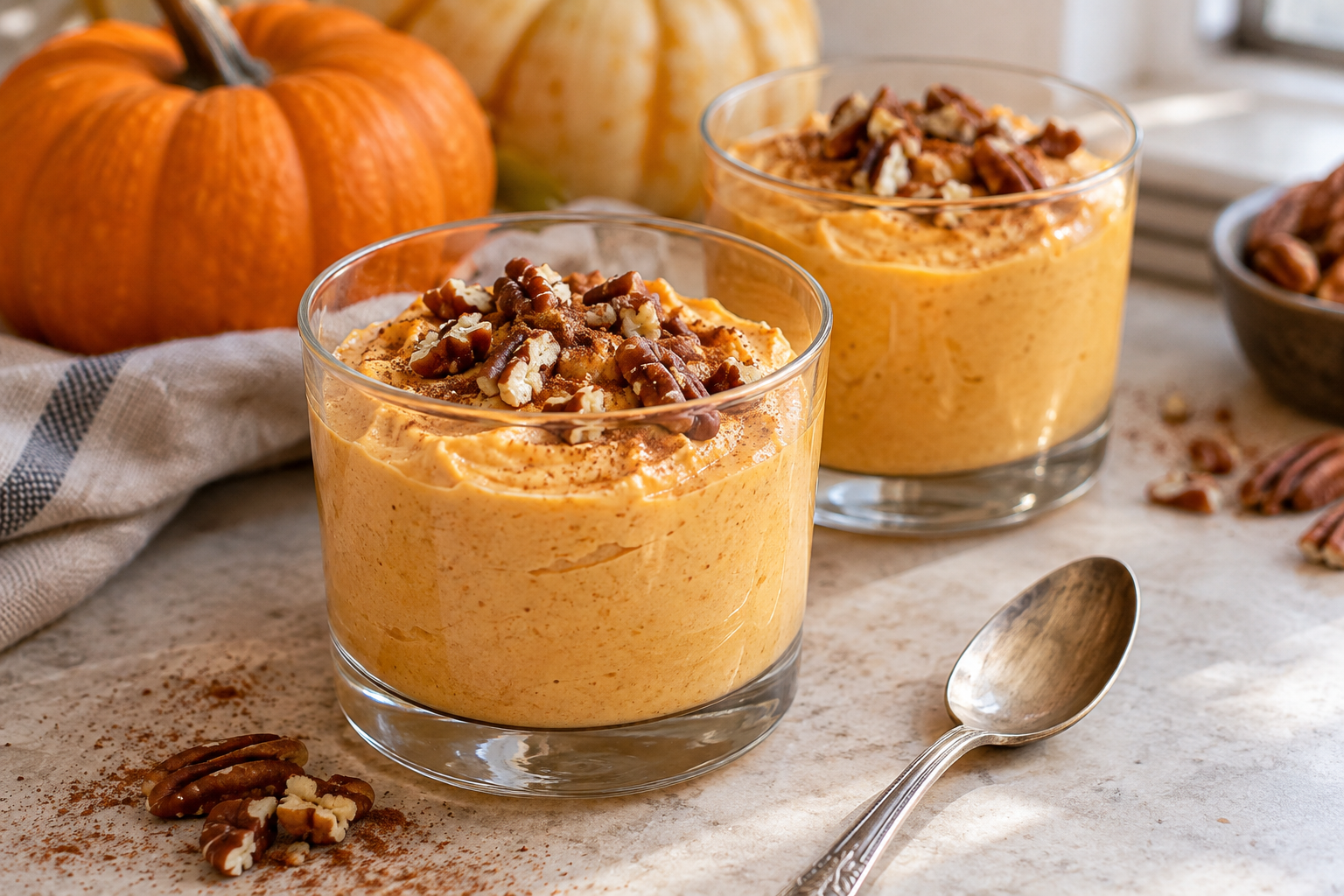
Pumpkin cottage cheese mousse works best when you treat it as a chilled cheesecake cream: smooth the cheese first, control the pumpkin’s moisture, and stop processing once the mixture is uniform. You can make two generous snack portions without protein powder, gelatin or an oven.
The useful starting point is two parts cottage cheese to one part plain pumpkin by volume. Below, you’ll find the full recipe, five texture decisions that matter, a transparent protein calculation, and a make-ahead plan that keeps the topping crisp. Expect a dense, spoonable dessert rather than the airy lift of whipped-cream mousse.
In this recipe
Affiliate disclosure: As an Amazon Associate I earn from qualifying purchases. Product links below are affiliate links, at no extra cost to you.
Pumpkin cottage cheese mousse recipe
Yield: 2 snack portions or 4 small dessert portions. Active preparation: about 10 minutes. Chill: 60 minutes. Cooking: none. Contains milk; optional toppings may contain nuts or wheat.
For one batch, measure 1 cup (225 g) plain 4% cottage cheese, ½ cup (122 g) plain canned pumpkin purée, 1 tablespoon (20 g) pure maple syrup, ½ teaspoon vanilla extract, and ½ teaspoon pumpkin pie spice. Keep an additional teaspoon of maple syrup available for adjustment. Do not add salt until you have tasted the cheese.
Optional finishing ingredients are 2 teaspoons chopped toasted pecans or pumpkin seeds, divided between two portions, and a light dusting of cinnamon. This no-bake pumpkin dessert has no cream, pudding mix or protein powder; those ingredients change both the texture and the nutrition calculation.
These gram amounts are a reproducible starting formula, not a claim that every cottage cheese brand weighs the same per cup. Use weight when repeating a batch you like. The recipe is developed from ingredient behavior and published methods; it has not yet been kitchen-tested for this site.
1. Smooth the cheese before adding pumpkin
Put the cottage cheese in a small food processor. Process briefly, stop, and scrape the sides with the machine switched off. Repeat until a dab rubbed between the back of a spoon and the bowl looks smooth, with no obvious white curd pieces. Check the texture rather than trusting a fixed timer.
Add the pumpkin, maple syrup, vanilla and spice. Pulse just until the color is even, scraping once if needed. Taste a small spoonful. If the dairy tang dominates, add the reserved teaspoon of maple syrup; if the flavor already feels balanced, leave it out.
2. Chill pumpkin cottage cheese mousse and finish
Divide the pumpkin cottage cheese mousse between two covered bowls and refrigerate for about an hour. Chilling improves the serving texture, but it cannot remove curds you left unblended. Spoon on nuts or crumbs immediately before eating, so they remain a separate crunchy layer.
For smaller desserts after dinner, divide the same batch into four cups. That halves the protein and calories per cup compared with the two-portion version. For evenly sized pumpkin cottage cheese mousse portions, weigh the finished batch and divide that weight by your chosen number of servings.
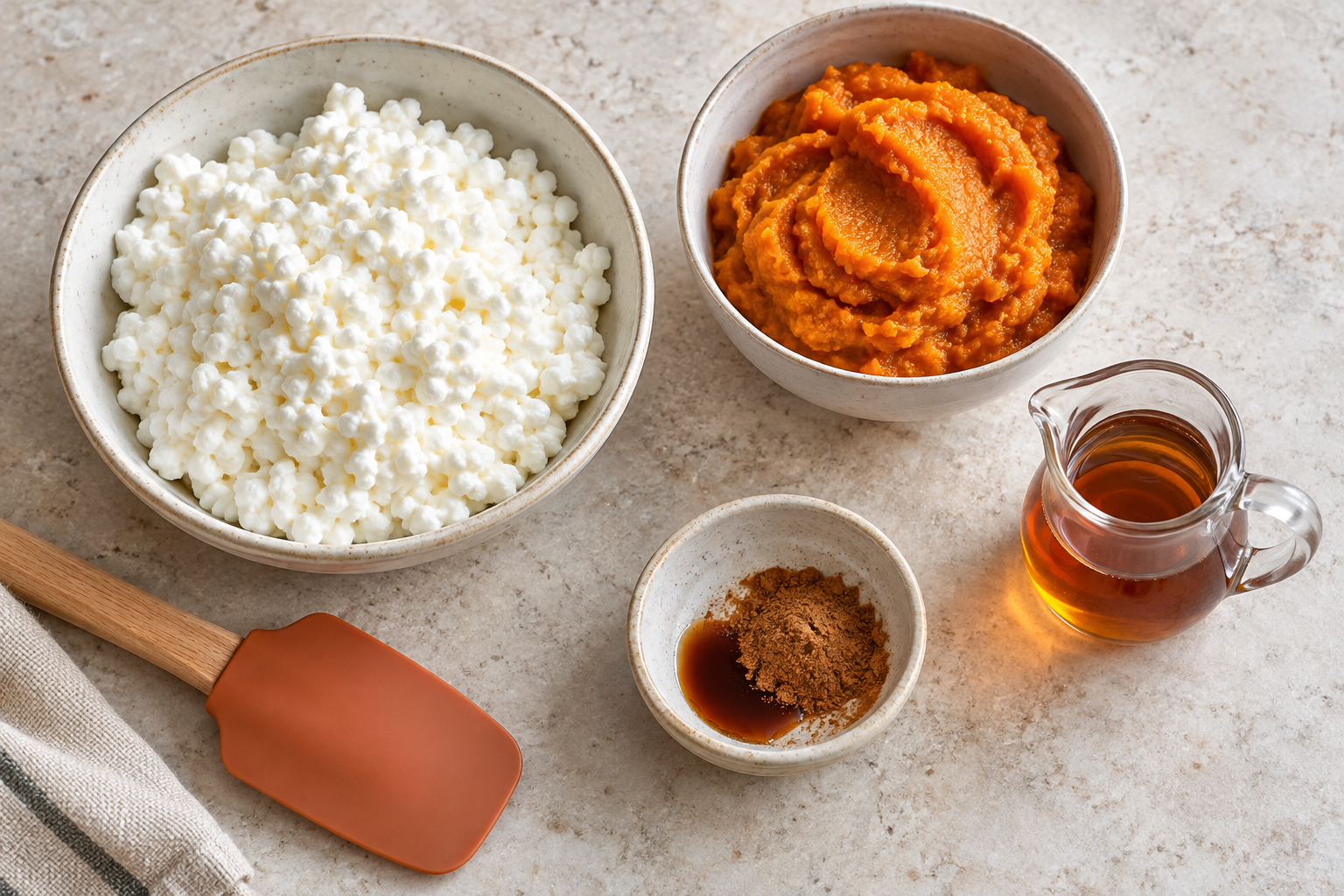
Five genius fixes for delicious pumpkin cottage cheese mousse
1. Choose the cheese for the texture you want
Start with plain 4% cottage cheese if your priority is a rounded, creamy finish. A 2% version can work, but expect a different balance of richness and tang. Fat-free cheese is not automatically a failed batch; it simply gives you less richness to soften the pumpkin and spice.
Before measuring, stir the tub so you are not scooping only dry curds from the top or liquid from the bottom. If there is a distinct pool of loose liquid, spoon that excess off first. Do not squeeze the cheese dry: removing its dressing changes the formula and makes smooth processing harder.
Taste the cheese on its own. A strongly salted brand will remain noticeable in a lightly sweetened dessert, however long you blend. Choose another brand next time rather than masking an unwanted salty note with several extra spoonfuls of syrup.
2. Keep pumpkin concentrated
Choose a can whose ingredient list says pumpkin, not pumpkin pie filling. LIBBY’S plain pumpkin label lists 45 calories, 3 g fiber and 1 g protein per 122 g half-cup. Those figures describe the pumpkin alone, not a completed dessert.
Home-roasted pumpkin is an option when it is thoroughly cooled and thick enough to hold a soft mound. Watery purée can loosen pumpkin cottage cheese mousse before you even switch on the machine. Drain visibly wet purée in a fine sieve in the refrigerator, then weigh the drained portion.
Do not compensate for thin purée by pouring in more cottage cheese without tracking it. That may improve consistency, but the yield and nutrition change. Write down the added amount so the next batch is repeatable instead of another guess.
3. Match the machine to the batch
A wide blender jar can strand a small batch above the blades. The tempting fix is extra milk, which turns a spoon dessert into a drink. A smaller work bowl usually makes this formula easier to move around the blade without introducing liquid.
The Cuisinart Mini-Prep Plus DLC-2ABC 3-cup processor is a compact option for small batches. Its bowl size suits this quantity better than a large blender jar; follow its fill limits and instructions, and use an appliance you already own if it handles the mixture well.
A processor is not a promise of perfect texture. Atlantic Health’s pumpkin mousse method specifically favors a food processor and cautions that a high-powered blender can liquify its mixture. Use short runs and inspect the result instead of assuming more power always helps.
4. Separate graininess from runniness
Graininess means detectable particles: usually curd pieces, sometimes undissolved sweetener or powder. Runniness means the mixture is smooth but flows too freely. Pumpkin cottage cheese mousse can have either problem, and the repairs are different.
For grainy pumpkin cottage cheese mousse, scrape the bowl and process briefly again before chilling. For a smooth but loose mixture, stop processing and refrigerate it. If it remains pourable, serve it as a pumpkin fruit dip and start the next batch with less watery ingredients. Endless blending does not remove water.
A flexible scraper helps you bring unprocessed cheese back into the blade’s path. The OXO Good Grips Silicone Everyday Spatula has flexible edges for scraping bowls; use it only with the appliance stopped and unplugged, never beside moving blades.
5. Adjust flavor after a cold taste
Pumpkin, dairy and cinnamon compete for attention. Too much spice can leave a dusty impression that resembles grit even when the cheese is smooth. Start with the stated half-teaspoon, then taste a chilled spoonful before increasing it.
If you want pumpkin cottage cheese mousse with stronger pumpkin-pie character, try a few graham crumbs on top before increasing the purée. They add a familiar toasted note without thinning the base. If the mousse feels too sweet, reduce the syrup next time; adding more spice is unlikely to restore balance.
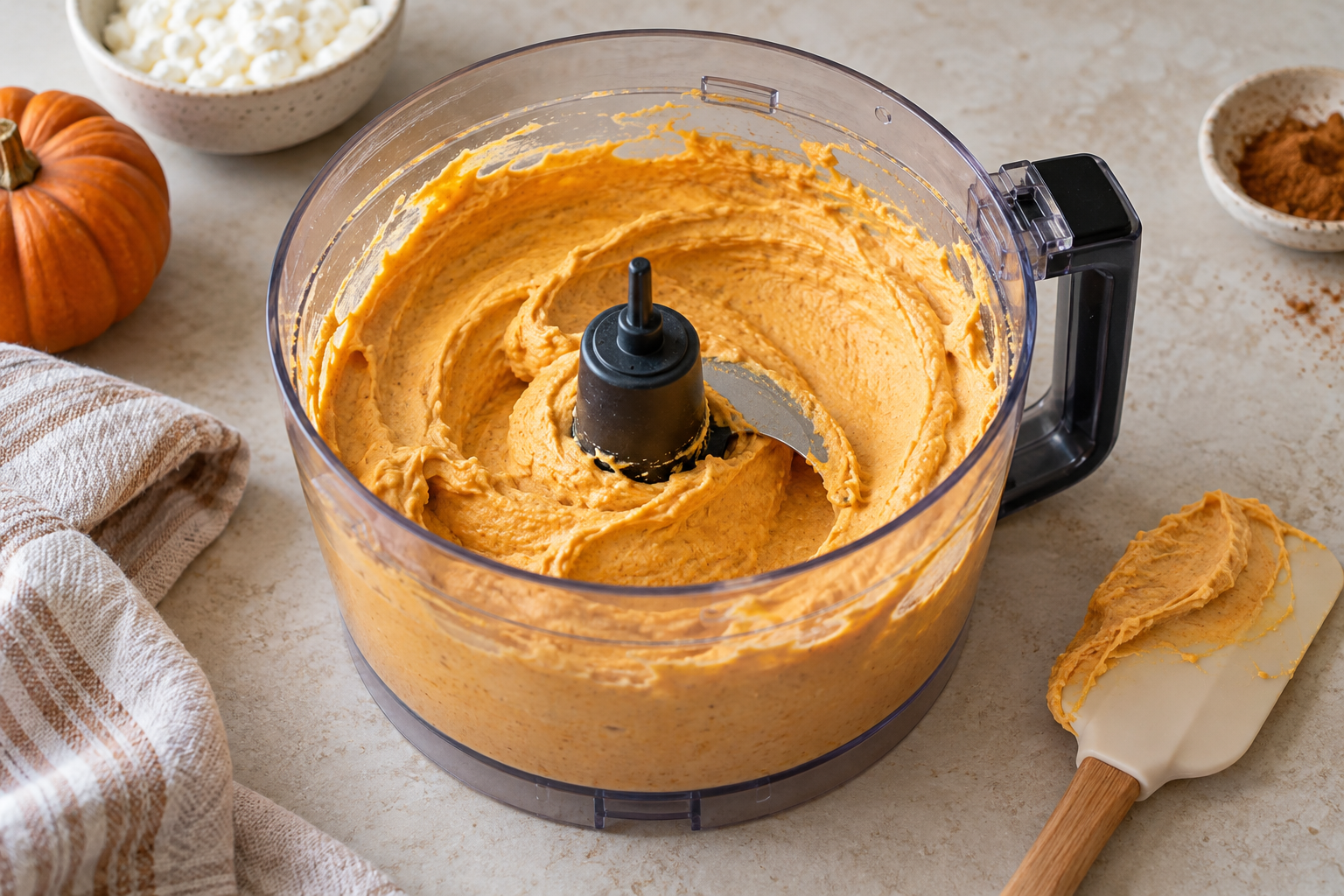
How much protein is actually in each serving?
Most of the protein in pumpkin cottage cheese mousse comes from the cheese. The serving size on your tub matters more than the number on a viral recipe graphic. Find the grams of protein per label serving and multiply by the number of those servings you use.
For example, if your cheese label gives 13 g protein per ½ cup, one cup supplies 26 g. Add the pumpkin’s 1 g for about 27 g in the batch, before tiny contributions from flavorings. Divide by two for approximately 13.5 g per snack, or by four for approximately 6.8 g per small dessert.
This is a label-based estimate, not laboratory analysis. If your brand lists 12 g instead, the same calculation becomes about 25 g per batch and 12.5 g per snack. Measuring the entire batch on a kitchen scale and splitting its weight equally is more reliable than eyeballing uneven glasses.
The pumpkin contributes about 3 g fiber to the whole batch, or roughly 1.5 g to each of two servings. That makes this a protein-containing dessert with some fiber, not a high-fiber meal. For a breakfast designed around oats and seeds, use our high fiber overnight oats instead.
Calculate calories the same way: cheese calories for the amount used, plus pumpkin, syrup and toppings, divided by the actual yield. Maple syrup still contributes added sugar. Leaving out refined white sugar does not make pumpkin cottage cheese mousse sugar-free.
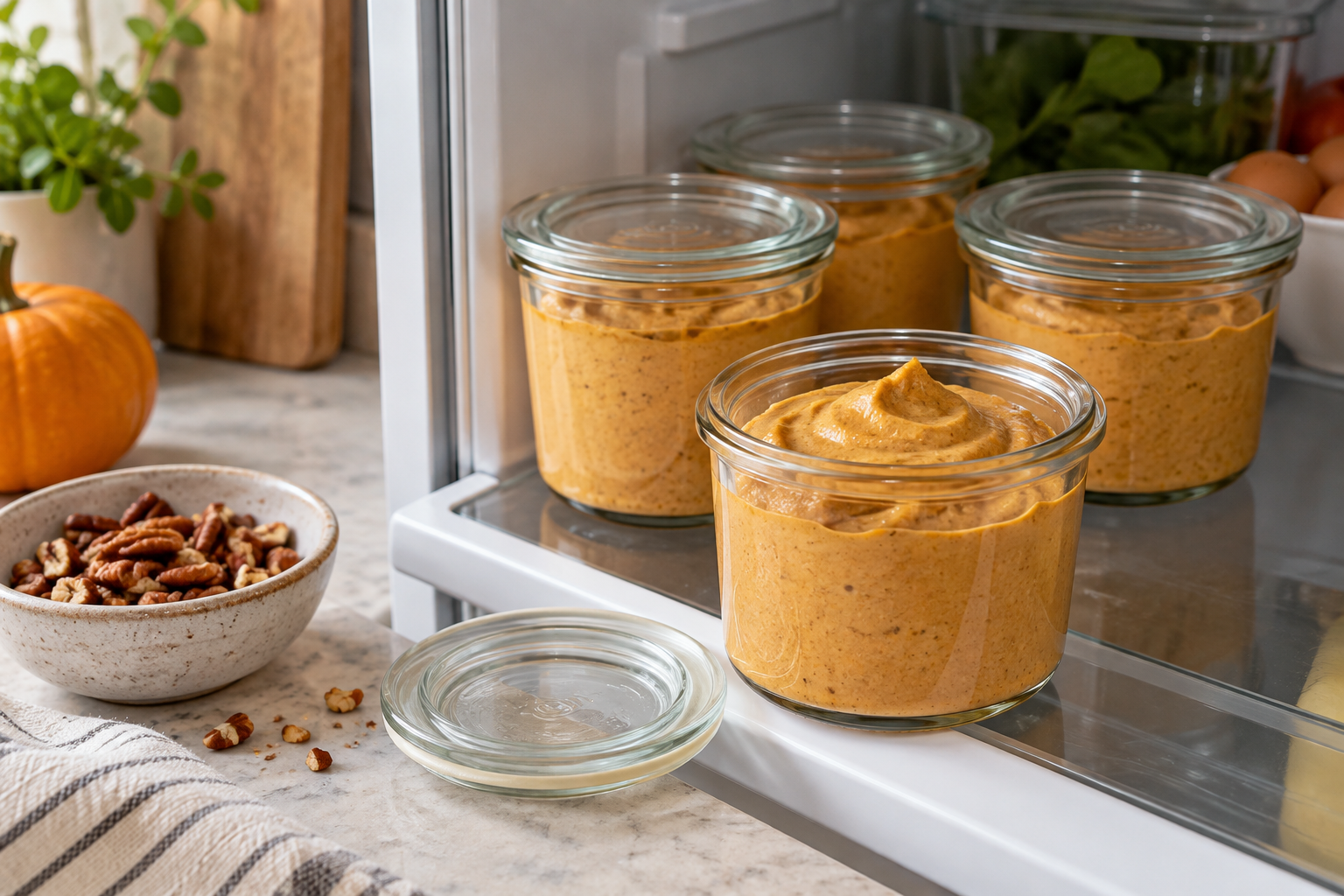
Three variations worth making deliberately
Pumpkin cheesecake cups
For high protein pumpkin mousse served as a layered dessert, add a teaspoon of crushed graham crackers to each cup just before serving. Use a small spoonful of plain Greek yogurt on top if you enjoy a sharper finish. Keep the topping separate during storage; a soft crumb layer is a different texture, not failed mousse.
Chocolate pumpkin cream
Mix 1 teaspoon unsweetened cocoa into a spoonful of the finished base, then fold it back through one portion. Taste before increasing the cocoa because it can obscure pumpkin quickly. A little chopped dark chocolate gives a clearer chocolate accent without changing the entire bowl.
A higher-protein version
If you already use a protein powder you like, test a teaspoon in a small separate portion first. Powders differ in sweetness, flavor and thickening behavior, so a universal “one scoop” instruction is unreliable. Wait several minutes before deciding whether to add more.
Record the powder’s weight and use its own label to update the estimate. More powder can produce a chalky pumpkin cottage cheese mousse, especially when you add it to fix excess water. For more ways to use the rest of the tub, see our quick cottage cheese recipes.
Watch a related pumpkin mousse method
Colleen Forton’s video demonstrates a related pumpkin cottage cheese mousse with protein powder, almond butter and whipped topping. It is useful for seeing the smooth blended texture and jar presentation. Its ingredients and serving nutrition differ from the simpler base above; use one complete formula rather than mixing instructions from both.
Make-ahead storage without soggy toppings
Prepare pumpkin cottage cheese mousse with fresh, properly refrigerated ingredients and clean utensils. Portion it promptly, cover it, and keep it at 40°F (4°C) or below. The FDA’s refrigerator guidance explains why checking the appliance temperature matters; the dial setting alone does not tell you the food temperature.
For this pumpkin cottage cheese mousse formula, use a conservative two-day make-ahead window, consistent with Atlantic Health’s recipe guidance. An ingredient that was already near the end of its usable life does not become fresh again when blended. Follow any shorter storage instruction on the cheese package.
The Ball 4-ounce quilted jelly jars with lids are useful for four small dessert portions, with toppings packed separately. These jars provide covered refrigerator storage for this cottage cheese pumpkin dessert; a closed canning lid does not make a dairy dessert shelf-stable.
At a gathering, bring out only the portions you expect people to eat and replenish from the fridge. USDA guidance for perishable food sets a two-hour limit at room temperature, reduced to one hour above 90°F (32°C). Count total time out, including preparation and serving.
Freezing can change dairy texture and encourage separation after thawing. Make a small trial portion before freezing a whole batch, and thaw it in the refrigerator. If you want a deliberately frozen dessert, our cottage cheese ice cream blends are a more suitable starting point.
To double pumpkin cottage cheese mousse for guests, make two separate processor batches if the larger amount would exceed your machine’s working capacity. Combine them in a bowl before portioning so the sweetness stays consistent. Weigh eight small servings rather than assuming every dessert cup holds the same amount. Set aside a plain portion before adding nuts for anyone who avoids them, and label the milk ingredient clearly. If guests arrive at different times, keep the second tray refrigerated until needed. A small batch made close to serving day is more useful than a large batch you struggle to store.
Use the leftover pumpkin without another shopping trip
A 15-ounce can contains more pumpkin than this batch needs. Transfer the remainder into a clean covered container, note the opening date, and follow the manufacturer’s storage guidance. Freeze measured portions if you will not use them promptly; label the quantity so a future recipe is easy to plan.
Stir a spoonful into cooked oats or add some to a savory soup rather than committing the whole can to dessert. Our high protein soup recipes offer a different meal direction. Keep separate utensils for the pumpkin container so dairy from the mousse does not get introduced into it.
Pumpkin cottage cheese mousse questions
Why is my pumpkin cottage cheese mousse grainy?
Visible curds usually mean the cheese was not smoothed completely. Scrape the stopped processor bowl and process briefly again before chilling. If you added powder, gritty particles may come from that instead; chilling cannot reliably smooth either problem.
How do you thicken pumpkin cottage cheese mousse?
Start with thick pumpkin purée and avoid added milk. Chill a smooth but loose batch before changing it. If it still pours, use it as a dip; next time drain visibly watery ingredients rather than adding several thickeners at once.
Can you make pumpkin cottage cheese mousse without protein powder?
Yes. The base recipe uses cottage cheese, pumpkin, maple syrup, vanilla and spice. Depending on your cheese label, it provides approximately 12.5–13.5 g protein per serving when divided into two. Powder is optional and changes both texture and nutrition.
Can I use pumpkin pie filling instead of pumpkin purée?
Plain purée gives you control over sweetness and spice. Pie filling already includes other ingredients, so it is not a direct substitution in this formula. Choose plain pumpkin for the first batch, then adjust sweetness to your taste.
How long does pumpkin cottage cheese mousse last in the fridge?
Use this formula within two days, kept covered at 40°F (4°C) or below, and follow any shorter ingredient-label instruction. Keep crunchy toppings separate. Refrigeration cannot rescue a dessert that has spent too long at room temperature.
Can you freeze pumpkin cottage cheese mousse?
You can trial-freeze a small portion, but thawed dairy may separate or become grainier. Thaw in the refrigerator and evaluate the texture before freezing more. For a reliably repeatable chilled dessert, make a fresh small batch instead.
A smooth first blend and a measured amount of thick pumpkin solve more problems than a long ingredient list. Make the base once, note your cheese brand and the final texture, and adjust a single variable next time. That gives you a useful personal recipe instead of five simultaneous changes you cannot evaluate.