Why Do High-Fiber Desserts Cause Bloating? The Real Answer
If high-fiber desserts cause bloating every time you try one, you’re not imagining it, and you’re not doing it wrong. You did the responsible thing. You skipped the regular ice cream, paid two dollars more for the high-fiber, low-sugar one, and ate a sensible portion after dinner. Forty-five minutes later you’re on the couch with your jeans unbuttoned, listening to your stomach make sounds like old plumbing.
How is the healthy one the one that wrecks me?
High-fiber desserts cause bloating because most get their fiber from inulin (chicory root fiber), which gut bacteria ferment very quickly, releasing gas all at once. Many also contain sugar alcohols like maltitol or sorbitol, which pull water into the intestine and ferment too. A full serving delivers both in one concentrated dose.
That’s the short version, and it’s more useful than “everyone’s different.” Here is the longer one.
Table of Contents
Bloating After Fiber Bars, Keto Brownies, and Low-Sugar Ice Cream
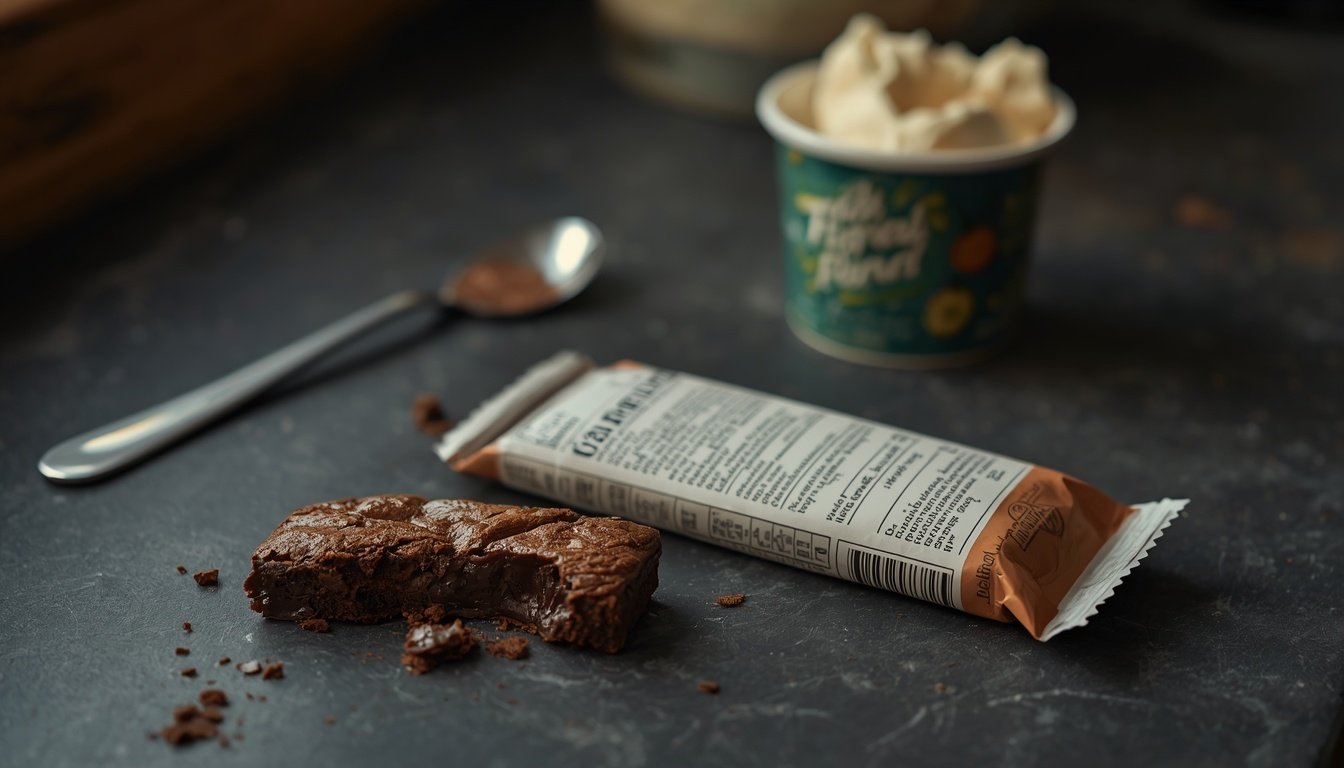
You probably know this move by now. The bloating starts, you fish the wrapper out of the trash, and you turn it over to read the back for clues. There it is, second or third on the ingredient list: chicory root fiber, or inulin, or something ending in “-itol.”
You’ve done this with a fiber bar. Then a keto brownie. Then a pint that bragged about its net carbs. They were different brands and different products, and the evening ended the same way each time.
So now every new “gut-friendly” dessert feels like a scratch-off ticket, except the losing ones cost six dollars and ruin your night. (If you want the wider picture of which “healthy” labels hold up, start with Healthy Desserts Explained: What to Eat, What to Avoid.)

Why Chicory Root Fiber (Inulin) Causes Gas and Bloating
“High-fiber” on a label tells you how many grams are in there. It tells you nothing about what kind, and the kind is what your evening depends on.
A lot of packaged desserts get their fiber count from inulin, usually listed as chicory root fiber. Manufacturers love it for good reasons. It’s mildly sweet, it disappears into a recipe, and it lets them print a big fiber number on the front.
It’s also one of the fastest-fermenting fibers there is. Your gut bacteria break it down quickly, and that process makes gas. A slow fiber makes its gas a little at a time, over many hours, along a long stretch of your gut. A fast fiber makes it all at once, in one spot. You feel every bit of it.
This isn’t a fringe idea. Inulin belongs to a group of carbohydrates called fructans, which are the “O” in FODMAP. Monash University, whose researchers developed the low-FODMAP diet, explains that gut bacteria ferment these carbohydrates rapidly and produce gas as a result. Their explainer on fructans is worth ten minutes if you want the detail. monashfodmap
Watch: Monash University’s short animation, “IBS symptoms, the low FODMAP diet and the Monash app that can help”, shows what fast-fermenting carbohydrates do inside the gut in about three minutes.
Inulin is a real prebiotic, and the bacteria that eat it are ones you want. That’s why the “gut-friendly” claim isn’t exactly a lie. But what feeds your microbes and what feels comfortable an hour later are two separate things, and the label only speaks to the first. If feeding your microbes is the goal, fermented food swaps get you there without the concentrated dose.
Do Sugar Alcohols Cause Bloating? Maltitol, Sorbitol, and Erythritol
Then there are the sweeteners. Your body absorbs only part of sugar alcohols like maltitol and sorbitol. The rest stays in your gut. It pulls in water, and then your bacteria ferment it. That’s where the cramping and the urgency come from. The effect is well enough known that U.S. food regulations require a laxative-effect warning on products likely to deliver a large daily dose of sorbitol.
Erythritol is different. Roughly 90 percent of it is absorbed in the small intestine before it reaches the bacteria, so many people handle it better, though a big serving can still cause trouble for some. That’s the main reason it shows up in so many sugar-free dessert recipes.
Now stack them. A single bar can carry a large dose of fast-fermenting fiber plus a sugar alcohol, eaten all at once by someone whose usual diet doesn’t contain much of either. That describes most of us: according to the Dietary Guidelines for Americans, more than 90 percent of women and 97 percent of men don’t reach the recommended fiber intake. Your gut wasn’t being dramatic. It reacted predictably to a concentrated dose of exactly the things that cause gas. nih
Why You Can’t Tell Which Ingredient Is Causing the Bloating
The bloating is bad, but the worse part is that you walk away with no usable information.
I can’t tell what’s actually setting my stomach off.
Of course you can’t. Each product changed four things at the same time: the type of fiber, the amount of fiber, the sweetener, and the portion. When the night goes badly, any of them could be the culprit. So the only conclusion available is the vague one: “these things don’t agree with me.”
That vague conclusion is expensive. It’s how people end up deciding fiber itself is the enemy, and backing away from oats and beans and fruit along with the bars. Or they keep buying new products hoping the next one is different, which is the same gamble in different packaging.
I’m scared to try another one of these is a reasonable response to a game where you can’t see the rules.
Which Types of Fiber Cause the Least Gas?
You were sold “fiber” as a single ingredient that’s either present or absent. It’s really a family, and the members behave very differently.
Some ferment fast and loud. Inulin, chicory root, and their cousin FOS are the usual suspects in packaged sweets, and the usual reason a “gut-friendly” dessert ends in gas.
Others are slower and gentler for most people. The fiber in oats, chia seeds, ground flax, and psyllium tends to form a gel and ferment gradually, if much at all.
Whole foods are gentler still. Berries, a kiwi, or cocoa give you fiber in smaller amounts. It comes packed with water and plant structure, and both slow things down.
A dessert built on these low-gas fibers will usually be much easier on you than a bar with the same number on the label, simply because the gas gets produced slowly and spread out. The same fibers work outside dessert too; see How to Add Fiber to Any Recipe (Without Tasting It).
Portion still matters, though. Even gentle fiber can cause trouble if you triple your intake overnight. Your gut adapts to more fiber, but it adapts over weeks.

How to Eat High-Fiber Desserts Without Bloating
Check the Ingredient List for Inulin, Chicory Root, and Sugar Alcohols
Read the back first. If chicory root, inulin, or FOS is in the first few ingredients, you know what you’re signing up for. The same goes for maltitol and sorbitol. You don’t have to ban them. You just can’t be surprised anymore.
Test One Ingredient at a Time to Find Your Trigger
Change one thing at a time. If you want to know whether inulin is your problem, find something that has it without a sugar alcohol, and eat a small amount. Then you’ll know. That one experiment tells you more than ten random purchases.
Start With a Half Portion to Find Your Inulin Tolerance
Start with a quarter or half portion. This feels silly with a dessert, but it’s the fastest way to find your threshold, and a few portion-controlled dessert recipes make it easier.
The research backs the small start. In a University of Minnesota trial, healthy adults tolerated up to 10 grams a day of native inulin, but only up to 5 grams a day of the shorter-chain form, oligofructose. Some bars carry close to that much fiber in one serving. If a small portion sits well for a few days, go up. nutrition-evidence
Make Low-Bloat High-Fiber Desserts at Home
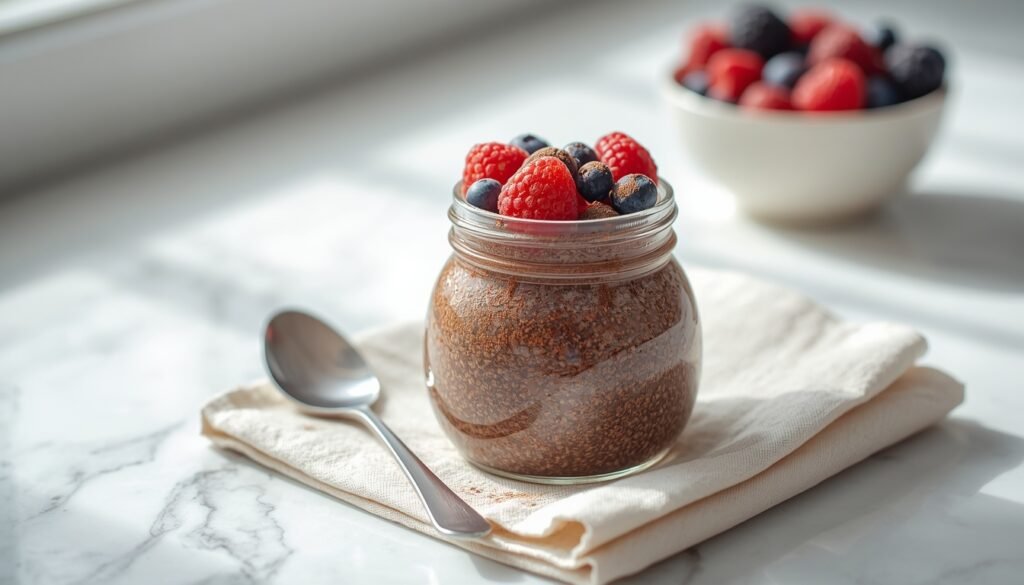
Make the easy version at home. You don’t need a recipe project. Chia pudding with cocoa and berries works. So do oats baked with banana and dark chocolate, or yogurt with ground flax and a kiwi. These give you real fiber from sources most guts handle well, sweetened with things you can pronounce and already know you tolerate.
For more ideas, try these healthy no-bake desserts, or swap the low-sugar pint for one of these cottage cheese ice cream blends, which skip the added chicory root altogether.
Increase Fiber Slowly and Drink More Water
Build slowly and drink water. Add a little more fiber every several days and give your gut time to catch up. Gel-forming fibers especially need fluid to do their job. Spreading fiber across the day helps too, and these high-fiber lunches are an easy place to put some of it.
One caveat: if you react to a wide range of foods, or the symptoms are severe or persistent regardless of what you eat, take that to a doctor or dietitian. A label-reading habit won’t fix it.
Pantry Staples for Low-Bloat High-Fiber Desserts
As an Amazon Associate I earn from qualifying purchases. See our affiliate disclaimer.
- Organic chia seeds: the base for the pudding above, and a gel-forming fiber most guts take slowly.
- Ground flaxseed: stir a spoonful into yogurt or oats.
- Psyllium husk powder: unflavored, for baking or adding fiber in small, measured steps.
- Old-fashioned rolled oats: for baked oats with banana and dark chocolate.
- Unsweetened cocoa powder: chocolate flavor with a little fiber of its own.
- Erythritol sweetener: the sugar alcohol most people tolerate best, if you want one at all.
- Small glass jars with lids: pre-portion half servings so the threshold test runs itself.
Should You Give Up on High-Fiber Desserts?
No. Your gut isn’t broken, and wanting a dessert that does something for it was never the mistake. High-fiber desserts cause bloating when they hand you a fast-fermenting fiber, a half-absorbed sweetener, and a full serving with no warm-up. That’s a formulation problem, and it’s printed right on the back.
So go pull tonight’s wrapper out of the trash. Read the first five ingredients. If chicory root or anything ending in “-itol” is there, eat half next time and see what happens. And when you’d rather skip the experiment, make dessert yourself.
High-Fiber Desserts and Bloating: FAQ
Why do high-fiber desserts cause bloating?
Most packaged high-fiber desserts get their fiber from inulin (chicory root fiber), which gut bacteria ferment quickly, producing a burst of gas. Many also contain sugar alcohols that pull water into the intestine. A full serving delivers both at once.
Does chicory root fiber cause gas in everyone?
No. Tolerance depends on the dose, the type of inulin, and what your gut is used to. Many people are fine with a few grams and uncomfortable at a full serving, which is why a half portion is the quickest test.
How long does bloating from inulin last?
For most people it eases within several hours to a day as the gas moves through. If bloating lasts for days or keeps returning no matter what you eat, see a doctor or dietitian.
Which sugar alcohol is easiest on the stomach?
Erythritol, for most people, because most of it is absorbed before it reaches the bacteria in the large intestine. Maltitol and sorbitol are more likely to cause cramping, gas, and urgency.
What fiber is least likely to cause gas?
Slower-fermenting, gel-forming fibers such as psyllium, oats, chia, and ground flax, along with the fiber that comes inside whole fruit. Increase any of them gradually and drink enough water.
Can your gut get used to inulin?
Often, yes. The gut adapts to more fermentable fiber over weeks, so small, regular amounts are usually better tolerated than an occasional large dose.
Is inulin bad for you?
No. It’s a genuine prebiotic that feeds beneficial gut bacteria. The problem is the dose and the speed, not the ingredient, and people with IBS or FODMAP sensitivity tend to react at lower amounts.