High Protein Sweet Potato Bowl: 5 Genius, Delicious Tips
A high protein sweet potato bowl works best when you treat it as three separate jobs: brown the potatoes, season the beef, and keep the creamy toppings cool. Pile everything together too early and the edges soften, the cheese warms, and lunch loses the contrast that made it appealing.
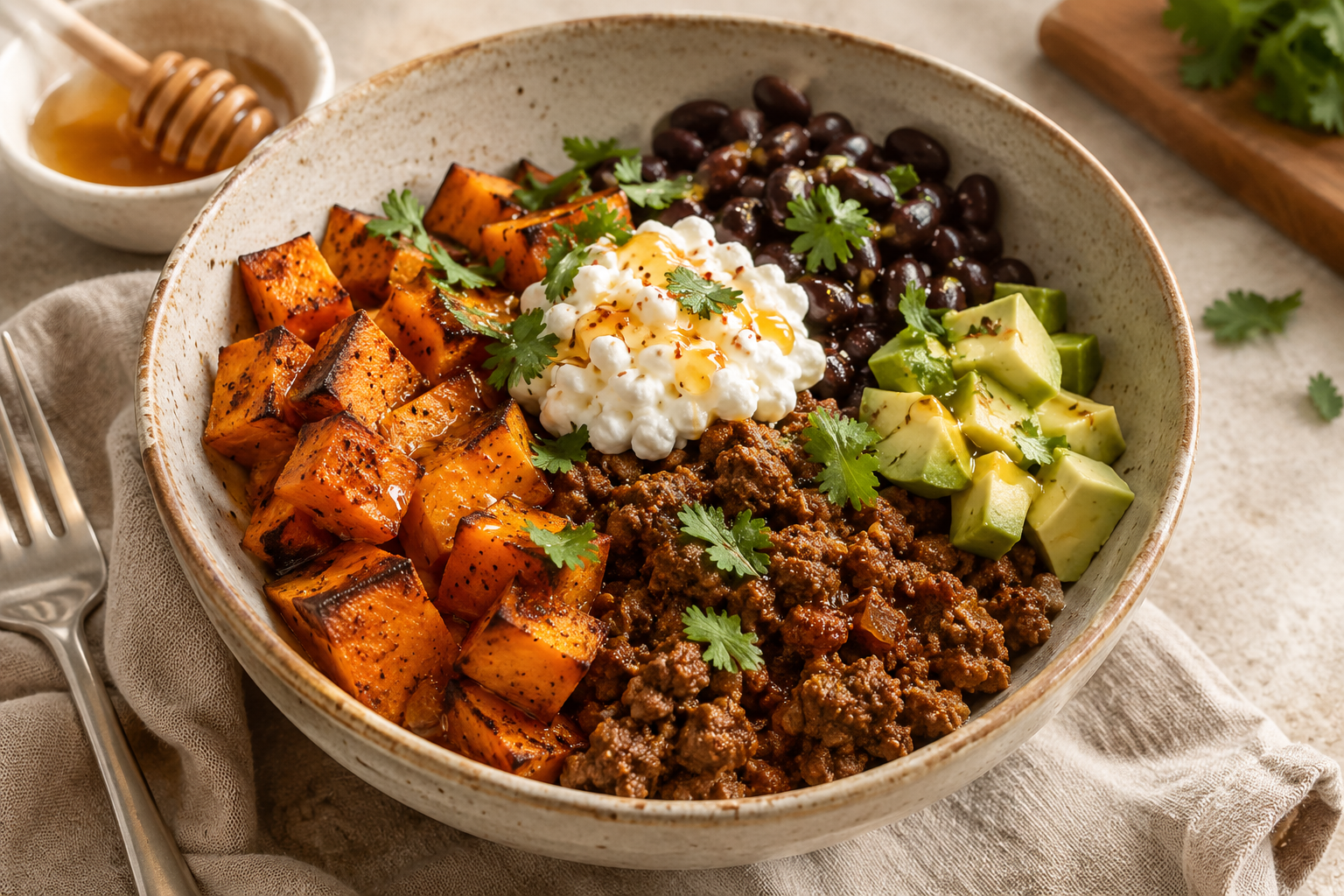
This four-serving high protein sweet potato bowl pairs taco-seasoned beef with black beans, roasted sweet potato and cottage cheese. Below are measured ingredients, five practical improvements, substitutions and a storage plan that makes tomorrow’s serving worth eating. Allow about 45 minutes, with the skillet cooking while the potatoes roast.
Affiliate disclosure: As an Amazon Associate, I earn from qualifying purchases. Equipment links below are optional; use suitable tools you already own.
Table of Contents
High protein sweet potato bowl ingredients and portions
Makes: four adult servings. Preparation: approximately 15 minutes. Cooking: approximately 30 minutes. Timing varies with your oven, pan size and chopping speed.
For the roasted base, use 800 grams sweet potatoes, scrubbed and cut into roughly ½-inch cubes; one tablespoon olive oil; one teaspoon smoked paprika; ½ teaspoon garlic powder; and ¼ teaspoon fine salt. Leaving the skin on saves peeling and adds texture. Remove damaged areas and dry the potatoes after washing.
For the skillet, use 454 grams, or one pound, of 93%-lean ground beef; one 15-ounce can black beans, drained and rinsed; two teaspoons ground cumin; one teaspoon smoked paprika; one teaspoon dried oregano; ½ teaspoon garlic powder; ¼ teaspoon fine salt; and 80 milliliters, about ⅓ cup, water. Add chili flakes to taste rather than assuming everyone wants heat.
For serving, set out 450 grams plain low-fat cottage cheese, one medium avocado, 200 grams chopped tomatoes, one lime, cilantro if you like it, and up to four teaspoons hot honey. The honey is optional. Tomatoes and lime provide acidity even when you leave out the sweet finish.
To portion a high protein sweet potato bowl consistently, divide the cooked potatoes, beef and beans evenly among four bowls. Each serving gets approximately 112 grams cottage cheese, a quarter of the avocado, a quarter of the tomatoes and no more than one teaspoon honey. Weigh the cooked batch if equal portions matter to you; raw ingredient weights cannot predict the final cooked weight precisely.
The beef, beans and cottage cheese all contribute protein. A precise nutrition panel needs the actual package labels, drained bean weight and final serving weights. Changing the beef’s fat percentage or using a larger avocado can shift the totals substantially.
For a transparent calculation, add the protein listed for the full pound of beef, the amount of drained beans used and the full cottage-cheese quantity, then divide by four. Include the other ingredients for a complete estimate. Repeat for calories, carbohydrate, fat and fiber, and label the result an estimate rather than a laboratory measurement.
Five tips for a better high protein sweet potato bowl
1. Give your high protein sweet potato bowl a browned base
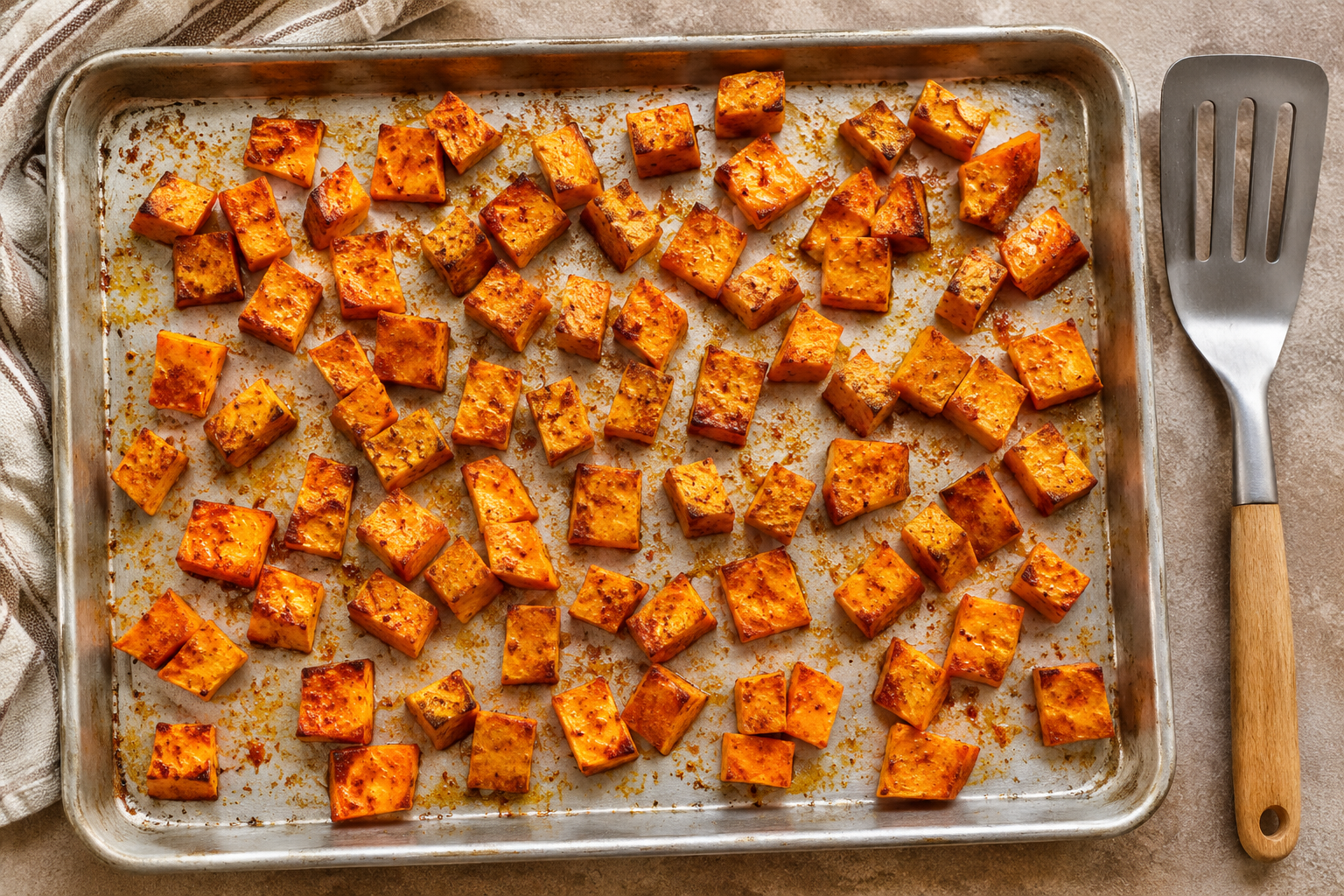
Heat the oven to 425°F, or 220°C, using a conventional setting. Toss the dry potato cubes with the oil, paprika, garlic and salt. Spread them across two rimmed trays if one tray leaves them touching tightly. Roast for approximately 25–35 minutes, turning once, until tender inside with browned edges.
Use tenderness and color as the endpoint rather than taking the first timer beep as proof. Larger cubes, crowded trays and some ovens need longer. If one tray browns faster, rotate its position. A higher temperature cannot compensate reliably for a thick, crowded layer that traps steam.
An optional Nordic Ware Naturals half-sheet pan set gives this batch room to spread. The useful feature here is usable roasting area; a second suitable tray you already own serves the same purpose.
For a smaller high protein sweet potato bowl batch, halve the ingredients and use one tray. Doubling the whole batch usually requires another roasting round. Stacking potatoes deeper saves oven space at the expense of browning, which is the main reason to roast them in the first place.
2. Season the beef for your high protein sweet potato bowl
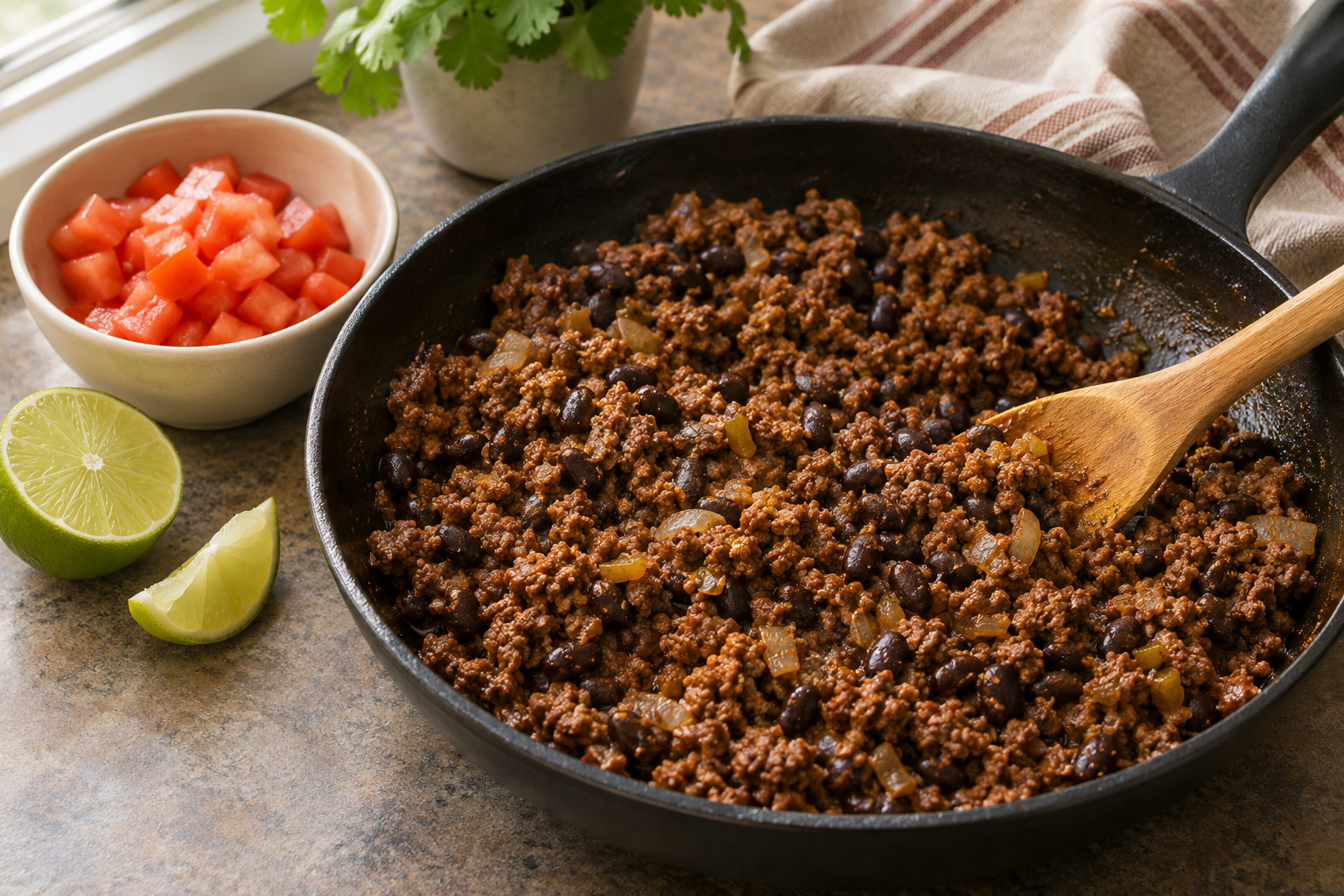
While the potatoes roast, heat a large skillet over medium-high heat. Add the beef and break it into small crumbles. Cook, stirring as needed, then drain excess rendered fat carefully. Add the cumin, paprika, oregano, garlic, salt and water. Stir until the spices coat the meat and the liquid reduces to a light coating.
Fold in the drained beans and heat them through. Check the ground beef reaches 160°F, or 71°C, using a food thermometer; brown color alone does not establish safety. FoodSafety.gov’s minimum internal temperature chart distinguishes ground beef from ground poultry, which requires 165°F, or 74°C.
An optional TP19H instant-read food thermometer helps check the meat and later reheated portions. Follow its instructions and check several spots; avoid touching the hot pan with the probe tip.
If you use packet seasoning, replace the listed skillet spices and salt with the packet’s recommended quantity for a pound of meat. Check whether it already contains salt before adding more. Keep the potato seasoning separate so the finished bowl has flavor beyond the beef layer.
3. Add beans to your high protein sweet potato bowl gradually
Black beans give the skillet another texture and spread the beef across four portions. Rinse canned beans in a sieve, let them drain well, and stir them in near the end. Adding their canning liquid changes both the seasoning and the skillet’s moisture, making the potatoes harder to keep distinct.
If beans are unfamiliar in your regular meals, begin with half the can and save the remainder for another dish. NIDDK advises adding dietary fiber gradually so the body can adapt. Its fiber and hydration guidance offers practical advice on increasing fiber and drinking enough fluids.
How this meal fits your day depends on portions, other meals and individual needs. For more ways to use the remaining beans, see our bean meal-prep recipe collection.
4. Keep your high protein sweet potato bowl topping cool
Finish your high protein sweet potato bowl with cottage cheese just before eating. That gives you a creamy, tangy contrast without turning the entire bowl into a lukewarm sauce. If visible curds put you off, blend the cottage cheese on its own until smooth, then refrigerate it until serving.
Check the tub before seasoning the topping. Cottage cheese varies in saltiness and thickness, and some brands release more liquid. Stir the tub, measure the amount you need, and use lime sparingly at first. You can loosen a thick blended topping with a teaspoon of water rather than a large splash.
Our high-protein cottage cheese recipes offer other uses for the rest of the tub. Buying one ingredient for several meals is more practical than building a shopping list around a single topping that will sit unused afterward.
5. Finish your high protein sweet potato bowl with lime
Divide the tomatoes and avocado among the bowls, then squeeze lime over the fresh toppings. Taste one forkful containing potato, beef and cheese before adding hot honey. Sweet potato already contributes sweetness; the bowl often needs a sharper finish more than an extra sweet drizzle.
If using honey, start with half a teaspoon per serving and increase only if it improves that forkful. For a less sweet finish, choose plain hot sauce, pickled onions or sliced jalapeños. These substitutions change the flavor while letting you control how much sweetness reaches the finished dish.
For a family high protein sweet potato bowl dinner, keep heat adjustable at the table. The paprika-and-cumin base can remain mild while individual servings receive chili flakes. One shared skillet is easier to manage than cooking two complete dinners because the finishing sauce was added too early.
For a related serving idea, Josh Bailey’s Loaded Sweet Potato Beef Bowl shows a beef-and-sweet-potato combination with Greek yogurt and green beans. It is a different variation from the cottage-cheese-and-bean recipe above; follow the measured recipe here for this batch.
High protein sweet potato bowl swaps that preserve balance
Ground turkey: Substitute the same raw weight and cook to 165°F, or 74°C. Very lean turkey may need a small additional splash of water once seasoned. Its calorie content depends on the package’s fat percentage; turkey is not automatically lower in fat than every beef option.
Plain Greek yogurt: Use it instead of cottage cheese when you prefer a smoother topping. Start with the same serving weight, then adjust for taste and thickness. Protein varies by product, so check the label rather than assuming the substitution preserves an exact macro total.
No avocado: Add shredded cabbage for crunch and a little olive oil or pumpkin seeds if you want richness. Neither replacement duplicates avocado’s complete nutrient profile. Keep seeds separate until serving so they retain their texture, and remember they introduce another ingredient to consider for allergies.
Vegetarian: Replace the beef with crumbled extra-firm tofu, browned in a little oil, while retaining the beans. Drain and pat the tofu dry first. Cottage cheese keeps this version vegetarian rather than vegan; use a suitable dairy-free topping for a vegan bowl and recalculate protein from its label.
Different base: Regular potatoes work with the same broad method, but cooking time may change with variety and cube size. If you want a grain base instead, our high-protein rice bowl ideas provide a separate direction without forcing sweet potato into every meal.
High protein sweet potato bowl meal prep and storage
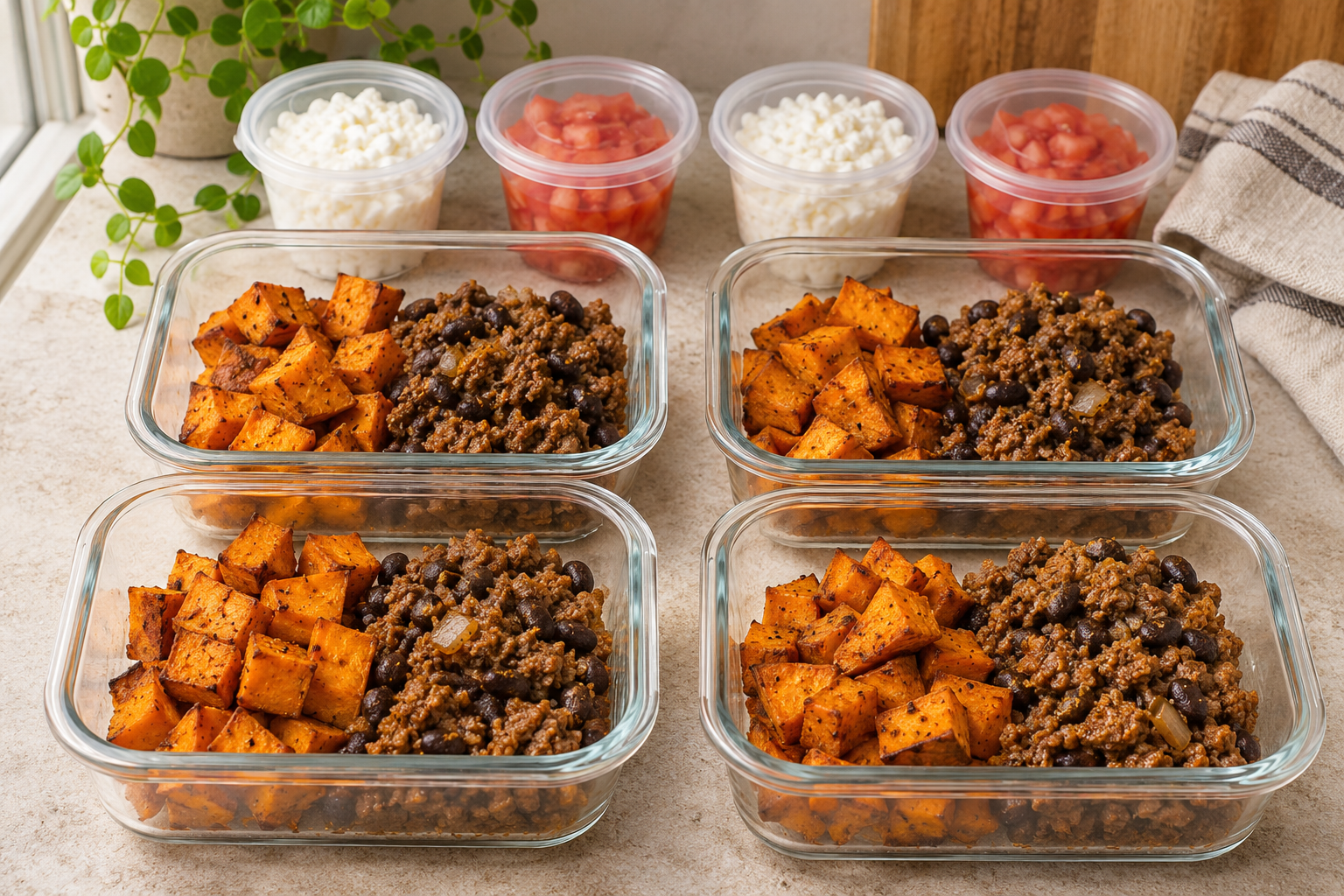
For high protein sweet potato bowl meal prep, divide the beef-and-bean mixture and potatoes into shallow containers. Pack cottage cheese and tomatoes separately, and cut avocado close to serving. A divided layout also lets you reheat the meat thoroughly without cooking the dairy or warming the fresh garnish.
The USDA’s leftover-handling guidance calls for refrigeration within two hours, or one hour when temperatures exceed 90°F, and refrigerated storage at 40°F or below. Use cooked leftovers within three to four days. Divide large quantities promptly; do not leave the batch on the counter until completely cool.
An optional Rubbermaid Brilliance glass food-container set is useful for portioning the warm base. Use separate small containers for toppings, and follow the manufacturer’s instructions for lids, venting and temperature changes.
For a Sunday cooking session, refrigerate the portions you will eat within that window and freeze any intended for later. Label each container with the cooking date. A four-serving recipe still needs a clear storage plan: freeze later portions rather than stretching their refrigerator time because they look or smell acceptable.
Reheat only the high protein sweet potato bowl portion you need. In the microwave, cover appropriately, stir the beef and beans, and allow standing time according to the appliance instructions. Check that the leftovers reach 165°F, or 74°C, throughout before adding the chilled toppings. Reheating time depends on portion size, starting temperature and microwave power.
For better potato texture, reheat them separately in an oven or air fryer until hot throughout; check temperature rather than relying only on crisp edges. The USDA reheating guidance explains the 165°F endpoint and why even heating matters. Keep the cold toppings refrigerated while the base reheats.
Freeze your high protein sweet potato bowl base without cottage cheese, tomato or avocado for easier assembly later. Thaw in the refrigerator, then reheat thoroughly. The potatoes may soften after freezing; use that portion as a softer bowl base rather than expecting the same texture as freshly roasted cubes.
High protein sweet potato bowl troubleshooting
The potatoes are soft and pale: The likely causes are crowding, wet surfaces or insufficient cooking. Next time dry them thoroughly and split them across trays. For this batch, let them roast longer if still underdone, watching closely; more honey will not fix a missing browned surface.
The bowl is watery: Drain the beans and chopped tomatoes well, and reduce the skillet liquid before assembling. Keep cottage cheese separate until eating. If everything is already mixed, eat it as a softer bowl rather than adding large quantities of cheese or salt to hide the extra moisture.
The beef seems dry: Stir in a tablespoon of water at a time and warm gently. Next time stop cooking once it reaches its safe temperature and the seasoning liquid coats the crumbles. The cool topping adds creaminess, but it cannot reverse severely overcooked meat.
The meal feels too large: Serve a smaller portion and save the remainder promptly. You do not have to finish a large bowl to make the recipe worthwhile. Adjust the potato, topping and meat portions deliberately, then recalculate nutrition if you track it instead of assuming every smaller bowl has the same composition.
Frequently asked questions
Can I make a high protein sweet potato bowl ahead?
Yes. Cook and portion the potatoes, beef and beans, refrigerate promptly, and store cold toppings separately. Use the cooked refrigerated base within three to four days or freeze it for later. Add cottage cheese, avocado and tomatoes after reheating the base thoroughly.
Can I replace cottage cheese with Greek yogurt?
Yes. Plain Greek yogurt gives a smooth, tangy topping. Start with the same weight and adjust to taste. Check the package label if protein or calories matter to you; different brands and fat levels are not nutritionally interchangeable.
How much protein is in a high protein sweet potato bowl?
It depends on the meat, cottage cheese, beans and portion size. For this recipe, total the protein from your actual ingredient labels and divide the batch into four equal servings. Treat that calculation as an estimate, and recalculate when you change ingredients.
Should I heat the cottage cheese with the bowl?
Keep it cold and add it after the base is reheated for the clearest contrast in texture. Cottage cheese can release liquid when heated. Packing it separately also makes it easier to reheat the beef and potatoes thoroughly without warming the garnish.
Can I make a high protein sweet potato bowl with turkey?
Yes. Replace the beef with the same raw weight of ground turkey and cook it to 165°F, or 74°C, measured with a food thermometer. Check the package’s fat percentage and nutrition rather than assuming all turkey products are leaner than beef.
Does a high protein sweet potato bowl need hot honey?
No. Lime, tomatoes and the seasoned beef give the bowl plenty of flavor. Use hot sauce or pickled onions for a sharper finish, or add a measured small drizzle of hot honey if you enjoy the sweet-and-spicy combination.