High Protein Thanksgiving Sides: 9 Swaps That Keep Every Classic
Affiliate disclosure: This post contains affiliate links. As an Amazon Associate, I earn from qualifying purchases, at no extra cost to you.
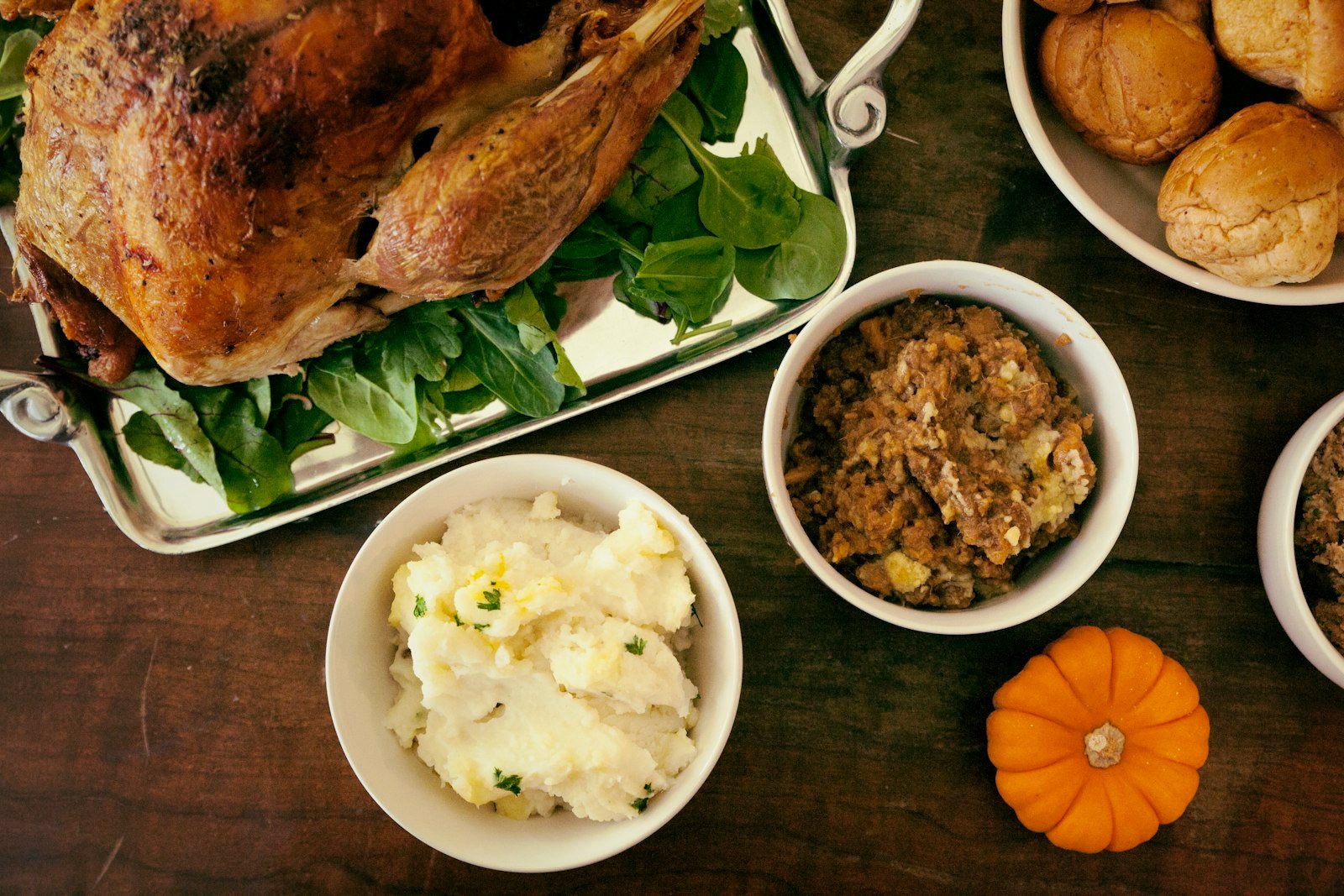
A classic Thanksgiving plate gets about 30 grams of protein from the turkey and maybe 18 more from everything else combined. High protein Thanksgiving sides flip that ratio: with five quiet swaps, the sides alone can match the bird, and nobody at the table has to eat anything that tastes like a diet.
That matters more than it sounds. The big meal is usually the most skewed eating day of the year, heavy on starch and fat, light on the one macro that keeps you full until dessert. The fix is not a smaller plate or a lecture about portions. It is better sides.
Below are nine high protein Thanksgiving sides I would actually serve to skeptical relatives, each with honest protein estimates, the mistake that ruins it, and a make-ahead plan that keeps Thursday calm. Every number is an estimate built from USDA data, so treat them as a guide rather than a label.
Table of Contents
Why high protein Thanksgiving sides matter more than the turkey
Turkey is already doing its job, which is why high protein Thanksgiving sides are where the real gains are. Roasted breast meat delivers roughly 30 grams of protein in a 4-ounce serving, and most people take one serving and move on.
The sides are where the plate goes sideways. A scoop each of classic mashed potatoes, bread stuffing, green bean casserole, sweet potato casserole and a dinner roll adds up to roughly 18 grams of protein across about a thousand calories. That is a lot of food for very little staying power.
The plate math nobody does
Here is the same five-side plate after the swaps in this guide, using approximate per-serving figures:
- Cottage cheese mashed potatoes: about 9 g (classic: about 4 g)
- Sausage and lentil stuffing: about 12 g (classic: about 5 g)
- Greek yogurt green bean casserole: about 11 g (classic: about 4 g)
- Yogurt-whipped sweet potatoes: about 8 g (classic: about 2 g)
- Two-ingredient yogurt roll: about 6 g (classic: about 3 g)
That is roughly 46 grams from the sides versus 18, before anyone touches the turkey. Add the bird and a single plate clears 70 grams.
Why that helps: a 2014 study in the Journal of Nutrition found that eating about 30 grams of protein at each meal produced 25% higher 24-hour muscle protein synthesis than the same total skewed toward dinner. One protein-heavy holiday plate will not change your physiology, but it does mean the meal keeps you full instead of sending you back for a third round of rolls.
You are also not alone in caring. Cargill’s 2025 Protein Profile reported that 61% of Americans increased their protein intake in 2024, up from 48% in 2019, so there is a good chance someone else at your table is counting too.
If you want those numbers to mean something for your own recipes, weigh the add-ins once. A basic scale like the Etekcity Food Kitchen Scale reads in grams, which makes it easy to check a recipe against USDA FoodData Central instead of guessing from cup measures that vary by curd size and brand.
9 high protein Thanksgiving sides, swap by swap
Each of these high protein Thanksgiving sides keeps the original dish recognizable. The rule I used: if a guest has to be told what is different, the swap failed.
1. Cottage cheese mashed potatoes (about 9 g per serving)
Cottage cheese mashed potatoes are the swap with the best reward for the least risk. Blend 1½ cups of 2% cottage cheese until completely smooth, then fold it into 3 pounds of boiled, drained Yukon Golds with butter, garlic and a splash of the cooking water. One cup of 2% cottage cheese carries about 24 grams of protein, so the batch gains roughly 36 grams for eight servings.
The mistake that ruins it: putting the potatoes in the blender. Blending potatoes ruptures the starch cells and turns them gluey. Blend only the cottage cheese, then mash the potatoes by hand or with a ricer; that is how cottage cheese mashed potatoes stay fluffy.
For cottage cheese mashed potatoes, a stick blender makes the cheese step take thirty seconds in a tall cup. The KitchenAid Variable Speed Hand Blender (KHBV53) has enough power to get curds silky without heating them, and it rinses clean before the gravy needs it.
Want a little more? Stir in half a cup of grated Parmesan for another 1 to 2 grams per serving and a deeper savory note. If cottage cheese is new territory, our 15 high-protein cottage cheese recipes are a low-stakes way to get used to it before the holiday.
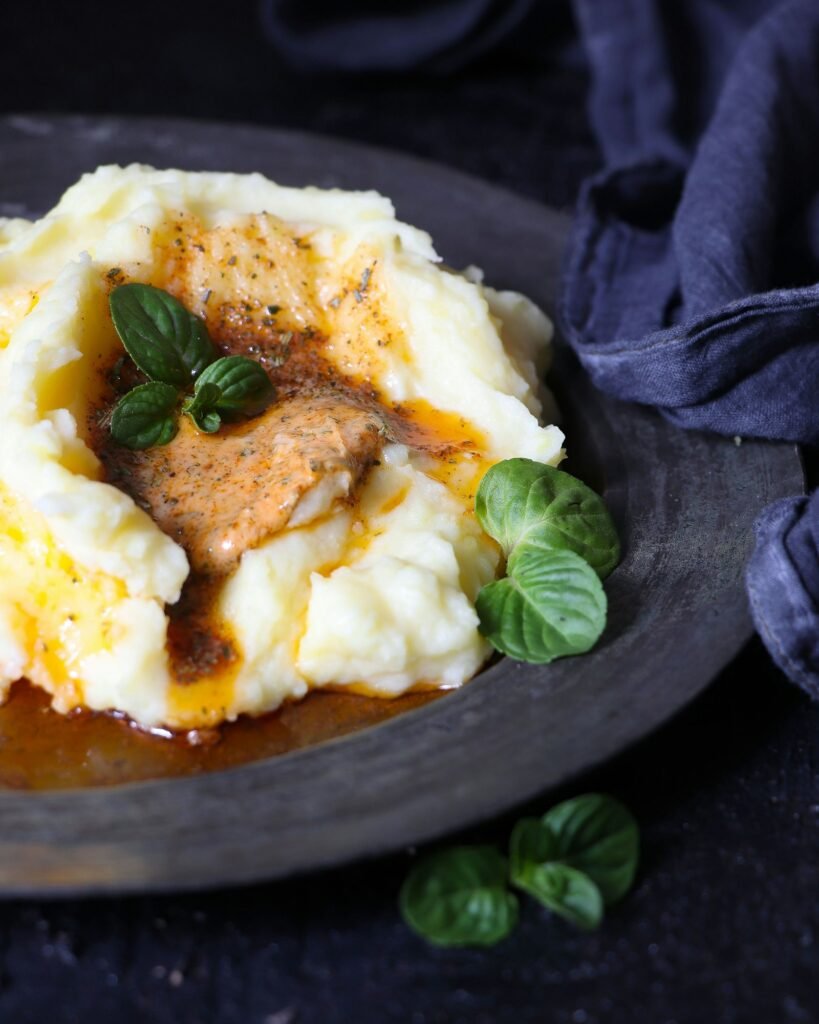
The Protein Chef walks through the same blend-then-fold method on video, which is helpful if you want to see the texture you are aiming for:
2. Greek yogurt green bean casserole (about 11 g per serving)
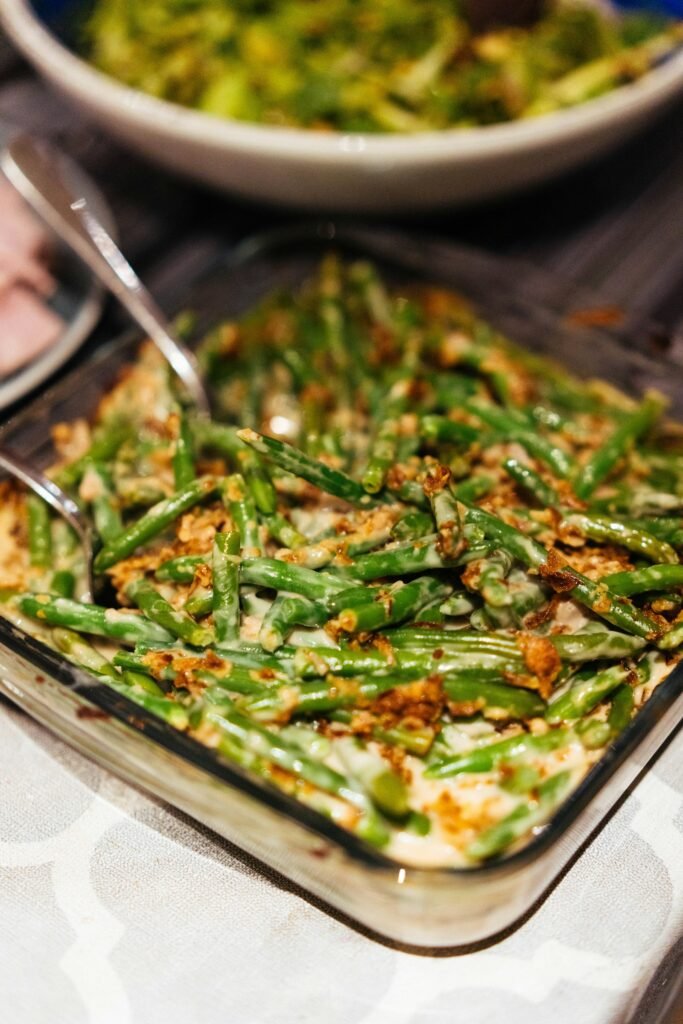
Skip the condensed soup. Sauté 8 ounces of sliced mushrooms with shallot and thyme, take the pan off the heat, then stir in 1¼ cups of plain 2% Greek yogurt and half a cup of Parmesan. Toss with 1½ pounds of blanched green beans, top with crispy onions and a handful of sliced almonds, and bake until bubbling at the edges.
The yogurt goes in off the heat for a reason: boiling it makes it split. Once it is folded into the warm beans and baked under a topping, it stays creamy.
We use the same logic in our Greek yogurt mayo swap, and it explains why the casserole tastes tangy-rich rather than “lightened.”
3. Sausage and lentil stuffing (about 12 g per serving)
Brown 1 pound of turkey or chicken sausage, add a cup of cooked green or brown lentils, then build your usual bread stuffing around them. Bind with two beaten eggs and broth instead of broth alone. A cooked cup of lentils adds about 18 grams of protein and plenty of fiber, and they disappear into the sausage visually.
Bake stuffing in a dish rather than inside the bird, and check that the center reaches 165°F, which matters more once eggs are involved.
4. Brussels sprouts with edamame and Parmesan (about 12 g per serving)
Roast halved Brussels sprouts hard at 425°F until the cut sides are dark. In the last five minutes, add two cups of shelled frozen edamame to the pan. Finish with lemon zest and shaved Parmesan.
Edamame is the hidden workhorse among these high protein side dishes, at roughly 18 grams of protein per cooked cup. It also looks intentional on a holiday platter, which is more than you can say for a bowl of beans.
5. Yogurt-whipped sweet potatoes with pecan crumble (about 8 g per serving)
Replace the marshmallow layer with a pecan, oat and cinnamon crumble, and whip the roasted sweet potatoes with a cup of Greek yogurt and two eggs before baking. The eggs set the casserole into a soufflé-like texture that slices cleanly.
This is the one side where I would not chase more protein. Sweet potatoes are supposed to taste like dessert, and pushing them further turns them into something nobody asked for.
6. Cottage cheese mac and cheese (about 16 g per serving)
Mac and cheese is already one of the better high protein side dishes, so the swap is about upgrading rather than rescuing. Blend 2 cups of cottage cheese with a cup of milk, warm it gently with sharp cheddar, and fold through a pound of cooked pasta. For a bigger jump, use a chickpea or lentil pasta, which often lists roughly double the protein of wheat pasta; check your brand’s label.
7. Two-ingredient Greek yogurt rolls (about 6 g each)
Mix 2 cups of self-rising flour with 1 cup of nonfat Greek yogurt, knead briefly, shape eight rolls and bake at 375°F until golden. They are dense, soft and faintly tangy, more like a biscuit than a brioche, and they double the protein of a standard dinner roll.
8. White bean and roasted squash salad (about 11 g per serving)
Every table needs one bright side to cut through the cream, and this is the high protein Thanksgiving sides option that travels best. Toss roasted butternut squash with two cans of drained cannellini beans, crumbled feta, toasted pepitas, arugula and a maple-mustard dressing. It holds at room temperature for hours, which makes it the easiest dish to bring if you are a guest.
9. Bone broth gravy (a small win, not a big one)
Make your gravy with a bone broth instead of standard stock. Labels vary widely, from almost nothing to about 10 grams of protein per cup, so read the panel. Even at best, gravy adds only a couple of grams per serving. I include it because it is free to do, not because it moves the needle.
What to leave alone
Cranberry sauce and pie do not need a protein makeover. Not every dish has to work hard. If you want a lighter dessert option alongside the real pie, our pumpkin cottage cheese mousse sits next to it on the table without competing.
A make-ahead timeline for a calm Thursday
High protein Thanksgiving sides are more forgiving than their classic versions because dairy and eggs hold moisture. That makes high protein side dishes ideal for working ahead.
Day-by-day plan for high protein Thanksgiving sides
- Sunday or Monday: Cook and cool lentils. Roast squash for the salad. Mix the pecan crumble and store it airtight.
- Tuesday: Make the stuffing base without the eggs and broth. Blanch the green beans and cook the mushroom sauce, but keep the yogurt separate.
- Wednesday: Assemble the mac and cheese and the sweet potato casserole, covered, in the fridge. Make the mashed potatoes completely; they reheat beautifully with a splash of milk.
- Thursday morning: Bind and bake the stuffing. Stir the yogurt into the green bean sauce and assemble. Shape and bake the rolls last so they are warm.
The one thing not to do ahead is fold Greek yogurt into a sauce and then reheat it hard. Reheat gently, covered, at 325°F, and it stays smooth.
For a fuller game plan around the meal itself, including when to eat and how to use the hours before dinner, see how we turn Thanksgiving into a strategic metabolic reset.
Feeding vegetarian guests without a separate main
Here is a problem the classic menu never solves: the vegetarian at the table eats only sides, and classic sides are almost all starch. A plate of mashed potatoes, rolls and sweet potato casserole might reach 10 grams of protein for the whole meal.
Built from these high protein Thanksgiving sides, the same guest does far better. Brussels sprouts with edamame, the white bean salad, cottage cheese mashed potatoes and a yogurt roll land around 38 grams without a single piece of tofu turkey.
Two adjustments make that work. Make a small second pan of stuffing with lentils and mushrooms instead of sausage, and make your gravy with mushroom or vegetable broth so it can go on everything. Label both dishes, because a guest who has to ask is a guest who skips it.
If a vegan is coming, the Brussels sprouts and white bean salad work without the cheese, and the lentil stuffing works with a flax egg. Those three alone give them a real meal rather than a polite one.
Building a GLP-1 Thanksgiving plate
If you or someone at your table takes a GLP-1 medication, appetite is the limiting factor, not willpower. A person who can only eat half a plate needs that half to count.
The practical order: turkey first, then one or two high protein Thanksgiving sides from the list above, then whatever is left that they actually love. Protein-dense sides make this easier, because cottage cheese mashed potatoes and lentil stuffing deliver more protein per bite than their classic versions.
Protein matters more than usual here because rapid weight loss can take muscle with it. We cover that in depth in GLP-1 muscle loss: what to eat to protect your muscle. Any specific targets should come from the prescribing clinician.
Turning leftovers into a week of high protein meals
Leftovers are where high protein Thanksgiving sides keep paying off. Each one becomes a meal-prep component instead of a pile of starch to work through.
Start with food safety, because a long, relaxed meal is exactly when dishes sit out too long. According to FoodSafety.gov, leftovers should be stored within two hours of cooking, kept in the fridge for three to four days, and reheated to 165°F. Divide them into shallow containers so they cool quickly.
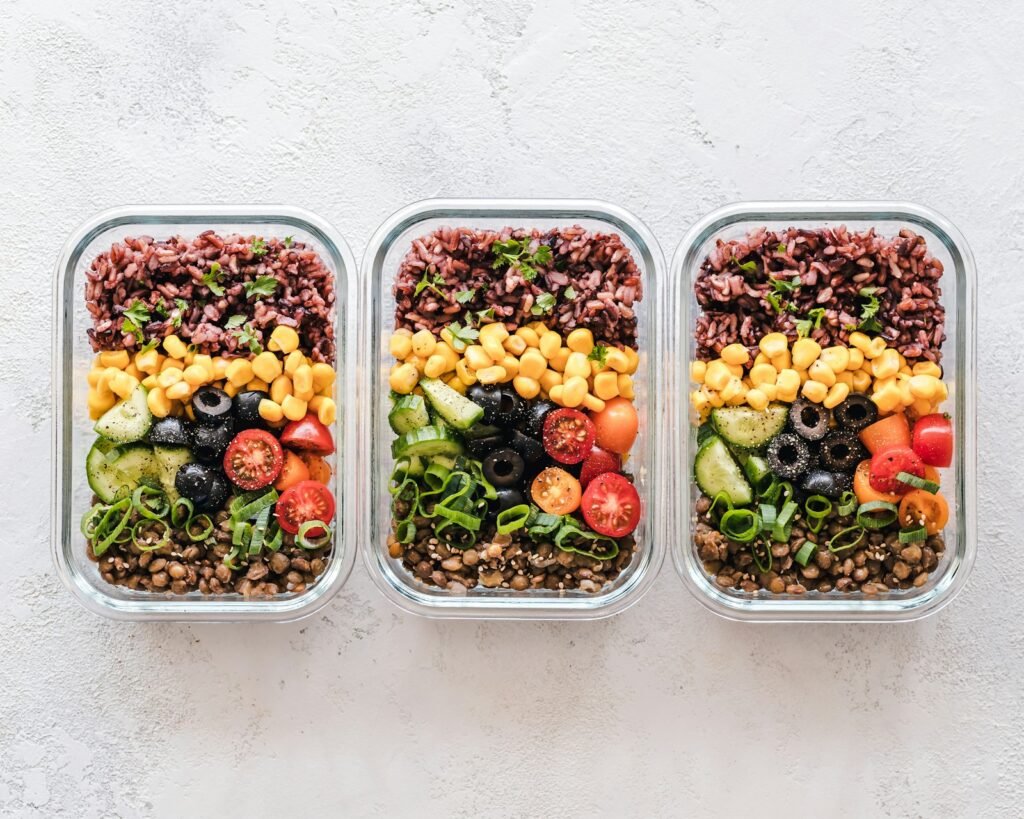
Glass containers make this part easy because they go from fridge to microwave to dishwasher. The Rubbermaid Brilliance Glass 3.2-Cup Containers are a sensible size for one portion of turkey plus two sides, and the lids seal well enough to stack.
To check that 165°F instead of guessing, an instant-read thermometer earns its drawer space. The ThermoWorks Thermapen ONE reads in about a second, which matters when you are checking the center of a dense stuffing or a reheated casserole.
Three leftover meals worth planning for
- Turkey and lentil stuffing hash: Crisp leftover stuffing in a skillet, add chopped turkey, and top with a fried egg.
- Green bean casserole grain bowl: Spoon the casserole over farro or brown rice with sliced turkey and a squeeze of lemon.
- Turkey bone broth soup: Simmer the carcass, then add leftover edamame, white beans and greens. Our high protein soup recipes show how to land a bowl at 28 grams or more.
Mistakes that make high protein Thanksgiving sides taste like health food
Most failed swaps come down to texture, not flavor. These are the four I see most often.
- Lumpy cottage cheese. Always blend it first. Small curds never fully disappear on their own.
- Split yogurt sauces. Add Greek yogurt off the heat and reheat gently. High heat breaks the proteins into a grainy sauce.
- Under-seasoning. Dairy swaps mute salt. Taste after the cottage cheese or yogurt goes in and adjust; you will usually need a pinch more than the original recipe.
- Swapping everything at once. Change two or three high protein side dishes your first year. Keep the rest exactly as family expects, and the swaps will be welcomed rather than inspected.
If someone at the table also needs more fiber, the lentils, edamame and white beans above do double duty, and our guide to adding fiber to any recipe shows how to push that further without changing taste.
Frequently asked questions
What is the highest protein Thanksgiving side dish?
Among common sides, cottage cheese mac and cheese usually lands highest at roughly 16 grams per serving, followed by sausage and lentil stuffing and Brussels sprouts with edamame at about 12 grams each. Exact numbers depend on your brands and portion sizes, so check labels if you track closely.
Can you taste cottage cheese in mashed potatoes?
Not if you blend it first. Whipped smooth, cottage cheese reads as extra creaminess and a faint tang similar to sour cream. Unblended curds stay visible and give the swap away.
How can I make Thanksgiving sides higher in protein without changing the recipe?
Swap a fat or liquid for a protein-rich ingredient that does the same job: cottage cheese for cream in mashed potatoes, Greek yogurt for condensed soup in casseroles, and eggs plus broth for broth alone in stuffing. Adding lentils or edamame to an existing dish also works without altering its flavor much.
Are high protein Thanksgiving sides good for people taking GLP-1 medications?
They can help, because a smaller appetite means each bite needs to carry more protein. Serving turkey first and then the higher protein Thanksgiving sides makes it easier to eat enough protein within a reduced appetite. Personal protein targets should come from the prescribing clinician.
Can I make high protein Thanksgiving sides ahead of time?
Yes. Mashed potatoes, mac and cheese and sweet potato casserole can be fully assembled a day ahead. Keep Greek yogurt separate from sauces until the day of baking, and reheat yogurt-based dishes gently so they stay smooth.
How long do Thanksgiving leftovers last in the fridge?
FoodSafety.gov advises storing leftovers within two hours of cooking and eating them within three to four days. Reheat them to 165°F, and freeze anything you will not finish in that window.
The bottom line
You do not need a new menu to eat well on Thanksgiving. Pick two or three of these high protein Thanksgiving sides, start with the cottage cheese mashed potatoes and the green bean casserole, and keep everything else as tradition dictates. Plan your leftover containers before the meal, and the week after takes care of itself.