GLP-1 Muscle Loss: What to Eat to Protect Your Muscle
GLP-1 muscle loss is the side effect nobody printed on your pharmacy label. The scale is dropping. You feel amazing. But something is happening under the surface that the ads never mention: some of the weight you’re losing on Ozempic, Wegovy, or Zepbound isn’t fat. It’s muscle. And muscle is the one thing you cannot afford to lose.
Here’s the good news. You can stop it. Not with a supplement empire or a punishing gym routine. Just with what’s on your plate — starting with the right high-protein meals.
Let me show you.
Table of Contents
How Much Muscle Do You Lose on a GLP-1?
Let’s start with the fact that changes everything.
In the big semaglutide trials, people lost a lot of weight. Impressive amounts. But when researchers measured what they lost, they found something uncomfortable.
Roughly 40% of the total weight lost was lean mass. Not fat. Lean tissue. In the STEP-1 trial, that worked out to nearly 7 kilograms of lean mass gone.
Read that again. In some studies, almost half of the loss was not fat.
These numbers come from body-composition analyses tied to the STEP trials (semaglutide) and the SURMOUNT trials (tirzepatide) — the same studies that put these drugs on the map. Tirzepatide, the Zepbound and Mounjaro drug, looked a bit better, closer to a third. But the pattern holds across the whole drug class. These medications are brilliant at shrinking the scale. They are not picky about what tissue they shrink.
Nobody says this on TV. The ads show smaller bodies, not weaker ones. So most people never hear the number until it’s too late.
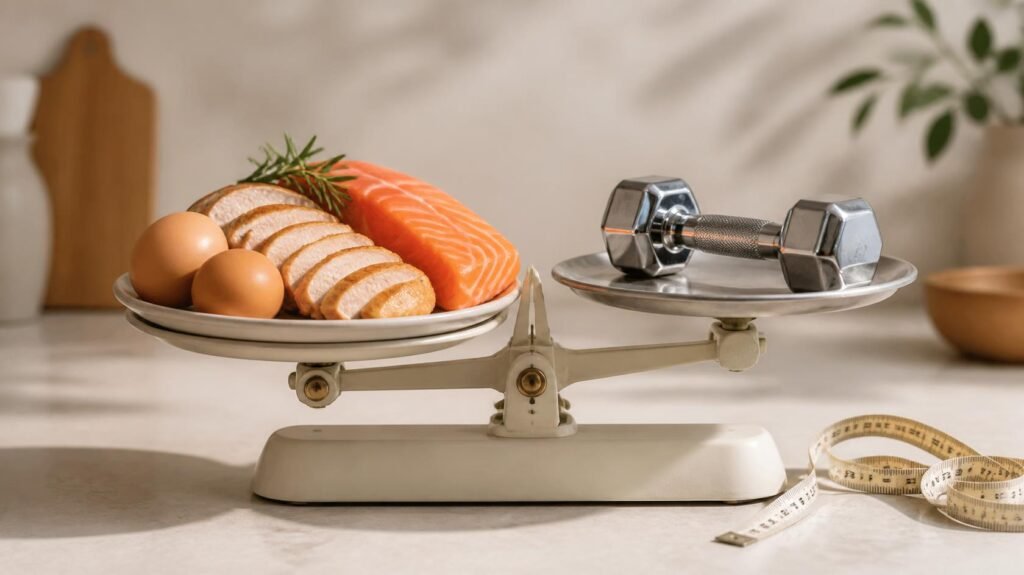
Is GLP-1 Muscle Loss Actually a Problem?
Now, I know what you’re thinking. You’ve heard scare stories before. “Everything gives you cancer.” “Carbs are poison.” “This supplement will save your life.” You’ve been burned. You’re right to be suspicious.
So let me be honest with you in a way most articles won’t.
Some scientists say part of this muscle loss is normal. Lose weight any way, and you lose some muscle too. A lighter body needs less muscle to move around. That part is real. Doctors call it an adaptive response.
But here’s what the “it’s fine, it’s normal” crowd skips over. The weight loss on these drugs is fast and large. So the muscle loss can be large too. Many people on these drugs are older, and already losing muscle to age. And when eating gets easy to skip, protein quietly falls off a cliff.
So even if the muscle loss is “normal,” the amount can be a real problem. A normal process at an abnormal speed is still a problem. That’s not fearmongering. That’s just math.
And the fix isn’t fear. The fix is food.
Why Protecting Muscle on GLP-1 Matters
Let’s talk about why you should actually care. Because “muscle” sounds like a bodybuilder concern, not a health concern. It isn’t.
Muscle is the most metabolically active tissue you have. It burns calories while you sit. It burns calories while you sleep. Lose muscle, and your body burns fewer calories at rest.
This is the trap. Here’s how it springs shut:
- You lose weight, and some of it is muscle.
- Your resting metabolism drops.
- One day you stop the drug, or the dose stops working as well.
- The weight comes back — but the muscle doesn’t come with it.
Studies show people regain a big chunk of lost weight after stopping semaglutide. If that regain is fat, and the muscle stayed gone, you end up worse off than before. Softer, weaker, and slower-burning.
Muscle is also what lets you carry groceries, climb stairs, and get off the floor at 75. It’s the same reason eating for longevity leans so hard on protein. I’ve sat across from people who nailed every number on the scale and still felt themselves getting weaker on the stairs. That’s the muscle talking. It’s not vanity. It’s independence.
So protecting it isn’t optional. It’s the whole point.
How to Protect Muscle on a GLP-1: Two Levers
Good news: the science here is refreshingly simple. Two things protect muscle during GLP-1 weight loss. Just two.
- Lever one: eat enough protein.
- Lever two: use your muscles with resistance training.
That’s it. Not a magic meal-timing trick. Not a $90 powder. Two boring, proven levers.
And here’s the part critics never tell you. In a small but striking case series, patients who prioritized protein and lifted weights didn’t just slow their muscle loss. Some actually gained lean tissue while losing fat on these drugs.
Read that twice. They lost fat and built muscle at the same time. The medication isn’t your destiny. What you do with it is.
This article is about lever one, the plate. But do a little resistance work too — even bands or bodyweight, two or three times a week. Twenty minutes counts. The two levers together beat either one alone.
How Much Protein Should You Eat on a GLP-1?
Let’s get concrete, because vague advice helps no one.
On a GLP-1, aim for 1.2 to 1.6 grams of protein per kilogram of body weight each day — well above the standard 0.8 g/kg. A 70 kg (154 lb) person needs roughly 85 to 112 grams daily. Spread it across your meals at 25 to 40 grams each.
The standard 0.8 grams per kilogram is built for a person who isn’t losing weight. During weight loss, it’s not enough. Not even close.
That’s why experts point higher for anyone losing weight on a GLP-1 — higher intakes of 1.2 to 1.6 g/kg are shown to preserve lean mass during weight loss. Some specialists push toward 2.0 g/kg for older or very active people.
Let’s make that human. Say you weigh 70 kg, about 154 pounds. Your target lands somewhere around 85 to 112 grams of protein a day.
One more rule that matters. Don’t cram it all into dinner. Spread it out. Aim for 25 to 40 grams of protein per meal, across three or four meals. Your body builds muscle best when protein arrives in steady doses, not one giant hit.
To be clear, this is general information, not medical advice. If you have kidney disease, talk to your doctor first — high protein isn’t right for everyone.
High-Protein GLP-1 Meals: What to Eat
This is where it gets easy. You don’t need recipes from a chef. You need a simple pattern: protein first, and lots of it.
Here are real high-protein GLP-1 meals that hit the target without overwhelming a shrunken appetite.
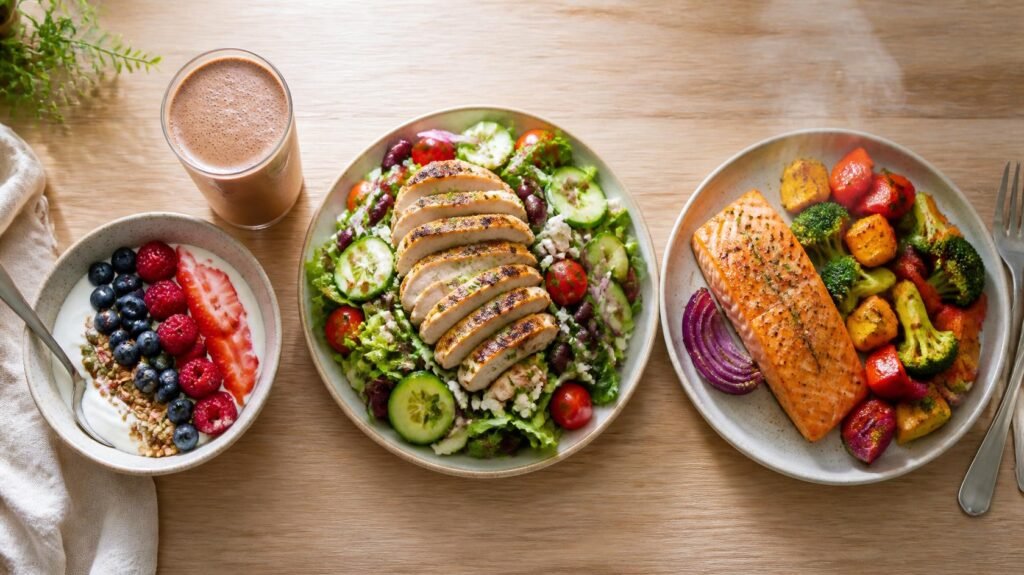
High-Protein Breakfast Ideas (~30g)
- Greek yogurt with a scoop of protein powder and berries.
- Three eggs scrambled with cottage cheese folded in.
- A protein shake blended with milk instead of water.
High-Protein Lunch Ideas (30–40g)
- Grilled chicken over a small salad with beans.
- Tuna mixed with Greek yogurt on a slice of high-protein toast.
- A tofu-and-edamame meal-prep bowl for the plant-based crowd.
High-Protein Dinner Ideas (30–40g)
- Salmon with a few roasted vegetables.
- Lean ground turkey with lentils.
- Shrimp stir-fry with a modest scoop of rice.
Want a few more? These high-protein rice bowl ideas and high-protein air fryer meals drop straight into this protein-first pattern.
High-Protein Snacks That Protect Muscle
- A stick of string cheese and a hard-boiled egg.
- Cottage cheese with a sprinkle of nuts.
- A ready-to-drink protein shake in your bag.
Notice the pattern. Protein anchors every single meal. Vegetables and carbs fill in around it. Not the other way around.
How to Hit Your Protein Goal With a Small Appetite
Here’s the honest obstacle. These drugs kill your appetite. That’s the whole magic. But it’s also why protein gets so hard. You sit down, eat four bites, and you’re done. If those four bites were toast, you got almost no protein.
So the strategy is simple. Eat the protein first, while you still have room. Take three or four bites of chicken or eggs before you touch anything else. Fill the small tank with the fuel that matters most.
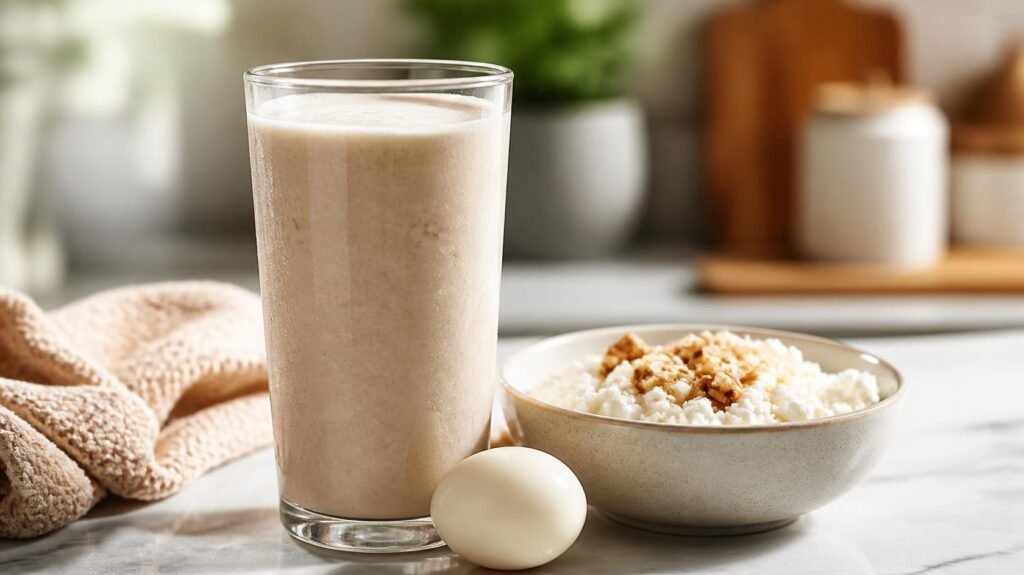
When solid food feels impossible, go liquid. Your body doesn’t care if protein arrives as a steak or a shake. A few options that go down easy when protein while on semaglutide feels like a chore:
- Protein shakes and smoothies for a queasy day.
- Cottage cheese, Greek yogurt, and soups — gentle and dense.
- Milk, yogurt, and a scoop of powder blended into a quick 40 grams.
A small appetite is not a reason to give up on protein. It’s the exact reason to be deliberate about it.
You Don’t Have to Hit Your Protein Target Perfectly
Let me take the pressure off, because pressure is what makes people quit.
You will not hit your protein target every single day. That’s fine. This isn’t a pass-fail test. The goal is direction, not perfection.
- Adding one protein-rich meal a day beats doing nothing.
- Miss your number on a rough day? Get back to it tomorrow.
- Can’t stomach a full meal? A shake still counts.
- Hate tracking? Make protein the star of every plate and move on.
A little simple meal prep on the weekend makes the protein target almost automatic on your busiest days. Every gram of muscle you protect today is a gram you won’t have to fight to rebuild later. Small, steady wins stack up. That’s how bodies actually change.
You are already doing the hard part. You’re losing the weight. Don’t let the muscle slip out the back door while you celebrate the front.
The Bottom Line on GLP-1 Muscle Loss
These drugs are the most powerful weight-loss tools we’ve ever had — and left alone, they’ll take your muscle right along with your fat. That’s the whole trap of GLP-1 muscle loss, and it’s the part nobody warns you about until the strength is already gone.
But you’re not stuck with it. You have the wheel. Eat enough protein, roughly 1.2 to 1.6 grams per kilogram a day. Spread it out. Put it first on every plate. Add a little resistance work. Do that, and you don’t just lose weight — you lose the right weight, and you come out leaner, stronger, and far more likely to stay that way.
So stop reading and go do the one thing that matters: at your very next meal, eat the protein first.