
The Ultimate Guide to High Protein Breakfasts: Fuel Your Day Right
Table of Contents
Introduction to High Protein Breakfasts
A high protein breakfast can make mornings easier.
It gives you a practical way to add protein early in the day while building a more filling meal.
Protein is essential for maintaining muscle, producing enzymes and hormones, and supporting normal body function. It also tends to be more filling than many lower-protein foods.
That matters if you regularly find yourself hungry again an hour or two after breakfast.
Research has found that higher-protein breakfasts can increase feelings of fullness in the hours after eating. However, that does not automatically mean you will eat fewer calories for the entire day. (PubMed)
The goal is simple.
Build a breakfast around a meaningful protein source, then add fiber-rich carbohydrates, fruit or vegetables, and healthy fats where they make sense.
For more quick ideas, check out our guide to 10 Easy High-Protein Breakfasts.
The Role of Protein in Your Breakfast
Protein provides amino acids that your body uses for muscle maintenance, tissue repair, enzymes, hormones, and many other biological processes.
That makes protein particularly useful when breakfast is also supporting an active lifestyle.
Eggs, Greek yogurt, cottage cheese, milk, tofu, lentils, beans, and lean meats can all contribute protein to a morning meal.
The trick is not simply adding protein powder to everything.
Instead, build breakfast around a protein anchor.
For example:
- Greek yogurt + berries + chia seeds
- Eggs + spinach + whole-grain toast
- Cottage cheese + fruit + nuts
- Tofu scramble + vegetables
- Protein smoothie + banana + peanut butter
- Lentil breakfast bowl + eggs
- Smoked salmon + avocado + eggs
A high-protein breakfast may also help with short-term appetite control. Several controlled studies have found greater satiety after higher-protein breakfasts compared with lower-protein alternatives. (PubMed)
But don’t confuse “more filling” with “automatically better.”
Your total diet still matters.
How Much Protein Should Breakfast Have?
There is no universal breakfast protein target that works for everyone.
The basic adult protein RDA is about 0.8 grams per kilogram of body weight per day, although individual needs can be higher depending on age, activity, body size, and goals.
Instead of obsessing over a perfect number, use a practical target.
For many people, 20–40 grams of protein at breakfast is a useful range to experiment with.
You can adjust it based on your overall diet and nutritional needs.
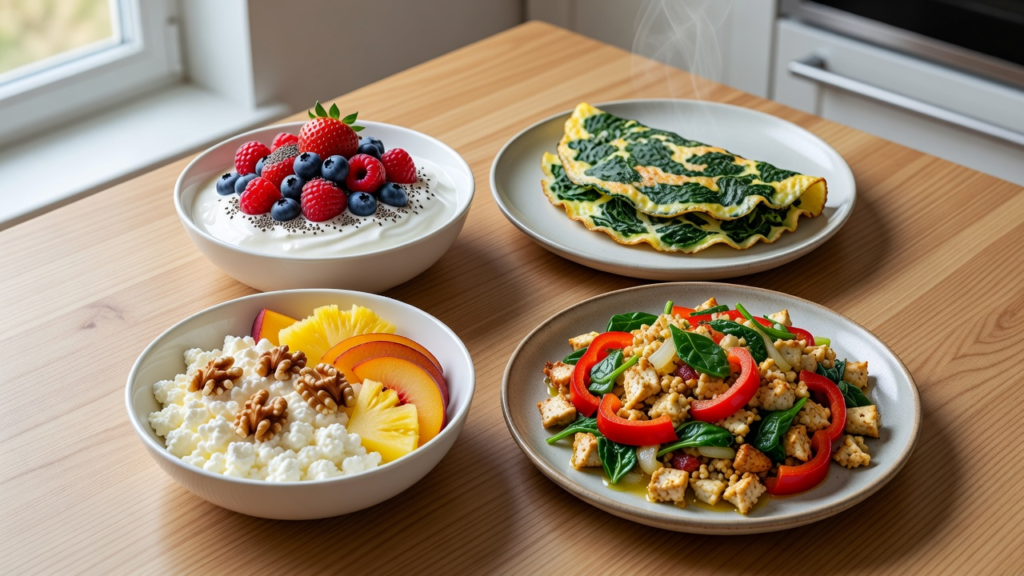
Top High Protein Breakfast Foods
The best high protein breakfast foods are the ones you will actually eat consistently.
1. Greek Yogurt
Greek yogurt is one of the easiest breakfast protein sources.
Depending on the brand and type, it can provide roughly 10 grams or more of protein per 100 grams.
Choose plain or lower-added-sugar options when appropriate.
Then add berries, nuts, chia seeds, cinnamon, or a small amount of honey.
You can also use Greek yogurt in smoothies, overnight oats, sauces, and baked recipes.
2. Cottage Cheese
Cottage cheese is another practical protein source.
It works particularly well for people who want a fast breakfast without cooking.
Eat it with berries and nuts for a sweet option.
Or add pepper, herbs, tomatoes, and avocado for a savory bowl.
Our 15 High-Protein Cottage Cheese Recipes has more ways to use it.
3. Eggs
Eggs are a breakfast classic for good reason.
One large egg provides roughly 6 grams of protein.
Three eggs can therefore provide around 18 grams before you add cheese, vegetables, yogurt, turkey, or another protein source.
Try:
- Scrambled eggs with spinach
- Omelets with vegetables
- Egg and avocado toast
- Egg muffins
- Breakfast burritos
- Eggs with cottage cheese
4. Chia Seeds
Chia seeds provide protein, fiber, and ALA omega-3 fats.
They work especially well in overnight oats, yogurt bowls, and smoothies.
They are not a substitute for a major protein source, though.
Think of chia as a protein booster, not the main event.
5. Lentils
Lentils are an underrated breakfast ingredient.
A savory lentil bowl can combine lentils with eggs, avocado, spinach, tomatoes, and spices.
You get protein plus fiber and a meal that can keep you satisfied for longer.
6. Turkey
Lean turkey can make breakfast more protein-dense without requiring a huge portion.
Use it in an egg scramble, breakfast sandwich, wrap, or breakfast bowl.
Watch sodium levels in processed turkey products.
7. Tofu
Tofu is one of the most versatile plant-based breakfast proteins.
Crumble it with turmeric, black pepper, spinach, mushrooms, onions, and peppers for a quick tofu scramble.
You can also blend silken tofu into smoothies for extra protein and creaminess.
8. Protein Powder
Protein powder can be useful when food alone makes it difficult to hit your protein target.
It is especially convenient for smoothies and busy mornings.
But it is not mandatory.
Whole-food protein sources can work perfectly well.
High Protein Breakfast Recipes
Here are three simple breakfasts you can rotate throughout the week.
1. Greek Yogurt Parfait
Ingredients
- 1 cup Greek yogurt
- ½ cup mixed berries
- ¼ cup granola
- 1 tablespoon chia seeds
- 1 tablespoon chopped nuts
- 1 teaspoon honey, optional
Preparation
Add half the yogurt to a bowl or glass.
Add berries, chia seeds, nuts, and granola.
Add the remaining yogurt.
Finish with berries and a small drizzle of honey.
The final protein amount depends heavily on the yogurt and granola you use, so check the nutrition label rather than relying on a fixed number.
2. Spinach and Cheese Omelet
Ingredients
- 3 large eggs
- 1 cup fresh spinach
- ¼ cup shredded cheese
- Black pepper
- Optional herbs
Preparation
Whisk the eggs.
Wilt the spinach in a nonstick skillet.
Add the eggs and cook until mostly set.
Add the cheese, fold the omelet, and finish cooking.
For more protein, add cottage cheese, turkey, or smoked salmon.
3. Peanut Butter Banana Protein Smoothie
Ingredients
- 1 banana
- 2 tablespoons peanut butter
- 1 cup milk or fortified plant milk
- 1 scoop protein powder, optional
- Ice
- Cinnamon, optional
Preparation
Add everything to a blender.
Blend until smooth.
If the smoothie is too thick, add more milk.
If you want more fiber, add chia seeds or ground flaxseed.
For more blender-based ideas, see our High-Protein Recipes Using a Blender.
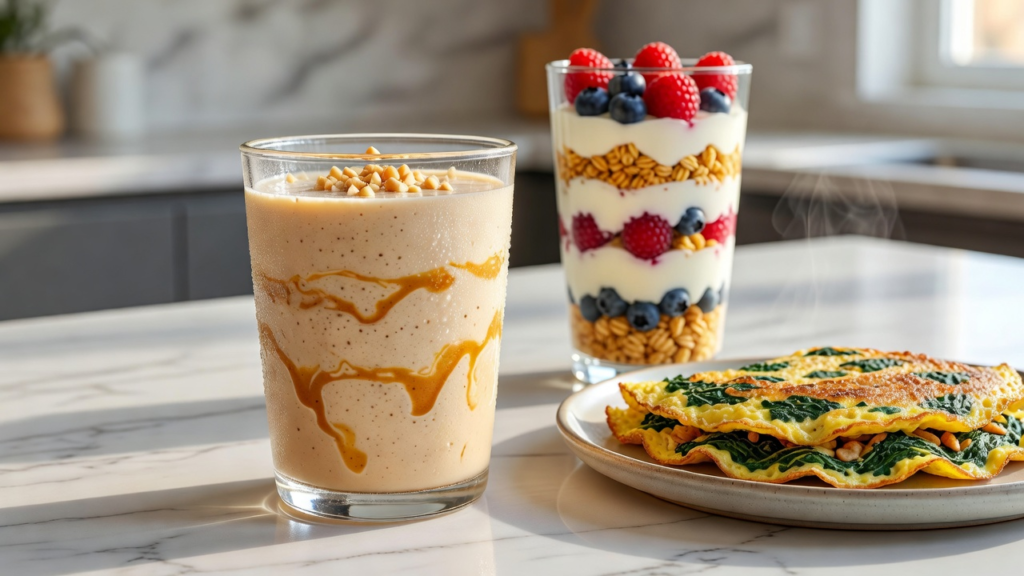
Tips for Making Breakfast High in Protein
You don’t need complicated recipes.
You need a repeatable system.
Start With a Protein Anchor
Choose one primary protein source first.
Examples:
- Eggs
- Greek yogurt
- Cottage cheese
- Tofu
- Smoked salmon
- Turkey
- Lentils
- Protein powder
Then build around it.
Add a Second Protein Source
This is an easy way to increase protein without making breakfast enormous.
Try:
Eggs + cottage cheese
Greek yogurt + chia
Oatmeal + Greek yogurt
Smoothie + protein powder
Toast + eggs
Tofu + beans
Add Fiber
Protein is only part of a balanced breakfast.
Add berries, vegetables, oats, chia seeds, flax, whole grains, or legumes.
This creates a more nutritionally complete meal.
Use Meal Prep
Breakfast becomes much easier when the food is already waiting for you.
Prepare:
- Hard-boiled eggs
- Overnight oats
- Greek yogurt bowls
- Egg muffins
- Chia pudding
- Smoothie packs
- Cottage cheese snack boxes
Our Clean Meal Prep With Air Fryer guide is useful if you want to build a bigger weekly prep system.
Keep Emergency Breakfasts
Not every morning goes according to plan.
Keep a few backup foods available:
- Greek yogurt
- Cottage cheese
- Protein powder
- Nut butter
- Fruit
- Eggs
- Chia seeds
- High-protein wraps
That turns “I have no time for breakfast” into a five-minute problem.
High Protein Breakfast for Different Dietary Needs
A high-protein breakfast does not need to look the same for everyone.
Vegetarian
Good choices include:
- Eggs
- Greek yogurt
- Cottage cheese
- Milk
- Lentils
- Beans
- Tofu
- Tempeh
A spinach-and-feta omelet is an easy starting point.
Vegan
Build around plant proteins such as:
- Tofu
- Tempeh
- Soy yogurt
- Soy milk
- Lentils
- Beans
- Hemp seeds
- Chia seeds
- Plant protein powder
A tofu scramble with vegetables is particularly easy to batch cook.
Gluten-Free
Focus on naturally gluten-free foods such as eggs, yogurt, fruit, potatoes, quinoa, chia, lentils, and certified gluten-free oats.
Check labels carefully on processed foods, protein powders, granola, and flavored products.
Lower-Carbohydrate or Keto
Prioritize protein sources with fewer carbohydrates.
Examples include:
- Eggs
- Cottage cheese
- Greek yogurt
- Smoked salmon
- Turkey
- Tofu
- Avocado
A smoked salmon, egg, and avocado plate is a simple option.
Timing Your Breakfast for Protein Optimization
The idea that everyone must eat breakfast within a specific 30-minute window is too simplistic.
There is no magic clock that makes protein suddenly work.
Your overall protein intake and total dietary pattern matter more than hitting an exact breakfast deadline.
For people who exercise in the morning, eating after training can be a convenient way to include protein.
A post-workout breakfast could include:
- Eggs and whole-grain toast
- Greek yogurt and berries
- Protein smoothie with fruit
- Cottage cheese and oats
- Tofu scramble with potatoes
The bigger strategy is to distribute protein across the day rather than trying to cram everything into one meal.
For active people, our Longevity Diet for Athletes guide explores broader meal timing and recovery strategies.
Importantly, recent research does not establish one universally optimal breakfast protein timing strategy for everyone. (PubMed)
A Simple High Protein Breakfast Formula
If you don’t want recipes, use this formula:
Protein + produce + fiber-rich carbohydrate + healthy fat
For example:
Option 1
Greek yogurt + berries + oats + chia
Option 2
Eggs + spinach + whole-grain toast + avocado
Option 3
Cottage cheese + berries + walnuts + cinnamon
Option 4
Tofu scramble + vegetables + potatoes
Option 5
Protein smoothie + banana + spinach + peanut butter
This formula gives you flexibility without forcing you to eat the same breakfast every day.
Common Myths About High Protein Diets
Myth #1: More Protein Is Always Better
No.
Protein is important, but more is not automatically better.
Your needs depend on your body, activity level, age, health status, and overall diet.
If you have kidney disease or another condition affected by protein intake, discuss your diet with a qualified healthcare professional.
Myth #2: You Need Protein Powder
You don’t.
Protein powder is convenient.
It is not mandatory.
Eggs, dairy, fish, meat, tofu, legumes, and other whole foods can provide plenty of protein.
Myth #3: Animal Foods Are the Only Good Protein Sources
Also false.
Plant foods can contribute substantial protein.
Lentils, beans, tofu, tempeh, soy foods, quinoa, nuts, seeds, and whole grains can all contribute.
Myth #4: A High Protein Breakfast Automatically Causes Weight Loss
Not necessarily.
Higher protein intake can improve fullness, but weight change still depends on overall energy intake, food quality, activity, sleep, and many other factors.
One breakfast cannot override the rest of your diet.
Myth #5: You Have to Eat Breakfast
Not everyone needs breakfast.
Some people prefer eating later.
Others perform better when they eat soon after waking.
If you enjoy breakfast and find it helps you manage hunger and energy, make it work for you.
If you are not hungry in the morning, there is no universal rule saying you must force down a huge meal.
Recommended Kitchen Tools for High Protein Breakfasts
A few basic tools can make these breakfasts much easier.
Blender
Useful for protein smoothies, cottage cheese blends, and other fast breakfasts.
Amazon: Check current blender options
Nonstick Skillet
A quality skillet makes omelets, scrambled eggs, tofu, and breakfast vegetables much easier.
Amazon: Check current nonstick skillet options
Meal Prep Containers
Use airtight containers for overnight oats, yogurt bowls, egg muffins, and prepped breakfast ingredients.
Amazon: Check current meal prep containers
Chia Seeds
A useful pantry staple for overnight oats, yogurt bowls, and smoothies.
Amazon: Check current chia seed options
Affiliate disclosure: As an Amazon Associate, I earn from qualifying purchases.
High Protein Breakfast Video
If you prefer watching the process instead of reading another recipe, this high-protein meal-prep video demonstrates practical breakfast ideas and batch cooking.
Recommended YouTube video: Easy, Healthy & High Protein Meal Prep | 100G+ Protein by FitFoodieSelma.
Frequently Asked Questions
What is a good high protein breakfast?
A good high-protein breakfast combines a meaningful protein source with other nutrient-dense foods.
Greek yogurt with berries and chia, eggs with vegetables and toast, or cottage cheese with fruit and nuts are simple options.
How much protein should I eat at breakfast?
There is no single number for everyone.
A practical starting point for many adults is around 20–40 grams, then adjust based on your total daily needs and dietary pattern.
Are eggs a high protein breakfast?
Yes.
One large egg provides roughly 6 grams of protein.
Three eggs provide around 18 grams before additional ingredients are added.
Is Greek yogurt good for a high protein breakfast?
Yes.
Greek yogurt is convenient, versatile, and often substantially higher in protein than many standard yogurts.
Check the nutrition label because protein content varies between brands.
What is the best high protein breakfast for weight loss?
There is no single best breakfast for weight loss.
A high-protein breakfast may help some people feel fuller, but total calorie intake and overall dietary quality still matter.
Choose a breakfast that keeps you satisfied and fits your overall nutrition plan.
Can I eat a high protein breakfast every day?
Yes, provided the overall diet remains varied and nutritionally balanced.
Rotate protein sources and include fruits, vegetables, whole grains, legumes, nuts, and seeds where appropriate.
Are high protein breakfasts good after a workout?
They can be a convenient way to provide protein after exercise.
The exact timing is less important than meeting your overall nutrition needs consistently.
What are the best high protein breakfasts without eggs?
Try:
- Greek yogurt bowls
- Cottage cheese with berries
- Protein smoothies
- Overnight oats with Greek yogurt
- Tofu scramble
- Lentil breakfast bowls
- Chia pudding with protein-rich yogurt
For more no-cook ideas, see our 10 Easy High-Protein Breakfasts.
Final Takeaway: Build Breakfast Around Protein
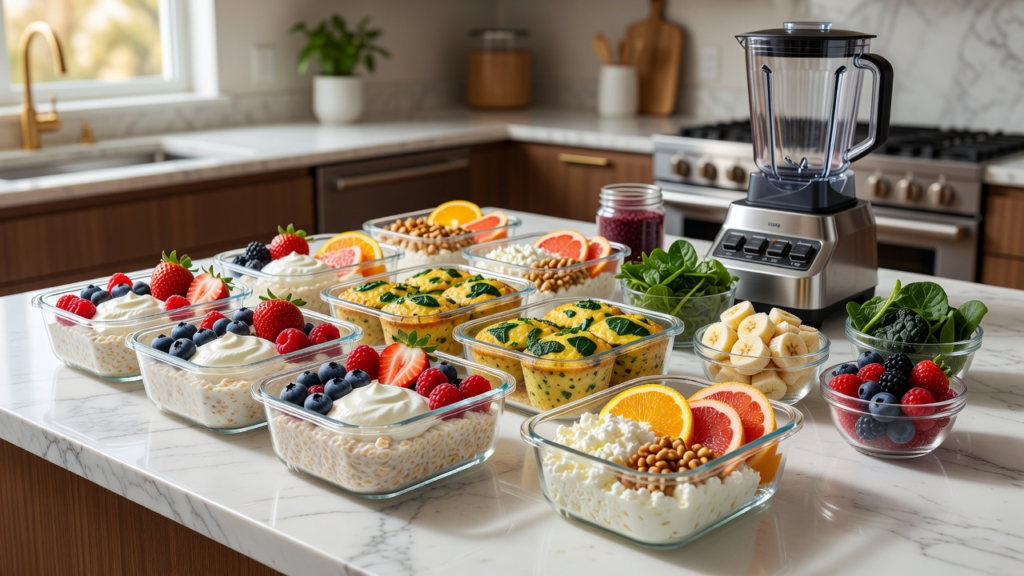
A high protein breakfast does not need to be complicated.
Start with one reliable protein source.
Then add fruit or vegetables, fiber-rich carbohydrates, and healthy fats according to your needs.
Greek yogurt, eggs, cottage cheese, tofu, lentils, chia seeds, and protein smoothies give you plenty of options.
The real win is consistency.
Find two or three breakfasts you genuinely enjoy.
Keep the ingredients available.
Prep them when necessary.
Then repeat.
That’s a much better strategy than searching for a perfect breakfast every morning.
Sources and Further Reading
- PubMed: Protein at breakfast and fullness
- PubMed: Protein-rich breakfast, satiety and cognitive concentration
- PubMed: Protein intake and fullness meta-analysis
- PMC: Protein source, quantity and appetite control