
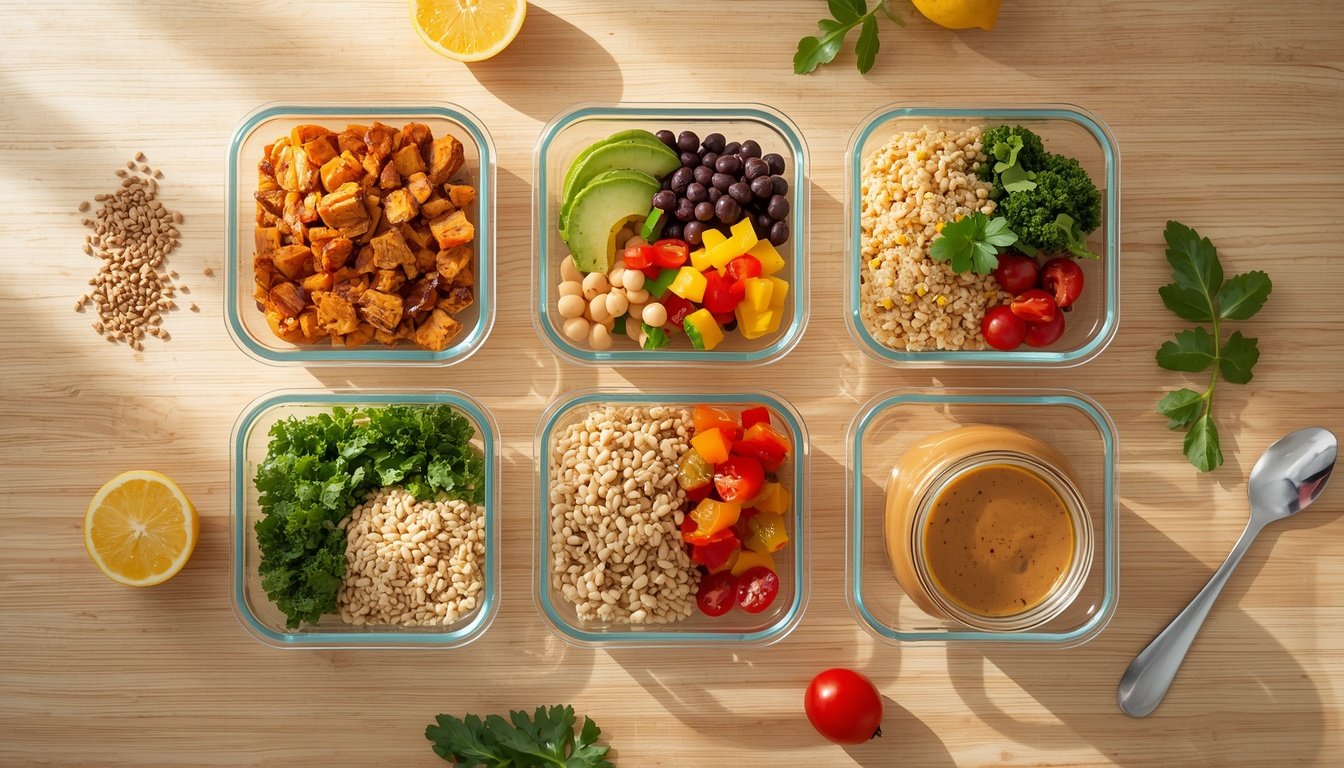
5 High-Fiber Lunches That Kill the 3PM Crash
High-fiber lunches sound like more boring health advice — and your eyes are already glazing over. I get it. You’ve heard “eat more fiber” a thousand times, and nothing changed. You’re not here for another lecture from someone in a lab coat. You’re here because you’re tired of being hungry an hour after lunch. You’re tired of the 3PM crash that sends you crawling toward the vending machine. So let me skip the sermon and show you why fiber-maxxing your lunch actually works — and give you five meals you can prep tonight.
Table of Contents
Is High-Fiber Meal Prep Just Another Wellness Trend?
You’ve been burned before. Every wellness trend promised the world. Kale. Celery juice. Whatever “superfood” was hot last Tuesday. Fiber feels like more of the same. Just another buzzword.
But here’s the difference. Fiber isn’t a trend. It’s not a supplement someone’s trying to sell you. It’s one of the most studied, boring, un-sexy nutrients in the world. And that’s exactly why it works. Nobody’s hyping it because nobody’s getting rich off broccoli and lentils.
The average American eats about 15 grams of fiber a day. If you’ve ever wondered how much fiber you actually need, the USDA’s Dietary Guidelines put the target closer to 25 to 38 grams. In fact, fewer than 1 in 10 Americans gets the recommended amount. So most of us aren’t failing at some exotic new hack. We’re just missing the basics by a mile.
Why High-Fiber Foods Keep You Full for Hours
Fiber keeps you full in three ways. It adds bulk to your food, so your stomach feels fuller for longer. It slows digestion, so food leaves your stomach gradually. And it flattens blood sugar spikes, which prevents the crash that triggers hunger a couple of hours later.
Let’s talk mechanics. Not vibes. Actual reasons.
When you eat white bread or a sad desk salad, it hits your system fast. Your blood sugar spikes. Then it crashes. That crash is the hunger you feel two hours later.
Fiber slows all of that down. Here’s how:
- It takes up space. Fiber adds bulk to your food. Your stomach physically feels fuller for longer.
- It slows digestion. Food leaves your stomach more slowly. That slow, steady release keeps hunger away.
- It flattens the sugar spike. No spike means no crash. No crash means no 3PM vending machine run.
One kind of fiber matters most here. It’s the soluble fiber found in oats, beans, and lentils. This fiber soaks up water and turns into a soft gel in your gut. That gel is what keeps you full for hours, not minutes.
This isn’t a theory someone dreamed up. It’s basic digestion. It happens whether you believe it or not.
Does High-Fiber Meal Prep Have to Be Bland?
I hear you. You picture gray chicken and dry rice in a sad plastic box. That’s not this. That’s bad meal prep.
High-fiber food is some of the most flavorful food out there. Beans soak up spice. Lentils carry sauce. Roasted veggies get sweet and crispy. You’re not eating cardboard. You’re eating food that actually tastes like something.
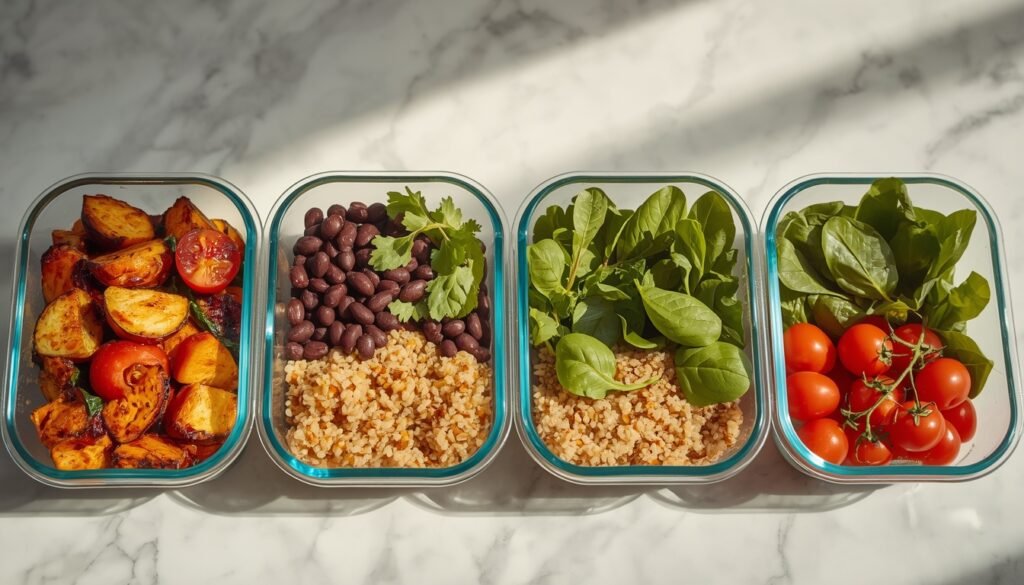
And here’s the real win. When you prep ahead, you remove the hard part. The choice. The 12:30 scramble where you cave and order takeout. The meal’s already made. You just eat it. Willpower barely enters the picture.
I’ve prepped some version of these five bowls almost every Sunday for years. The afternoon crash disappeared within the first two weeks, and it hasn’t come back.
5 High-Fiber Lunches to Meal Prep This Week
Each one is simple. Each one holds up in the fridge. And each one keeps you full for hours, not minutes. They run on the same clean, simple meal prep idea — cook a base once, eat it all week. Let’s go.
Watch: a high-fiber, high-protein meal prep session built around gut health and longevity — the same base-and-toppings rhythm the five lunches below use.
1. High-Fiber Lentil Bowl
Lentils are the king of fiber. One cooked cup packs around 15 grams. That’s your whole day’s shortfall in a single bowl.
Cook a big batch on Sunday. They keep all week. Build the bowl like this:
- Cooked lentils as the base
- Roasted sweet potato chunks
- A handful of spinach
- A spoon of tahini or a squeeze of lemon
The tahini makes it rich. The sweet potato makes it sweet. You won’t miss anything. This bowl fills you up like a brick, in the best way. You’ll forget snacks exist.
2. Black Bean and Quinoa Meal Prep Bowl
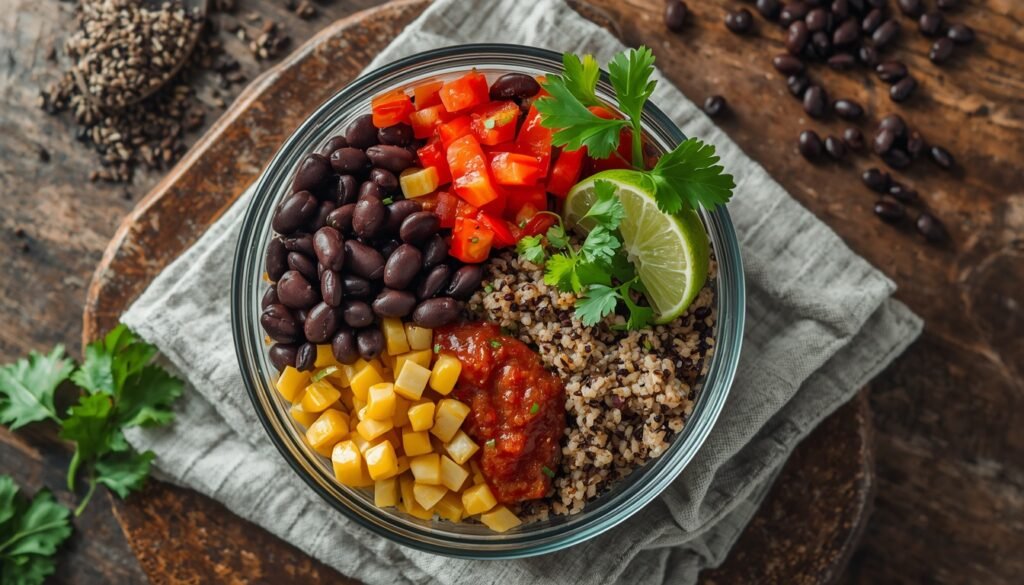
Black beans and quinoa are a power couple. Together they bring fiber and protein in one box. One cup of black beans has about 15 grams of fiber. Quinoa adds a few more, plus a complete protein punch — the same reason it anchors so many high-protein meals.
Mix them with:
- Diced bell peppers
- Corn
- A scoop of salsa
- A little cumin and lime
It tastes like a burrito bowl. It costs about two dollars. And it keeps you full clear through the afternoon. Make four boxes at once. Lunch is handled for half the week.
3. High-Fiber Chickpea “Tuna” Salad
Skip the fish. Smash chickpeas with a fork instead. Chickpeas give you around 12 grams of fiber per cup. Smashed up, they mimic the texture of tuna salad perfectly.
Stir in:
- A spoon of mayo, mashed avocado, or a Greek yogurt swap
- Diced celery and red onion
- Salt, pepper, a splash of mustard
Scoop it onto whole grain bread. Or eat it with crackers. Or pile it over greens. It’s creamy, savory, and satisfying. Nobody at your desk will guess it’s beans.
4. Barley and Roasted Veggie Bowl
Barley is a fiber sleeper hit. Most people forget it exists. One cup of cooked barley brings around 6 grams of fiber. It’s chewy and nutty and holds sauce beautifully — it plays the same role here that rice does in these high-protein bowl ideas.
Roast a tray of veggies while the barley cooks:
- Broccoli
- Zucchini
- Red onion
- Cherry tomatoes
Toss it all together with olive oil and garlic. The roasted edges get crispy and sweet. This bowl reheats like a dream. It might taste even better on day three.
5. High-Fiber White Bean and Kale Soup
Soup is the ultimate meal prep. Make one pot. Eat it all week. White beans bring the fiber. Kale piles on more. Together they turn a simple broth into a filling meal.
Simmer:
- White beans (canned is fine)
- Chopped kale
- Diced carrots and celery
- Garlic, broth, and a parmesan rind if you have one
Warm soup plus fiber fills you up fast. The heat and the bulk do the work. Ladle it into jars. Grab one each morning. Done.

The Meal Prep Gear That Makes High-Fiber Lunches Effortless
Quick note: the links below are affiliate links. If you buy through them, we may earn a small commission at no extra cost to you — it helps keep these recipes free.
You don’t need much. Four things turn Sunday prep from a chore into a 90-minute habit:
- Glass meal prep containers — Airtight, microwave- and freezer-safe glass keeps your bowls fresh all week and reheats without the plastic funk. Get a set with matching lids so nothing leaks in your bag.
- A 6-quart Instant Pot — This is the fiber workhorse. It cooks a big batch of lentils, black beans, quinoa, or barley hands-off while you do something else. Dried beans in under an hour, no overnight soak.
- Wide-mouth 32 oz mason jars — The move for the white bean and kale soup. Ladle, seal, grab one on your way out the door. Wide mouths are easier to fill and to eat straight from.
- Bulk lentils, beans, and quinoa — Buying your high-fiber staples in bulk drops the cost per lunch to about two dollars and means you’re never one missing ingredient away from ordering takeout.
That’s the whole kit. Everything else you already have.
What High-Fiber Foods Do for Your Gut Health
Here’s what the skeptics leave out. Fiber does more than fill your stomach. It feeds the good bacteria in your gut. Those bacteria affect your mood, your energy, even your immune system. It’s the same gut-first thinking behind eating for longevity.
You don’t feel that on day one. But eat this way for two weeks, and something shifts. Your energy stops crashing. Your afternoons get steadier. You stop white-knuckling your way to dinner.
That’s not hype. That’s just what happens when you stop starving your gut.
How to Increase Fiber Without Bloating
One honest warning. Don’t jump from 15 grams to 40 grams overnight. Your gut needs time to adjust. Ramp up too fast and you’ll feel bloated. Any dietitian will tell you the same thing.
Add one high-fiber lunch this week. Drink more water alongside it. Let your body catch up. Small steps win here. This isn’t a crash diet. It’s a quiet upgrade you keep for life.
Why High-Fiber Lunches Beat Every Diet You’ve Tried
Look, high-fiber lunches are never going to trend. Nobody’s building a supplement empire on lentils and black beans. That’s the whole point. They’re cheap, they’re dull, and they quietly fix the one thing that actually wrecks your afternoon — being hungry an hour after you eat.
Pick one lunch off this list and prep it before Monday. That’s the assignment.
Frequently Asked Questions
What are the best high-fiber lunches for meal prep?
The most filling, fridge-friendly options are a lentil bowl, a black bean and quinoa bowl, a smashed chickpea salad, a barley and roasted veggie bowl, and white bean and kale soup. Each delivers roughly 6 to 15 grams of fiber per serving and holds up for days.
How much fiber should I eat per day?
The Dietary Guidelines suggest about 25 grams a day for women and 38 grams for men, yet fewer than 1 in 10 Americans hits that. Most people sit around 15 grams, so a single high-fiber lunch can close most of the gap.
Do high-fiber lunches actually stop the afternoon crash?
Yes. Soluble fiber slows digestion and flattens the blood sugar spike that causes the 3PM slump. Instead of a fast rise and a hard crash, you get steady energy — which is why the mid-afternoon vending machine run stops calling your name.
How do I add more fiber without getting bloated?
Ramp up slowly. Add one high-fiber lunch this week rather than overhauling every meal at once, and drink more water as you go. Your gut adjusts within a couple of weeks, and the early bloating fades as it does.
Are canned beans as high in fiber as dried?
Yes. Canned black beans, chickpeas, and white beans carry essentially the same fiber as dried — around 12 to 15 grams per cup. Just rinse them to cut the sodium. Canned is the faster, cheaper route to a high-fiber lunch.




One Comment
Comments are closed.