7 Fermented Food Swaps for Gut Health (No Supplements)
This post contains affiliate links. If you buy through them, we earn a small commission at no extra cost to you. We only link to things we’d actually put in our own kitchen.
You eat about a thousand meals a year, and every one of them is a decision you’ve already made. So the real question about fermented foods for gut health isn’t whether to overhaul your diet — it’s whether the food already going into those meals could be doing something useful. Yogurt instead of sour cream. Sourdough instead of white bread. Kefir instead of milk. Same slot, same money, live bacteria included. What follows is the whole case, built one ordinary step at a time. Nod along and stop me where it breaks.
Table of Contents
Why Your Gut Bacteria Affect How You Feel
You have bacteria in your gut. Trillions of them. That isn’t a wellness claim — it’s basic biology you learned years ago.
Those bacteria aren’t passengers. They break down fiber you can’t digest. They make vitamins K and B12. They train your immune system.
When that community gets wiped out — say, by a course of antibiotics — you notice. Bloating. Loose stools. Feeling off for a week.
So the population matters. You already know this. You’ve felt it.
Why Gut Bacteria Need Replacing Constantly
Bacteria are alive. Living things die.
Your gut bacteria turn over all the time. Some die. Some divide. Some get flushed out. Nothing alive stays steady without new input. Your muscles need protein. Your bones need calcium. Your gut needs new bacteria and something to feed them.
So where do the new ones come from? One place: your mouth. There is no other door. Everything living down there got swallowed.
What Counts as a Fermented Food?
Here’s a definition, not an argument. Fermentation means microbes have already eaten part of the food and changed it.
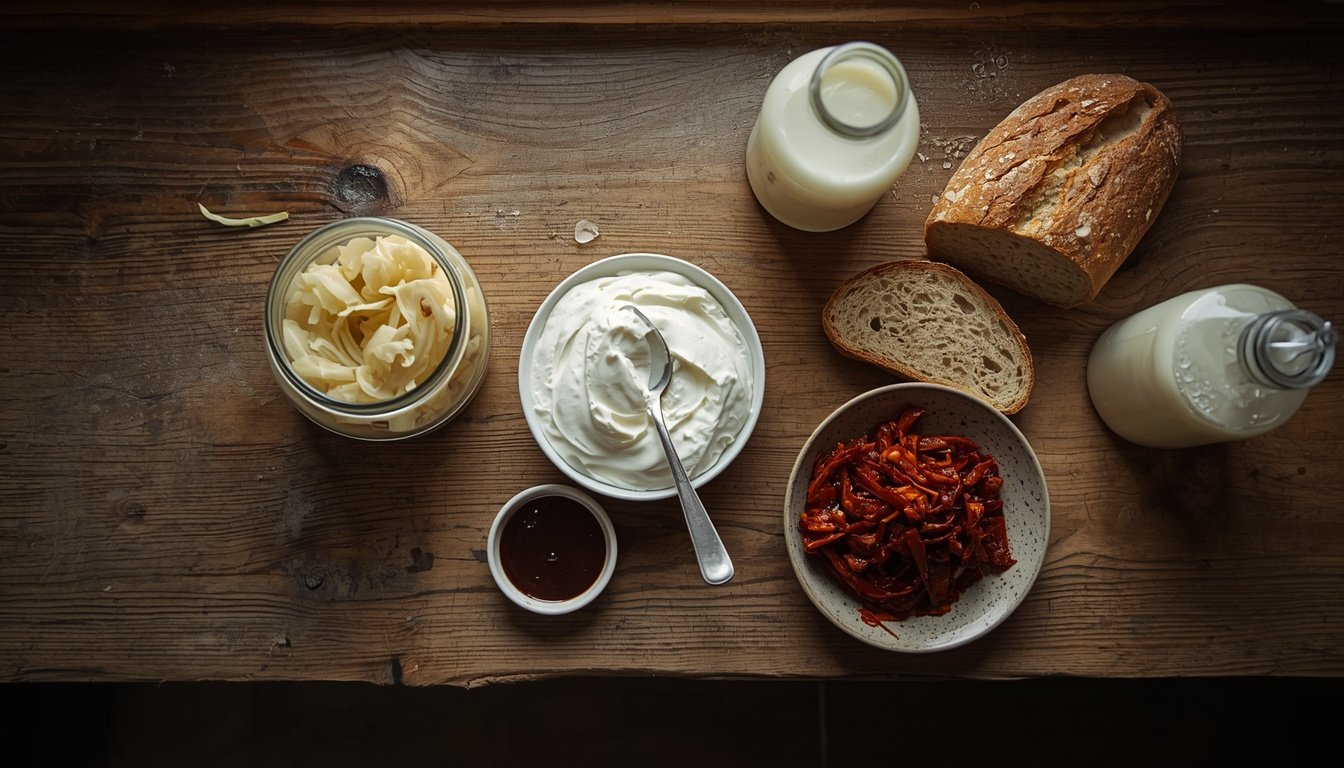
Yogurt is milk that bacteria got to first. Sauerkraut is cabbage that bacteria got to first. Kimchi, kefir, miso, tempeh — same idea. UCI Health’s dietitians put nearly all of these in the same bucket: ordinary grocery-store food, no specialty shopping required.
Humans have done this for thousands of years. Not for health. For preservation, before refrigerators existed. The bacteria were a side effect. A useful one.
How to Spot Live Cultures on a Food Label
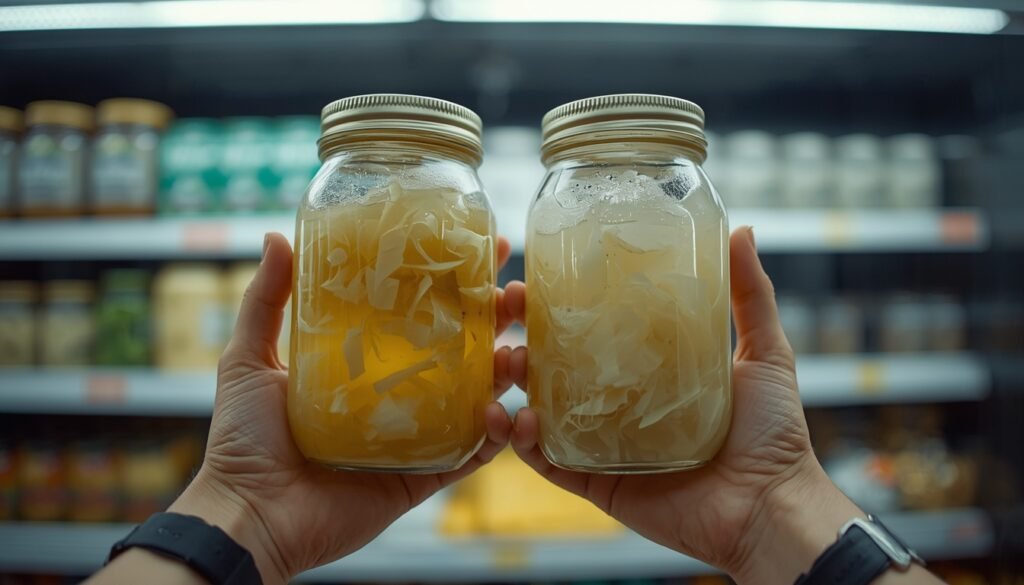
Check a yogurt label. Many say “contains live and active cultures.” That’s not marketing fluff — it’s a measurable claim about organisms that are alive in that container right now.
Unpasteurized sauerkraut in the refrigerated section? Same deal. Live bacteria, in a jar, on a grocery shelf, for about four dollars.
Shelf-stable sauerkraut in the canned aisle has been heat-treated. Those bacteria are dead. Same vegetable, different product.
The distinction is real, and you can read it off the label before you buy.
Where Fermented Foods Fit Into Meals You Already Eat
Here’s the part people skip. You are going to eat breakfast tomorrow. You’re going to put something on a sandwich. You’ll have a side with dinner.
These aren’t hypothetical meals. They’re already scheduled. The food is probably already in your kitchen.
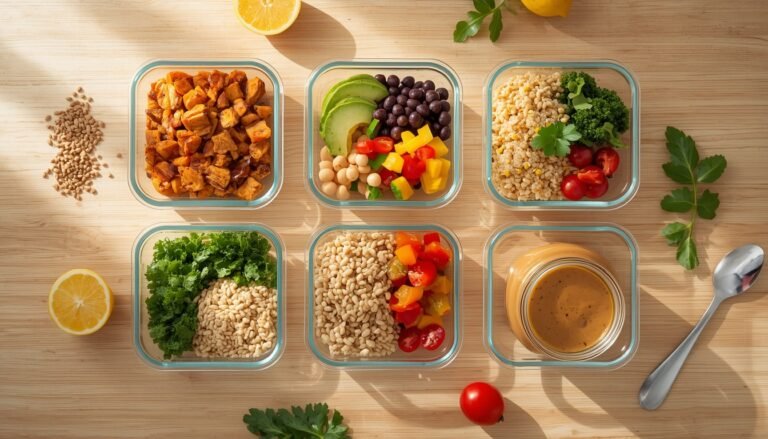
A slot is a slot. Something will fill it. If you already run a repeatable system — like the high-protein meal prep framework we’ve written about — this drops straight into it without changing a single thing about how you shop or cook.
7 Fermented Food Swaps That Cost You Nothing
This is where it gets almost too simple.
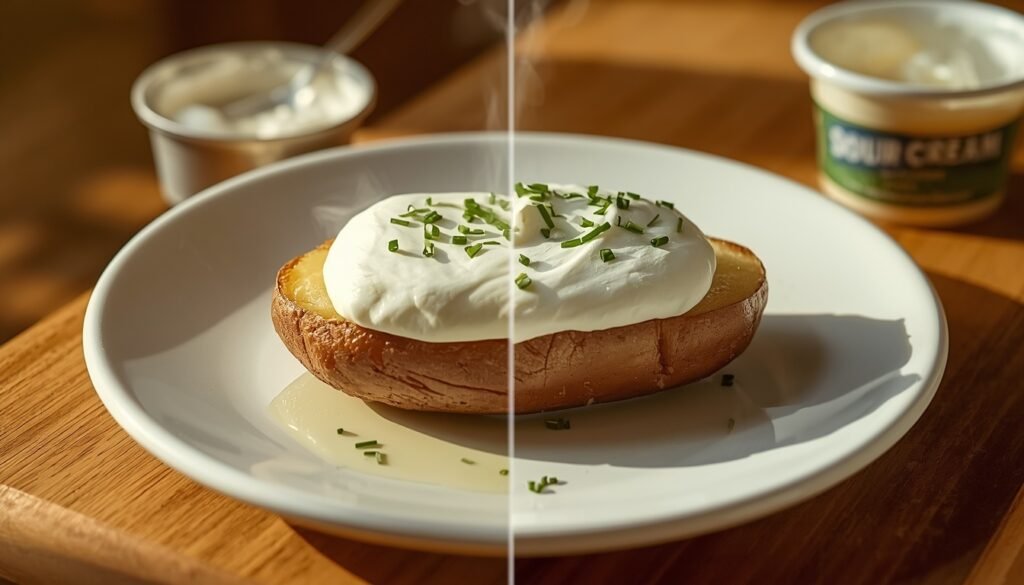
If you were going to eat sour cream, you could eat plain Greek yogurt. Same texture on a baked potato. Same tang. (Start with our plain Greek yogurt recipes → MAP TO REAL POST if you need ideas beyond the baked potato.)
If you were going to eat regular pickles, you could eat fermented pickles — the ones in the refrigerated case, brined in salt water instead of vinegar.
If you were going to drink a glass of milk, you could drink kefir. It’s milk, fermented, slightly tart — and it typically carries a far wider range of bacterial and yeast species than standard yogurt.
The swaps that cost you nothing:
- Sour cream → plain yogurt or labneh
- Vinegar pickles → refrigerated brined pickles
- Milk → kefir → MAP TO REAL POST
- Regular cabbage slaw → sauerkraut → MAP TO REAL POST
- Bouillon cube → a spoon of miso paste
- Bread → sourdough → MAP TO REAL POST
- Soy protein crumbles → tempeh
Notice what’s not on that list: supplements, powders, subscriptions, or anything you have to remember to take. Probiotic capsules run $25 to $40 a month. A jar of live-culture kraut runs four dollars and replaces a condiment you were buying anyway.
You’re not adding a habit. You’re editing one you already have.
What If You Don’t Like the Taste of Fermented Foods?
A fair objection: some of this tastes weird.
Kombucha is vinegary. Kimchi is aggressive. Natto is, by most accounts, a lot. I’ve thrown out more half-finished jars than I want to admit — one of them a beet kvass I bought purely because a label told me to.
But you don’t need all of them. You need one or two you actually enjoy.
Hate sauerkraut but like Greek yogurt? Eat Greek yogurt. Kefir too sour on its own? Blend it with a banana. That’s how it finally stuck for me — straight kefir lasted four days, kefir in a smoothie has lasted years.
A food you eat weekly beats a food you bought once and threw out.
Do Fermented Foods Really Improve Gut Health?
Yes — modestly, and with good evidence. In a 2021 Stanford trial published in Cell, 36 adults ate six servings of fermented foods a day for 10 weeks. Their gut microbiome diversity rose and 19 inflammatory proteins fell, including interleukin-6. Smaller daily amounts produce smaller effects, but the response was dose-dependent.
That trial came out of the lab of Justin and Erica Sonnenburg, with Stanford nutrition researcher Christopher Gardner as co-senior author. You can read Stanford Medicine’s write-up of the results or go straight to the full paper in Cell. Sonnenburg called the result “a stunning finding” at the time, and the effect held across every participant in the fermented-food group.
Six servings a day is a serious amount, and nobody is claiming your morning yogurt matches it. Eat less, get less.
But here’s the thing about a swap: it costs you nothing. So even a modest effect is pure upside. You aren’t trading money or time for a maybe. You’re trading one food for a similar food.
Erica Sonnenburg explains what the trial actually found — worth 15 minutes if you want the mechanism, not the headline:
What Fermented Foods Can’t Do
Let’s be clear about limits, because overselling this wrecks the whole argument.
Fermented food will not cure IBS. It won’t fix an autoimmune condition. It won’t replace medication.
Some people with histamine intolerance or SIBO feel worse on fermented foods. If that’s you, this isn’t your tool. Even in the Stanford trial, participants ramping up their intake reported bloating in the first few weeks before it settled — so go slow.
And if you have real digestive symptoms — blood, weight loss, persistent pain — see a doctor. Sauerkraut is not a diagnostic strategy.
I’m not selling you a supplement here. There’s no capsule at the end of this article, no protocol, no code. This is a low-stakes improvement to something you’re doing anyway. That’s the whole pitch.
Prebiotic Fiber: The Other Half of Gut Health
One more premise, and it’s the one most people miss.
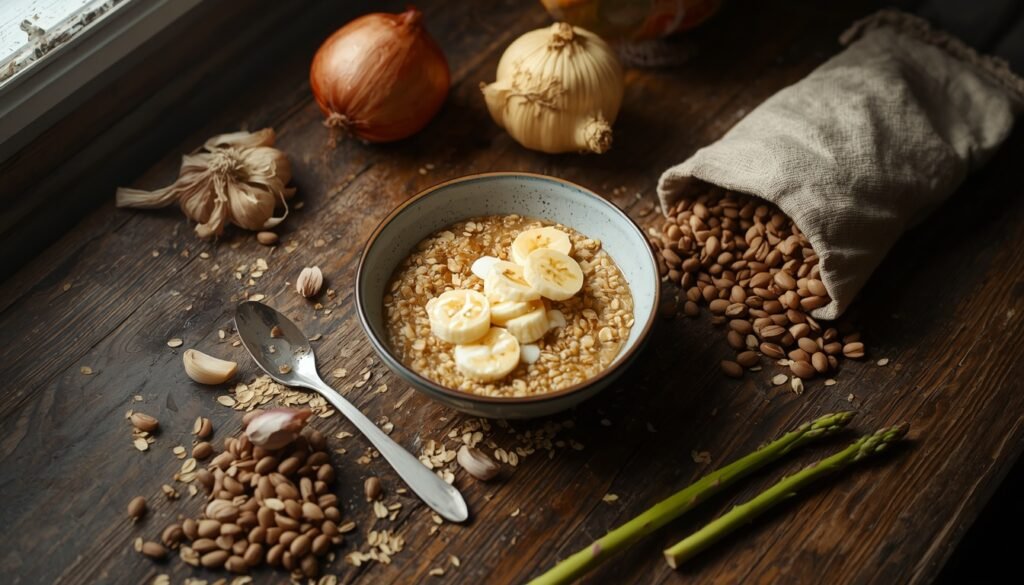
Bacteria have to eat. The ones you swallow won’t stay if there’s nothing there for them. What they eat is prebiotic fiber — the kinds your own enzymes can’t break down. Onions, garlic, oats, beans, bananas, asparagus.
Most of us are badly short. Only about 5% of US adults hit the daily fiber target of 25 grams for women and 38 for men; average intake sits closer to 15 to 17 grams. A bowl of oats with a banana closes a third of that gap before you’ve left the kitchen — our high-fiber breakfast recipes → MAP TO REAL POST are built around exactly that.
Worth knowing: in that same Stanford trial, the high-fiber group did not show a rise in microbiome diversity over 10 weeks. Erica Sonnenburg’s read was that fiber alone, over a short window, isn’t enough to move it. That’s not an argument for skipping fiber. It’s an argument for doing both.
The fermented food brings the guests. The fiber decides whether they stay for dinner. Doing one without the other is like buying seeds and skipping the soil.
What to Buy: Fermented Food Starter Kit
Nothing here is required. The whole argument is that you can do this with a four-dollar jar from the refrigerated case. But if you want to make your own — cheaper per serving, and you control the salt and sugar — these are the only items that actually matter.
Wide-mouth glass mason jars (32 oz, 6-pack) — The whole fermentation setup, basically. One jar of cabbage and salt makes about six servings of sauerkraut for under two dollars.
Fermentation airlock lids for mason jars — Lets CO₂ out, keeps oxygen and mold from getting in. This is the difference between kraut that works and kraut you throw away.
Glass fermentation weights — Holds the vegetables under the brine. Anything above the brine line goes fuzzy. Cheap and non-negotiable.
Live milk kefir grains — Buy once, use indefinitely. A jar of milk on the counter becomes kefir in 24 hours, which drops your per-glass cost to roughly the price of the milk.
Organic white miso paste — The easiest swap on the list. Replaces bouillon cubes one-for-one and lasts close to a year in the fridge. Stir it in off the heat.
Gochugaru Korean chili flakes — If you’re making kimchi rather than buying it, this is the one ingredient you can’t substitute.
The Art of Fermentation by Sandor Katz — The reference book. More than you need, and the only one worth owning if you get into this.
The Good Gut by Justin and Erica Sonnenburg — Written by the two Stanford researchers behind the trial cited above. If the science section left you wanting more, start here.
Fermented Foods and Gut Health: FAQ
How much fermented food should I eat per day for gut health?
The Stanford trial used six servings a day, which is more than most people will sustain. One to two servings daily is a realistic target and still meaningful — the effect in the trial was dose-dependent, meaning more gave more, but less still gave something. Start with one and build.
How long does it take for fermented foods to improve gut health?
In the Stanford study, microbiome diversity rose steadily across 10 weeks and peaked near the end. Expect weeks, not days. Some people notice digestive changes in the first two weeks, but the measurable microbiome shifts took the full run of the trial.
Are fermented foods the same as probiotics?
No. Probiotics are specific strains at doses shown to produce a health effect. Most fermented foods contain live microbes but haven’t been tested to that standard, which is why researchers call them probiotic-containing foods rather than probiotics. Fermented foods are cheaper and come with the food itself — fiber, protein, nutrients — attached.
Does sourdough bread count as a fermented food?
Sourdough is fermented, but the baking kills the bacteria, so it delivers no live cultures. It’s still worth swapping in: fermentation makes some nutrients more available and can make the bread easier to digest. Just don’t count it as your live-culture serving.
Can fermented foods cause bloating?
Yes, especially at first. Participants in the Stanford trial who ramped up their intake reported bloating early on that resolved as they continued. If you have SIBO or histamine intolerance, bloating may not settle — in that case fermented foods aren’t your tool, and it’s worth talking to a doctor.
Which fermented food has the most live bacteria?
Kefir generally carries the widest range of bacterial and yeast species — well beyond what standard yogurt contains. Unpasteurized refrigerated vegetables like sauerkraut and kimchi are also strong. Anything shelf-stable has been heat-treated and contains none.
Do I still need fiber if I’m eating fermented foods?
Yes. Swallowed bacteria don’t stay without prebiotic fiber to feed them, and only about 5% of US adults hit the daily fiber target. Fermented foods bring the microbes; fiber keeps them. Doing one without the other wastes half the effort.
Why the Fermented Food Argument Holds Up
Look at what you’ve agreed to, one step at a time:
- Your gut bacteria affect how you feel. You’ve experienced this.
- That population needs replenishing, and your mouth is the only entrance.
- Fermented foods contain live bacteria. The label says so.
- You’re eating three meals a day no matter what.
- Swapping one food for a fermented version costs nothing — not money, not time, not effort.
- A small benefit at zero cost is still worth taking.
There’s no leap anywhere in that chain. Every step is ordinary. So the conclusion is ordinary too. You’re eating sour cream anyway. Yogurt does the same job on the same potato. Yogurt might help.
There’s no version of that math where you eat the sour cream.
How to Start Eating Fermented Foods This Week
Pick one swap. The one that takes the least thought — for most people that’s yogurt for sour cream, or sourdough for regular bread. Run it for two weeks before you add a second.
And skip the diet overhaul. Marily Oppezzo, a dietitian at the Stanford Prevention Research Center, puts it plainly: her clients don’t do well with complete overhauls, so she changes one thing at a time. That’s not a motivational line, it’s what works.
Here’s what nags at me about all of this. The sour cream and the yogurt cost the same. They sit four feet apart. One of them contains a few billion live organisms and the other doesn’t, and the only reason most people grab the wrong one is that nobody ever pointed at the label. That’s it. That’s the entire gap between you and a better-fed gut — about four feet of refrigerated aisle and a habit you never examined.
So go examine it. Next grocery run, walk past the shelf-stable aisle, find the refrigerated case, and buy one jar of something that says live cultures on the label. One jar. Then eat it in the meal you were already going to eat.